


Affiliate Disclosure As an Amazon Associate I earn from qualifying purchases. This post may contain affiliate links. For more details, refer to my Disclaimer page.
Ciabatta is quite a new bread in the history of bread making. It was invented in 1982 by Arnaldo Cavallari as an answer to an Italian version of the French baguette. This recipe is a simple no knead ciabatta bread recipe.
This bread also appears in the top 50 breads of the world which includes breads such as pitta bread, Shaobing flatbread and plenty more which I am working through gradually. I took a standard recipe for ciabatta bread and gave it a no knead twist. This means that instead of using a stand mixer or kneading the bread by hand, it just needs a few folds over the course of a couple of hours.
Contents
This post is a part of the top 50 recipes which feature plenty of breads from around the world. I enjoy the challenge of making a bread I've not done before using the basic tools in my kitchen.
Instructions for no knead ciabatta
This is a simple recipe for ciabatta bread, but patience is the key to it being a success. While I have put timings in the post, these always vary massively depending on ambient room temperature and climate.
These are guideline timings for an average UK kitchen of around 20-24C.
These instructions carry on from the point all the wet ingredients are mixed together (poolish, yeast and water).
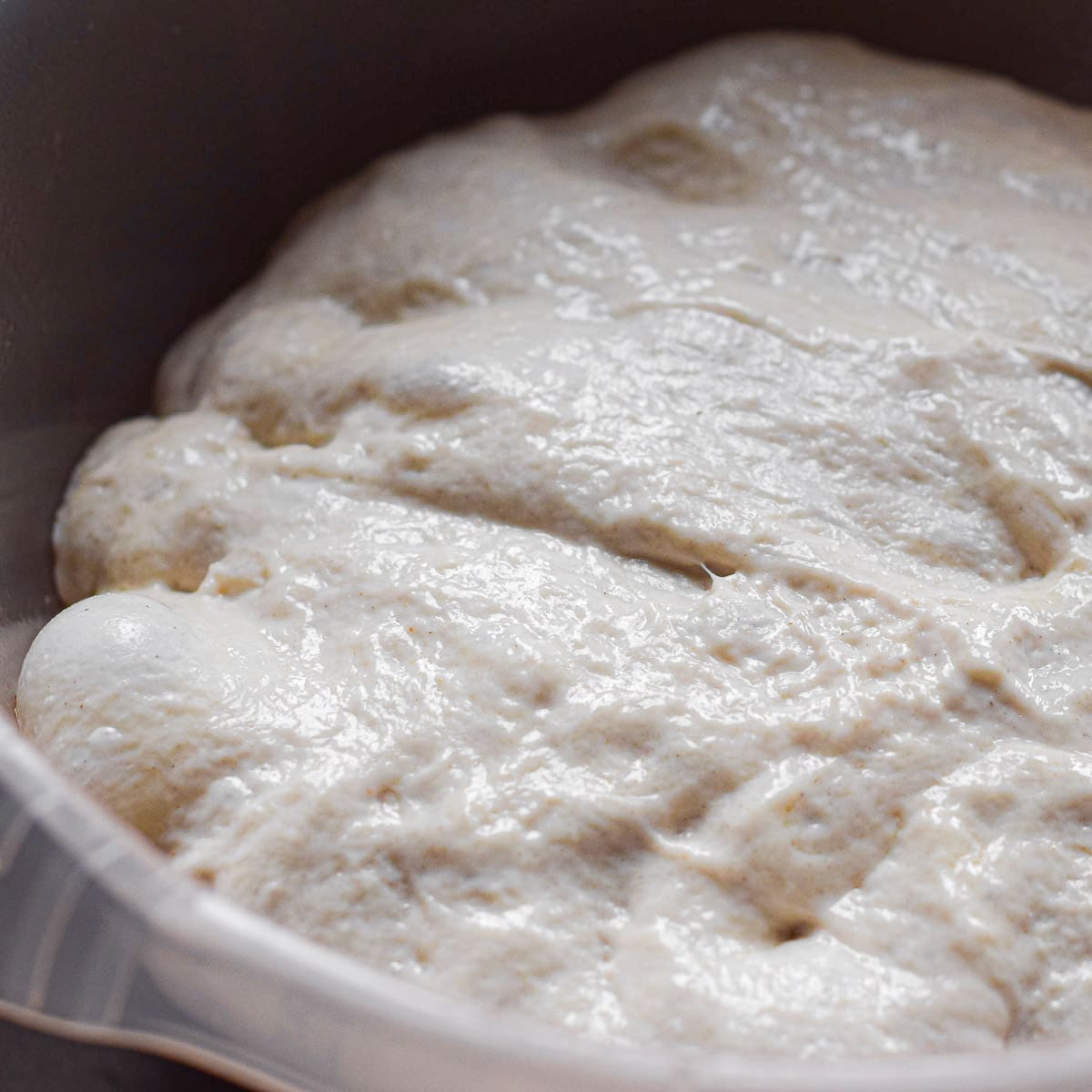
Once all the wet mixes are together (poolish and wet yeast mix) - Perform stretch and folds until the dough starts to form bubbles.
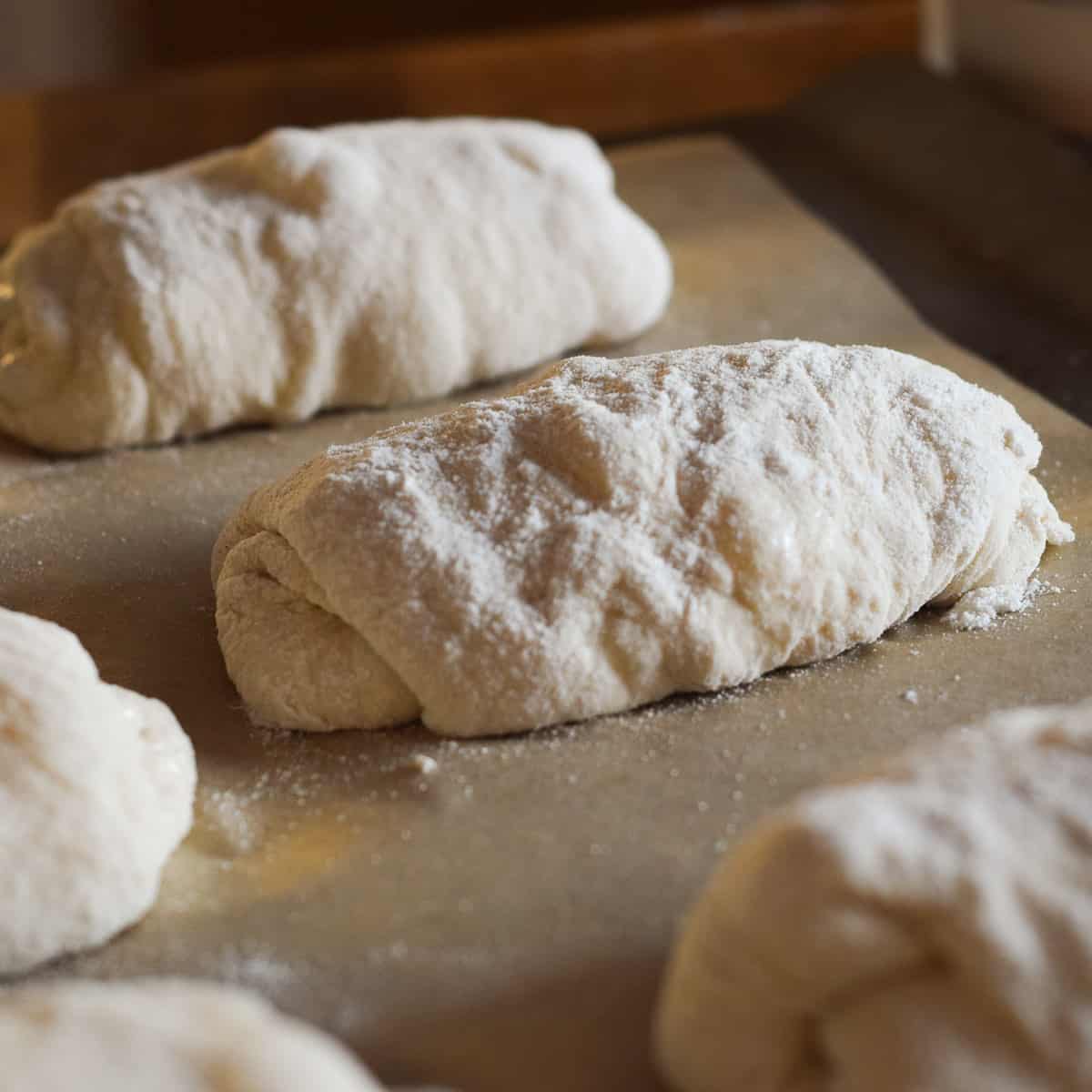
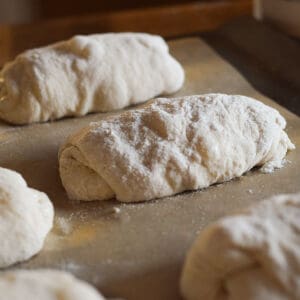
Form into 6 to 8 rectangles then fold over into thirds.
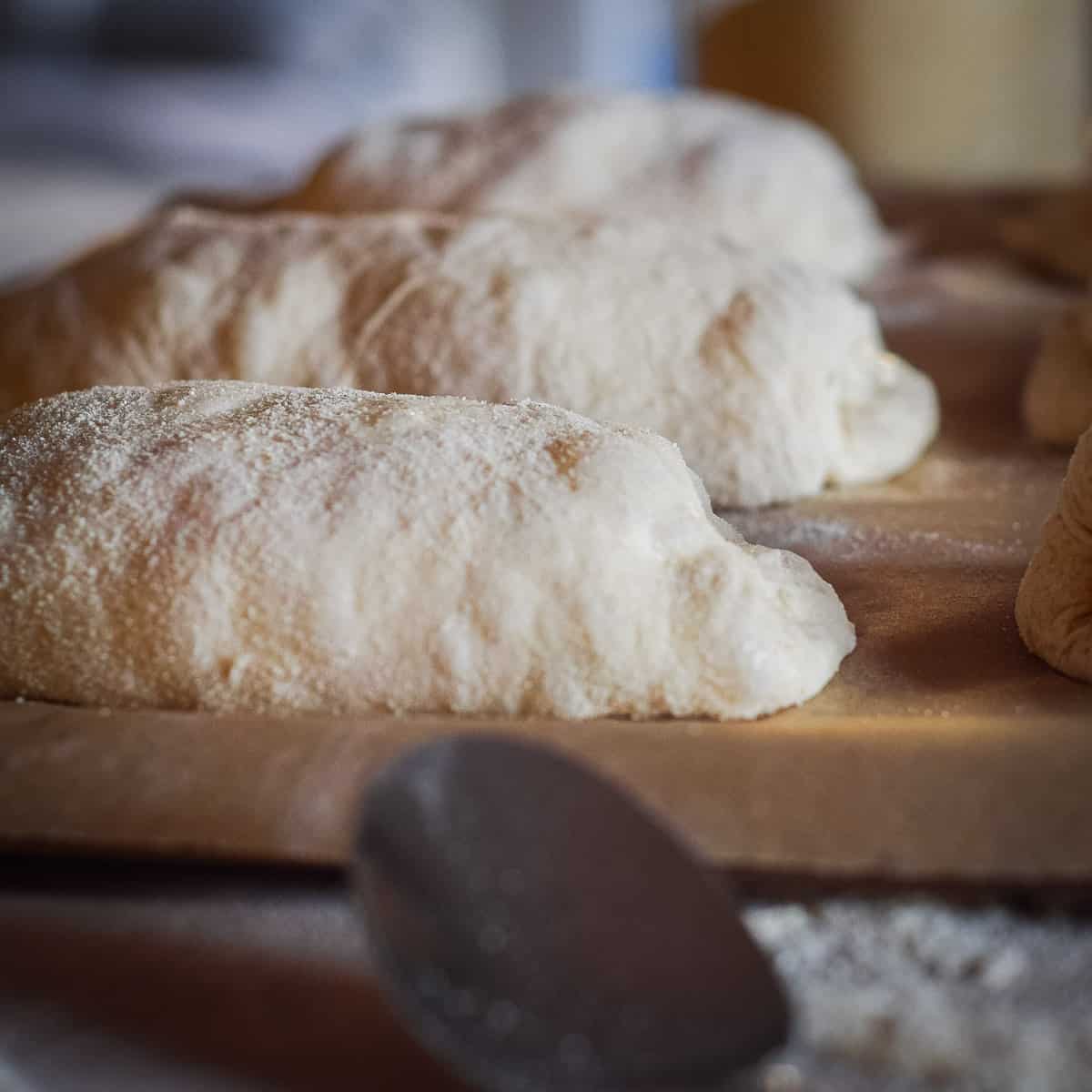
Allow them to prove before going into the oven.
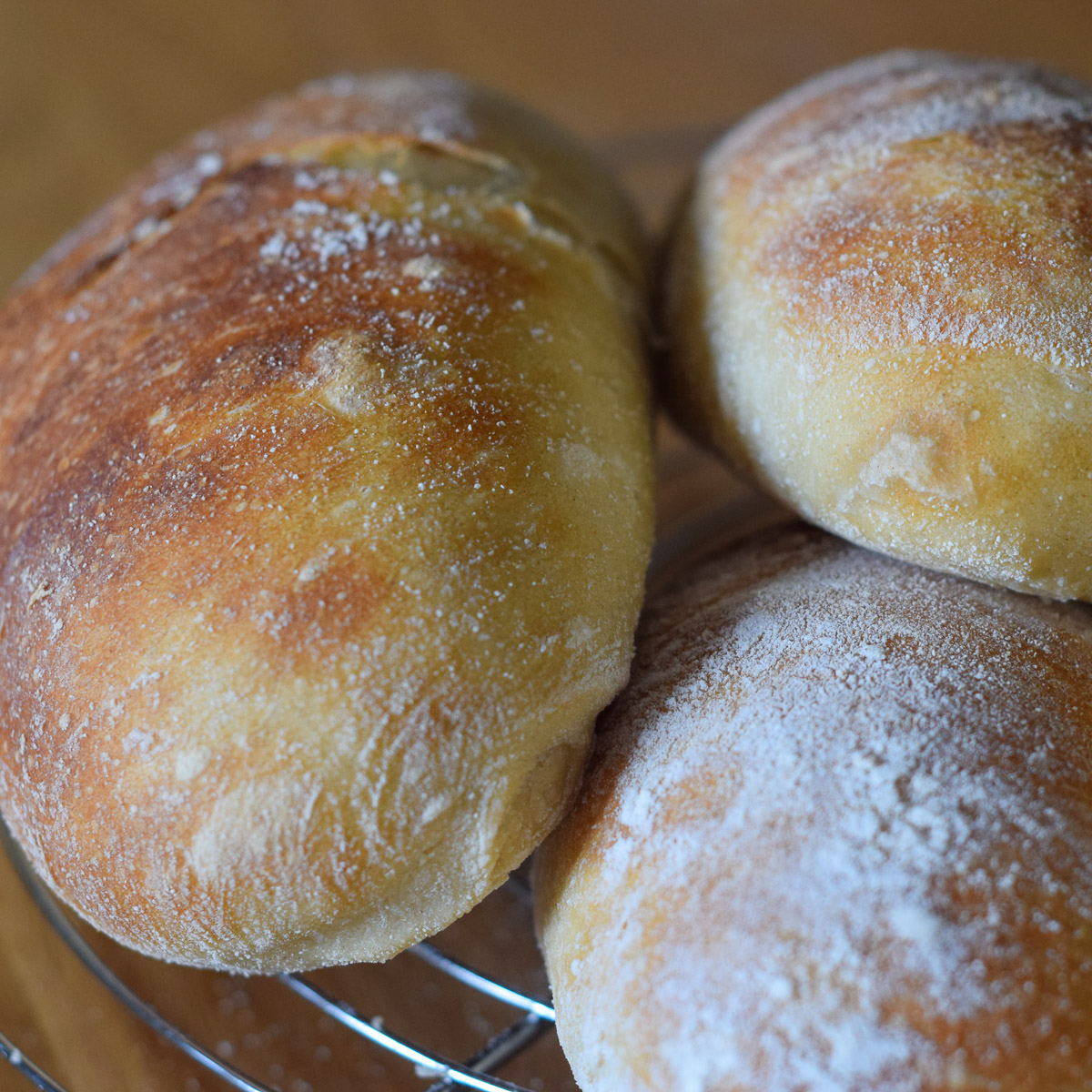
Cook at 180C until golden brown and they sound hollow when tapped underneath.
Remember that you can use my bread hydration calculator to work out how much water to flour you need to add. This recipe is a very hydrated 80% hydration rate. That means it makes handing the dough a bit of a challenge.
Hint: This recipe for ciabatta bread gives you quite a difficult dough to work with. So to help handle sticky dough, use a different flour than what is being added to the dough. So in this instance we are using 00 flour.
Therefore it's advised to use semolina or rice flour for dusting surfaces as this will not absorb into the dough. In my kitchen I find a 50/50 mix (2 tablespoon of each) is enough to dust a surface for 8 no knead ciabatta bread rolls.
For a simpler recipe with dough that is easier to work with try my Malthouse loaf recipe.
Substitutions
You could try swapping out the 00 flour for 55 flour if you wanted to have a more fluffy baguette type roll. Although this does not then become a Ciabatta, it still gives an amazing bread.
- 00 Flour - instead of 00 flour you can try with French T55 flour. Even normal bread flour will work
- Olive Oil - If you have no olive oil for greasing the bowl, use normal vegetable oil.
- Yeast - Use either freeze dried instant yeast or regular bakers yeast. Either will work, quantities for bakers yeast will be 5g for the poolish and 7g for the main dough.
Even if your reader doesn't follow a specific diet (eg. gluten free), they may have friends or family that they're cooking for that could use this. This is also a great idea to link out to another blogger with a similar recipe that fits a different diet.
Variations
There is the option to add your own spin on any sort of bread, obviously it will not be the native "original" method of making but it means you can do it your way. Experimenting with different additions can make the Ciabatta vary.
- Spicy - add chili pepper flakes while cooking to imbue heat into the dish. Just a quarter teaspoon will do.
- Herbs - some well placed basil or oregano will give it a different taste.
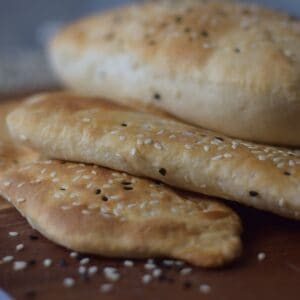
- Seeds - add seeds to the top of the Ciabatta bread for a new look and taste. Black onion seeds or sesame seeds work well.
- Dipping - This works well dipped in my katsu curry recipe.
See this Shaobing flatbread recipe on my website for use of seeds on a bread. My post about the breadmaking process has a full guide on the various stages of making bread.
Equipment needed for ciabatta
Baking the ciabatta bread rolls on a baking stone will crisp up the bottom in a more authentic Italian style.
Stone bakeware takes longer to heat up than metal trays so you need to give it some time in the oven to get to temperature before baking the Ciabatta.
Storing Ciabatta Bread
Once cooked, these bread rolls will last up to 3 days but are obviously better on the same day. A quick reheat in the oven for 3 to 4 minutes will work for the day after if needed.
If you want to freeze the Ciabatta bread rolls, then you can put them straight in the freezer after they have been cooked and cooled down appropriately. Store two or three at a time in these reusable freezer bags for ease of separation.
Top tip
The autolyse process at the start allows the gluten to start building before adding any yeast to the mix. While it is not an essential part of the recipe for ciabatta bread, give the flour and water at least 30 minutes together before adding anything.
FAQ
You can convert this recipe to a ciabatta garlic bread recipe by simply slicing the baked Ciabatta rolls lengthways and adding some garlic butter to the top of them. Pop them back in the warm oven for 1 - 2 minutes to melt the butter and you have a garlic bread ciabatta roll.
Ciabatta Bread was invented in 1982 by Arnaldo Cavallari as an answer to an Italian version of the French baguette.
Related
Looking for other recipes like this? Try these as a bit of an alternative:
Pairing
These are my favourite dishes to serve with Ciabatta bread:
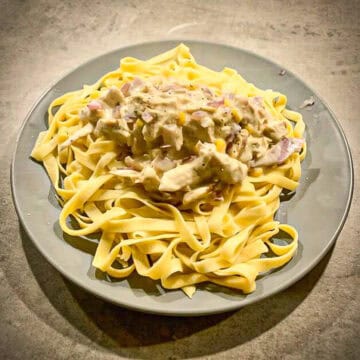

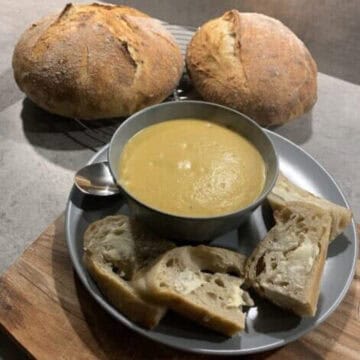
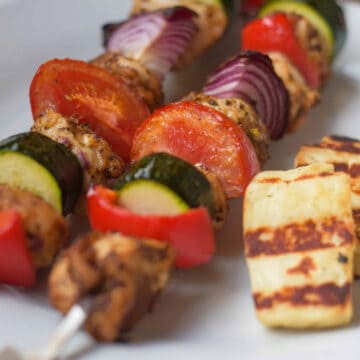
The Recipe

No Knead Ciabatta Bread
Equipment
- 1 Dough scraper Not essential, but helps.
Ingredients
Instructions
Make the poolish
- Mix the 50g flour and 50ml water together with the ¼ Yeast in a bowl. Cover it and leave it for at least 4 hours (or overnight if a colder day).50 g 00 flour, 50 ml Warm water, ¼ tsp Yeast
Make the dough
- Mix the flour and water together to form a sticky mess. Leave it for 30 minutes to autolyse.
- Add in the yeast and mix well. Mix the poolish made above in with this mix.
- Add the salt and mix in. Transfer it to a bowl which is greased with the olive oil a and then leave it to stand for 30 minutes covered up.
- With wet (or greased in oil) hands, pull up one side of the dough and stretch it then fold to the middle. Turn the bowl a quarter turn and repeat until the bowl has gone full circle. This is a stretch and fold cycle.
- Perform 3 more stretch and folds 30 minutes apart. This will take 2 hours in total.
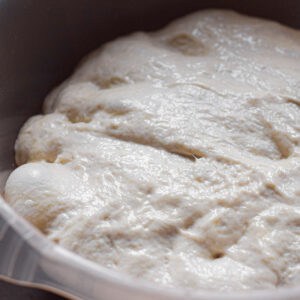
- Once the stretching and folding is complete, the dough should be starting to bubble.

- Flour a work surface and empty the dough on to it. The dough will be incredibly sticky so this is a bit of a work of art to get right. Make sure you have wet or greased hands. Ideally use a dough scraper as an extension of your hand so you don't need to handle the dough as much.Split the dough into 6 or 8 equal pieces (depending on how many Ciabatta bread rolls you want.
- Stretch out one piece into a rectangle. Fold one third into the centre, then rotate it round and do the same the other side. Then fold this into a roll shape. Keep the flour side down and the sticky side in for ease. Transfer these over to a baking sheet.
- Let these prove for a little while (30 to 40 minutes) until they rise a bit more. Then bake in the oven at 180℃ for 20 to 25 minutes until golden brown on the top and the bread sounds hollow when tapped underneath.
Nutrition
More posts like this
3 responses to “No Knead Ciabatta Bread”
-


A simple but effective way of how to make ciabatta bread. -
When do you add the polish? Its not in the recipe!!!
-
Hi Susan,
Oops. I missed that and it’s quite important! You need to add the poolish in step two of the recipe card when you make the dough. It gets added into the yeast mix.I’ll update accordingly. Thanks for pointing it out!
Martin.
-


Leave a Reply