


Affiliate Disclosure As an Amazon Associate I earn from qualifying purchases. This post may contain affiliate links. For more details, refer to my Disclaimer page.
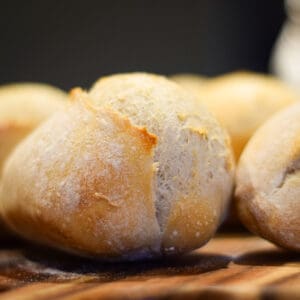
A simple dough but the output is tremendous. These white French bread rolls are made with T55 bread flour and offer a bit more "lightness" in the bite of the roll. While most French Baguettes are made with a yeast based starter called a poolish, this recipe skips that step.
Contents
The Best French Bread Flour
As with all bread making recipes the flour is a key ingredient which makes a huge difference to the output of the bread. This recipe calls for T55 bread flour which I usually order from Shipton Mill. Other baker suppliers such as Dove Farm also do a range of European bread flours.
The T55 flour is a finer bread flour and is the required flour type for a French Bread Stick. It has as relatively low percentage protein content. The 55 refers to the ash content (or mineral content).
T55 flour is often used in French breads like baguettes, batards, and other artisanal breads. It provides a balance between strength and flexibility in the dough, allowing for good rise and structure while still maintaining a light and airy texture in the finished bread. Have you squished a French stick in the supermarket when you were a kid? This crunch that springs back - that's what I'm talking about.
T55 White French Bread Rolls
The flour is available from plenty of stockists online. I buy mine from The Replenishery in Leigh, Lancashire. They are a zero waste local business and I try to support them where possible.
The recipe only has 4 ingredients which shows just what difference a bread flour can make on a recipe. If you made this with 00 bread flour, you'd be making pizza.
Why Does A Poolish Make A Difference?
My recipe does not use a poolish which is a yeast, water and flour mix made in a concentrated form. This is usually made the day before baking and then added to the rest of the recipe on bake day. If you made this recipe with a poolish then you will be making French sticks or Baguettes.
The recipe here skips that first step to speed things up. However if you wanted to do it the traditional boulanger way then make sure to use the poolish.
Splitting Dough For Bread Rolls
To make sure you use the correct amount of dough for the rolls, there are two approaches you can take.
- Weigh the dough, split evenly - This method will give you an even amount of bread rolls. So if you have 1000g of dough you can split into 10 x 100g rolls. This will give you a good looking equal and uniform batch of bread buns.
- Roll out to a specific size - This will mean you decide the optimum size for the rolls you are making. If you want 75g rolls you would roll out each dough ball to that size but you might have a bit of dough left over.
Whichever route you take, don't worry too much about being bang on accurate. Aim to be as close to the required weigh as possible but keep in mind that if you are within 5 grams either more or less, you will still get a uniform batch.
Obviously if you are selling your produce, weights and measures become more important so check with your local authority or regulations before proceeding.
Top Tip - If you don't have a bread cloth or baguette tray to make a baguette or roll, you can prove the bread in a wet tea towel. Pull and lift at each end to create a channel to rest the bread dough in.
Other Bread Recipes
I have lots of other bread recipes and a more detailed post about the bread making process to be sure to check that out.
Give this one a try and experiment with different shapes, proving times and water hydration. Use the hydration calculator for further assistance.
T55 flour is ideal for making traditional French breads with a crispy crust and a soft, open crumb. It's also commonly used in pastry-making for recipes like croissants, brioche, and puff pastry, where its low to medium protein content helps create an airy but crispy bread and therefore lots of crumbs.
The Recipe

White French Bread Rolls
Equipment
Instructions
- Throw all the ingredients in to the mixing bowl and loosely bring them together.
- When combined, begin to knead the mix into a dough. Aim for around 10 minutes by hand.If using a stand mixer with dough hook attachment, knead for 5 minutes on the lowest setting, then let the dough rest for 5 minutes and then knead again for a further 5 minutes. Careful not to over work the dough with the mixer (you can't really over work it by hand, you'll be knackered before that is done.)Aim for a smooth dough that doesn't tear when stretched thinly.
- Leave the dough in a bowl covered with cling film, damp cloth, tea towel (or a shower cap!) to rise for up to one hour (until just under double in size).
- When risen, split the dough into 10 equal pieces. Then roll them into a ball, then flatten and fold in ⅓, turn around and fold in ½. Then roll this into a little sausage.Put your oven on to 200℃.Leave the rolls to rise for another 30 to 40 mins, depending on ambient temperature, make sure they are covered with a damp cloth again.
- When proved, slice gently along the top at 45° with a lame or sharp blade. Cook the rolls in the oven for 15 - 20 minutes until golden brown on top and they sound a hollow tap when knocked on the bottom.
Notes
Nutrition
More posts like this
Comments
No Comments
Leave a Reply