


Affiliate Disclosure As an Amazon Associate I earn from qualifying purchases. This post may contain affiliate links. For more details, refer to my Disclaimer page.
Malthouse bread is a yeasted loaf made with malted barley flour mixed with regular bread flour. It's nutty, slightly sweet, and similar in colour to a brown loaf but lighter in texture. Don't confuse it with malt loaf, which is a completely different bake. Malt loaf is a dense, sticky fruit cake made with malt extract, served sliced and buttered. This recipe is the bread, not the cake.
This malt flour bread recipe is a proper favourite of mine. It’s a 50/50 mix of white bread flour and malthouse flour – hearty but not heavy. The result? A loaf that’s got all the nuttiness of a wholemeal but is still soft enough for sandwiches.
Because we’re using malted flour and not just your bog-standard wholemeal, it’s packed with flavour, has a brilliant crust and a crumb that doesn’t take ages to chew through.
Contents
What Is Malt Flour?
Malt flour is made from barley that’s been malted which means it’s soaked, sprouted, and dried. The result of this allows the enzymes to be kicked into gear and give the dough a deep, slightly sweet flavour. I recommend the malt flour (if using separately) is kept to small doses to help your dough rise better, brown up nicely, and taste that bit richer.
Quick Summary: Think of malt flour like the secret sauce in your bread recipe in that it's not flashy, but makes everything better.
Malt Flour vs Malted Flour
Yep, there is a difference. This is one of those baking terms that confuses loads of people (and to be fair, it’s not helped by unclear packaging).
Malt flour = flour made from malted barley. Just the inner part of the grain. Malted flour = flour (like wheat flour) that’s had malt added to it.
You’ll also see terms like diastatic and non-diastatic malt flour. Diastatic has the active enzymes still in it – helps fermentation and rise. Non-diastatic? Just there for flavour and colour.
Pro Tip: If your bread’s a bit flat or pale, try a pinch of diastatic malt flour (1–2 teaspoon per loaf). It’ll help the yeast work better and boost your crust colour.
Choosing The Malthouse Flour
I have two particular brands that I like to use when making this loaf:
- Shipton Mill Organic Malthouse Flour
- Doves Farm Malthouse Bread Flour
I don't tend to change brand of flour once I have a good recipe in place because I find the hydration rates for the breads can deviate slightly between different brands. As a starting point I will use my bread hydration calculator to work out a ballpark figure. From then on will get the recipe right by adding or removing liquid accordingly.
This is not a traditional malthouse loaf recipe as it uses white flour, but it is without additives making it a healthy loaf of 50/50 bread.
Seeds For A Malthouse Loaf
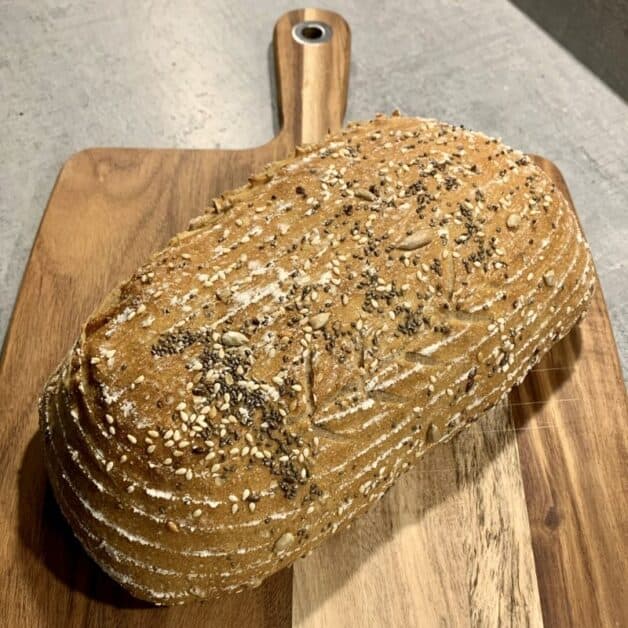
The choice of seeds you put in here can be any combination of seed. I have a preference for sunflower seeds, poppy seeds and mixed seed including sesame. Anything goes really though.
Keep in mind that there may already be a large amount of seed in the malthouse flour. Therefore you can add to it, or simply cover on the top when you bake the loaf.
Quick To Bake Loaf
This bread is a quick easy loaf to make too. Ready in under 3 hours with rising and cooking time included, this is one that can be kicked off in your lunch hour if working from home and then finished off after work.
My comprehensive guide to breadmaking goes in to more detail about the process of proving and shaping bread along with timings. See the recipe card for details.
Malted Brown Bread Recipe
You could make a malted brown bread recipe by substituting the white flour for wholemeal flour. However there is a risk the bread can become too dense. You may want to experiment with different liquids to help this, such as adding milk or milk power to make it a fluffier loaf.
The more dense breads will be similar in taste and texture to a German bread a little like a Pumpernickel loaf, but not made with rye flour. I have a malt and rye recipe for you to try if this is of interest.
What Seeds Go Well with Malthouse Bread?
Whatever you've got in the cupboard, basically.
I like to use:
- Sunflower seeds
- Poppy seeds
- Mixed seeds with sesame for extra crunch
Check your malthouse flour first – it might already be loaded with bits. If so, you can just sprinkle extra on top before baking for that rustic finish.
Baking The Bread
This is best baked in a bread tin. To make sure it does not stick when baking, either line the tin with a greaseproof paper. Otherwise, rub some butter or margarine all around the tin to make sure the bread does not stick when baking.
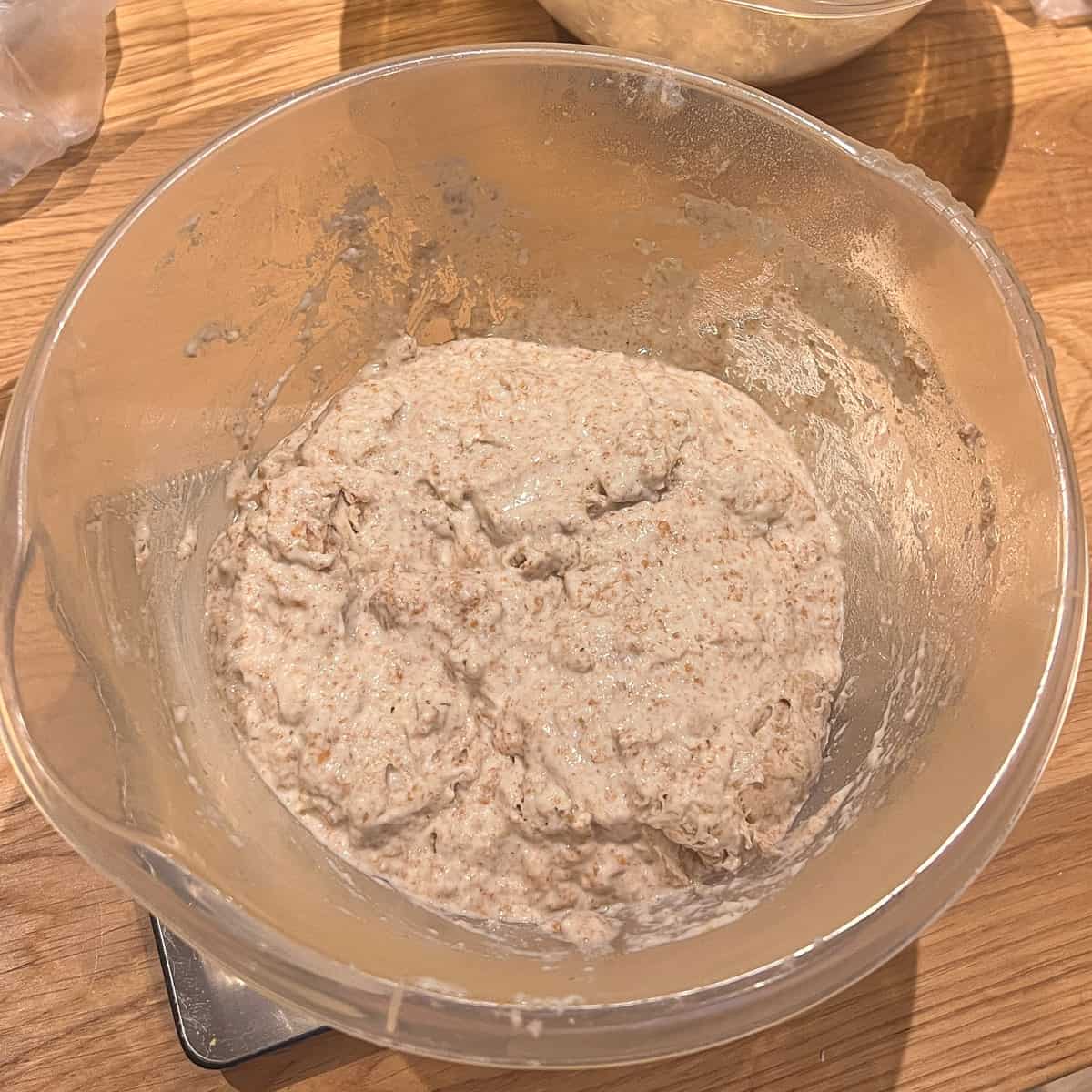
- Step 1: Weigh out all the ingredients and the place in a mixing bowl
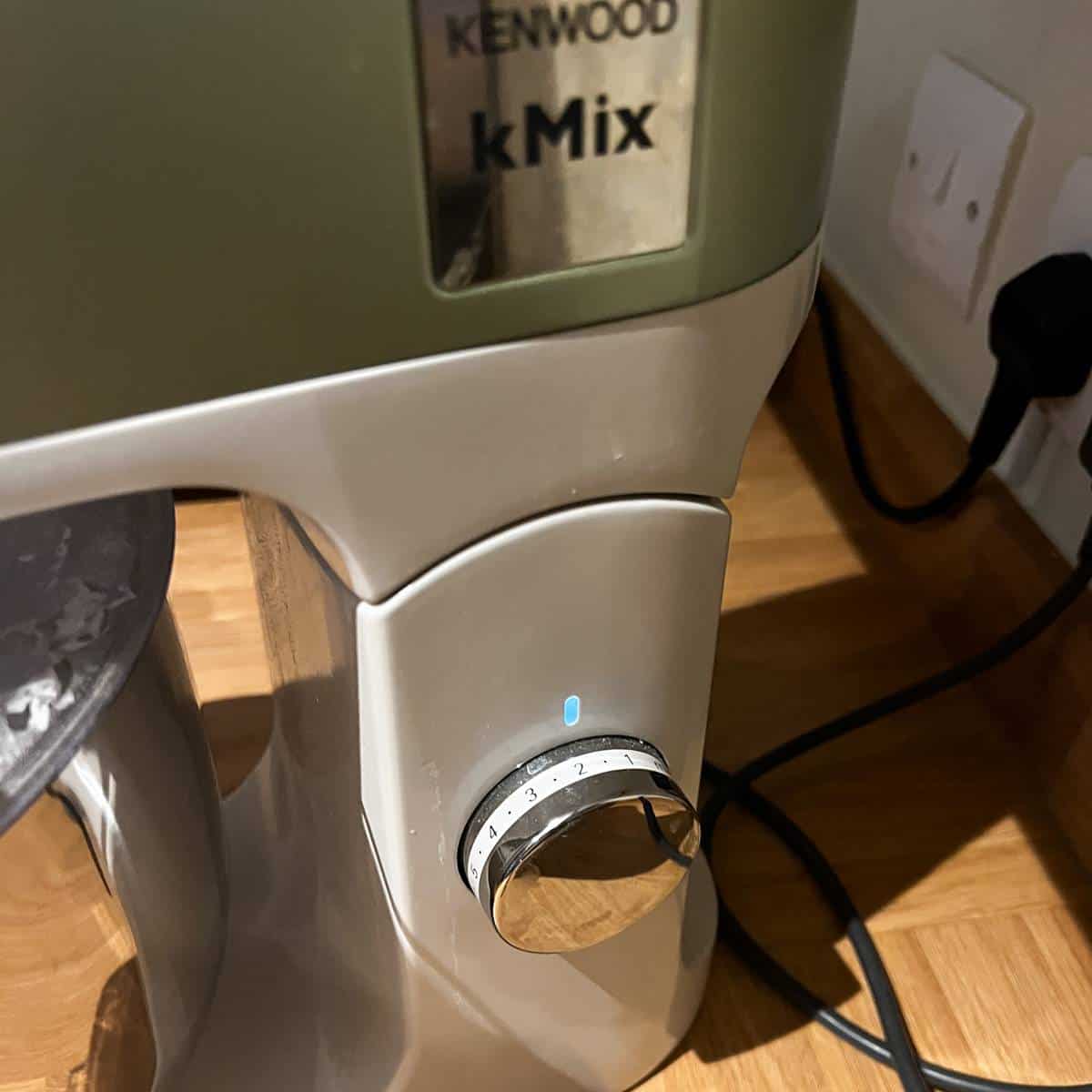
- Step 2: Mix on low for 5 to 10 minutes until the dough becomes firmer. You can also knead by hand.
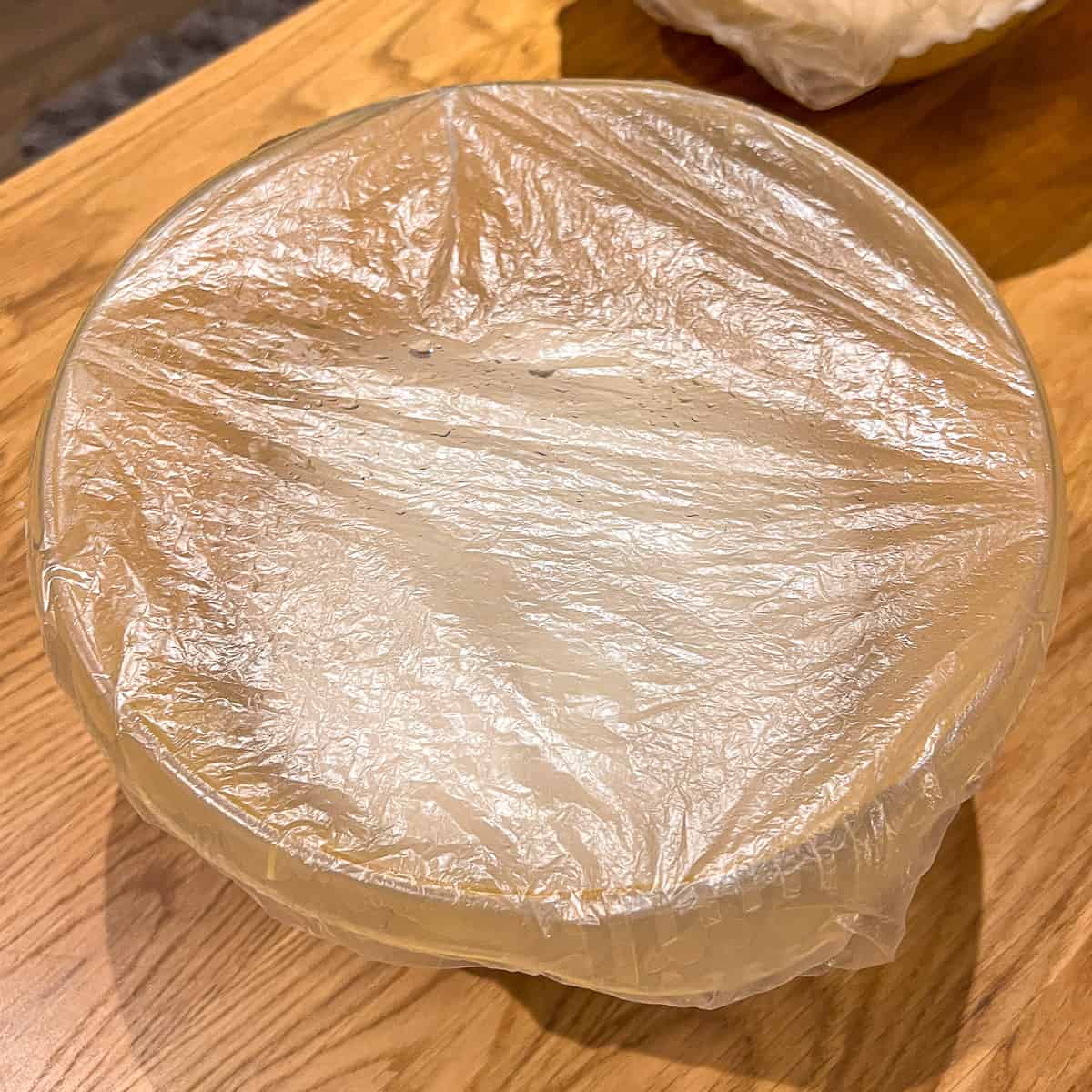
- Step 3: Cover the dough and allow it to rise for an hour or so until just under double in size.
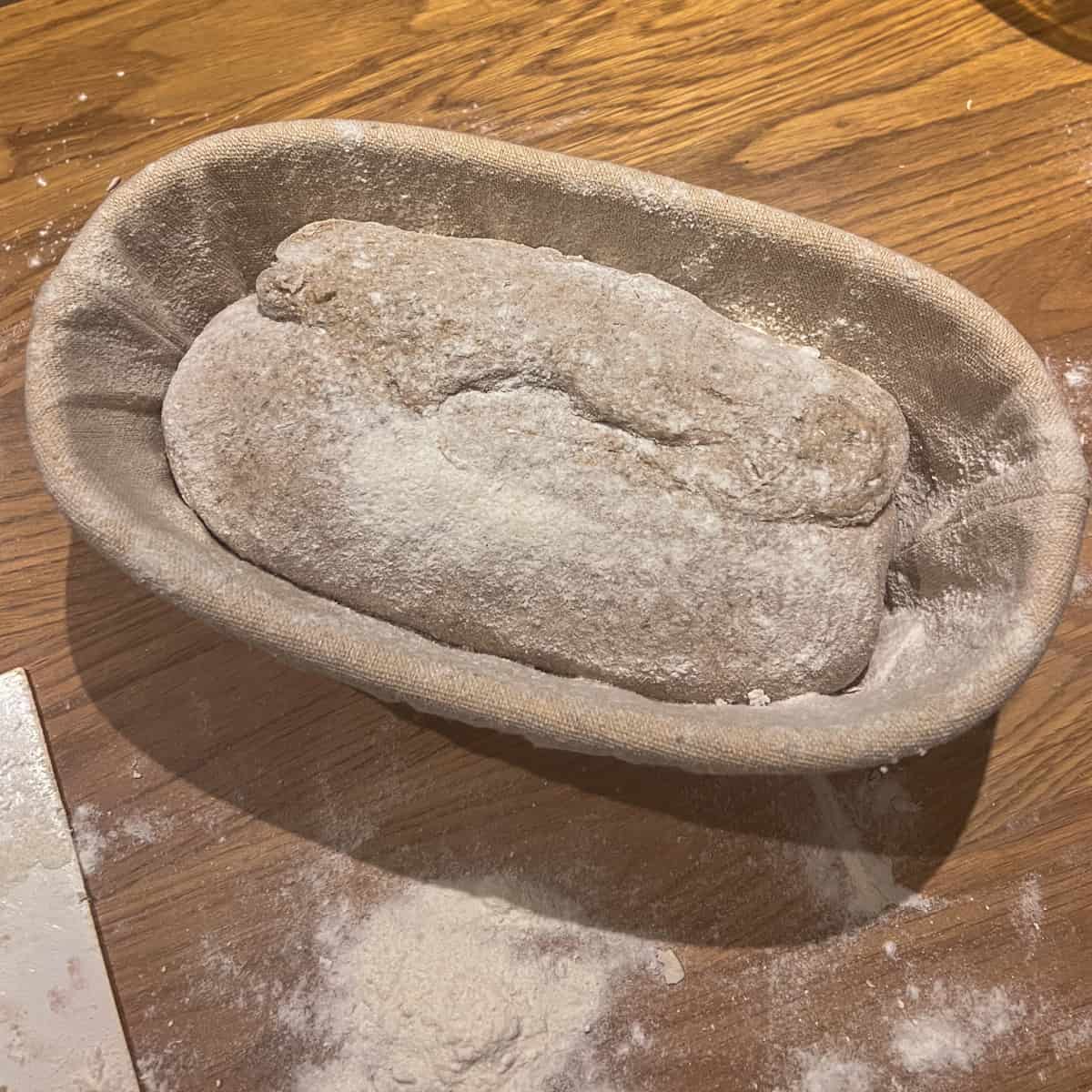
- Step 4: Shape and place into a pre dusted banneton basket. The pre-dusting of the liner can be done with rice flour or semolina flour to stop it from sticking.
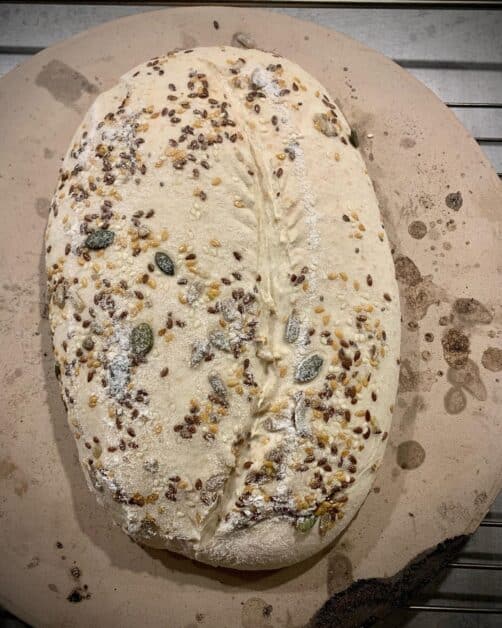
- Step 5: Once proved, open bake in the oven by tipping out onto a baking stone. To bake, place the bread in the oven cooking for 10 minutes at 220C (420F or Gas Mark 7) and then reducing to 200C/390F/Gas6 for 20 minutes
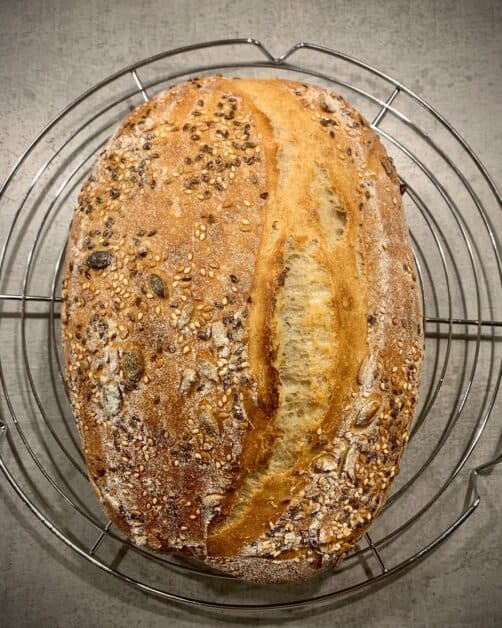
- Step 6: Allow to cool on a wire rack once baked before slicing and enjoying.
Alternative - Baking in a loaf tin
You can bake this loaf in a tin too if you wish. There are a huge range of loaf tins for baking bread in. I am a big fan of the Prestige range. They have a range called the aerolift range of tins which have bumps in the base to give more air to the bottom of a loaf. This will allow air to flow and therefore give a better cooked base of your bread.
When using a tin, bake for 25 - 30 minutes. When cooked, tip out into a wire rack and allow the bread to cool.
FAQs About Malt Flour
Nope. Malt flour is made from malted barley. Malted flour is just flour with malt added in.
It helps dough rise, adds a bit of sweetness, and gives that golden crust. Diastatic versions also help the yeast do its job.
Absolutely. A small amount (say, a teaspoon per loaf) can give your starter a lovely kick and help those bubbles form faster.
They're completely different bakes. Malt bread is a yeasted savoury loaf made with malted barley flour, eaten as you would any sandwich or toast bread. Malt loaf is a dense, sweet, sticky fruit cake made with malt extract and dried fruit, served sliced and buttered. The famous brand is Soreen.
It can do. Most shop-bought malthouse loaves and a lot of malthouse flours have seeds mixed in already, usually some combination of sunflower, poppy, sesame, and linseed. If you're making this recipe at home, the malthouse flour you buy might already contain seeds. If it doesn't, add 15 to 20 grams of mixed seeds to the dough or sprinkle them on top before baking.
Similar recipes to try

The Recipe
Easy Malthouse Bread Recipe With Malt Flour
Equipment
Ingredients
- 1.5 teaspoon Salt
- 1 teaspoon Instant yeast
- 320 ml Tepid water
- 200 g Malthouse flour
- 300 g Bread flour
- 16 g Mixed seeds
Instructions
- Put all dry ingredients in a bowl and make a well in the centre. Keep some of the seeds to one side to sprinkle on the top later.1.5 Tsp Salt, 1 Tsp Instant yeast, 200 g Malthouse flour, 300 g Bread flour, 16 g Mixed seeds
- Pour in the water320 ml Tepid water
- Mix the ingredients together and then begin kneading. Keep going until the dough is springy and transparent without ripping when stretched gently. Knead for 8 to 10 minutes by hand, or 5 minutes in a stand mixer on low speed, until the dough passes the windowpane test (you can almost see through it without tearing the dough). Then set aside and loosely cover leaving for the dough to rise and double in size.
- Cover the dough and leave to rise for around 1 hour, or until just under doubled in size. Then gently shape the dough and place in a proving basket or tin to prove for around 45 minutes. Sprinkle the remaining seeds on the top.
- Preheat the oven to 220°C with a heavy tray on the bottom shelf. When you put the bread in, pour boiling water into the tray to create a burst of steam, then close the door quickly.The bread is done when the base sounds hollow when tapped and the internal temperature reaches 95°C if measured with a probe.For more temperature conversions take a look at my Unit Conversions page.
- When cooked, leave to rest before slicing.
Notes
Nutrition
More posts like this
Comments
No Comments
Leave a Reply