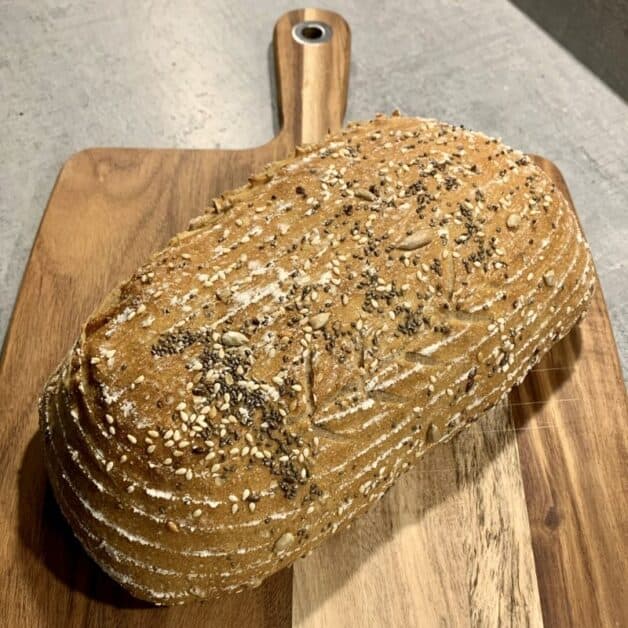
Easy Malthouse Bread Recipe With Malt Flour
A tasty alternative to brown bread
Print
Pin
Servings: 12 slices
Calories: 161kcal
Cost: £3
Equipment
Ingredients
- 1.5 teaspoon Salt
- 1 teaspoon Instant yeast
- 320 ml Tepid water
- 200 g Malthouse flour
- 300 g Bread flour
- 16 g Mixed seeds
Instructions
- Put all dry ingredients in a bowl and make a well in the centre. Keep some of the seeds to one side to sprinkle on the top later.1.5 Tsp Salt, 1 Tsp Instant yeast, 200 g Malthouse flour, 300 g Bread flour, 16 g Mixed seeds
- Pour in the water320 ml Tepid water
- Mix the ingredients together and then begin kneading. Keep going until the dough is springy and transparent without ripping when stretched gently. Knead for 8 to 10 minutes by hand, or 5 minutes in a stand mixer on low speed, until the dough passes the windowpane test (you can almost see through it without tearing the dough). Then set aside and loosely cover leaving for the dough to rise and double in size.
- Cover the dough and leave to rise for around 1 hour, or until just under doubled in size. Then gently shape the dough and place in a proving basket or tin to prove for around 45 minutes. Sprinkle the remaining seeds on the top.
- Preheat the oven to 220°C with a heavy tray on the bottom shelf. When you put the bread in, pour boiling water into the tray to create a burst of steam, then close the door quickly.The bread is done when the base sounds hollow when tapped and the internal temperature reaches 95°C if measured with a probe.For more temperature conversions take a look at my Unit Conversions page.
- When cooked, leave to rest before slicing.
Notes
Hydration may need adjusting by brand. Shipton Mill and Doves Farm malthouse flours absorb water slightly differently. If the dough feels dry and stiff during kneading, add water a tablespoon at a time. If it feels slack and sticky, add flour. Aim for a smooth, springy dough that holds its shape when shaped.
Test for doneness, not time. The bake time is a guide. Tap the base of the loaf when you take it out, it should sound hollow. If you have a probe thermometer, the internal temperature should be 95°C or above. An underbaked loaf will feel heavy and have a gummy crumb when sliced.
Cool completely before slicing. Cutting into a warm loaf releases steam from the crumb and makes the bread dense. Leave it on a wire rack for at least 45 minutes. The crust will soften slightly as it cools, which is normal.
Storage. Wrap in a clean tea towel or a bread bag and keep at room temperature for up to three days. Don't refrigerate, it dries the bread out. For longer storage, slice and freeze in portions, then toast straight from frozen.
Nutrition
Serving: 100g | Calories: 161kcal | Carbohydrates: 32g | Protein: 5g | Fat: 1g | Saturated Fat: 0.2g | Polyunsaturated Fat: 1g | Monounsaturated Fat: 0.4g | Sodium: 295mg | Potassium: 78mg | Fiber: 2g | Sugar: 0.2g | Vitamin A: 4IU | Vitamin C: 0.1mg | Calcium: 24mg | Iron: 1mg
