


Affiliate Disclosure As an Amazon Associate I earn from qualifying purchases. This post may contain affiliate links. For more details, refer to my Disclaimer page.
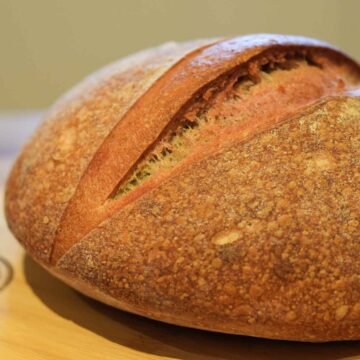
Great for the gut and a little sweetness added to this bread. This is a recipe for Maple Syrup Rye Sourdough Bread.
The maple syrup rye sourdough bread recipe came out of experimenting with something new. I like the flavours and with most sourdough breads, things just work and ingredients can be added to make them interesting.
This bread serves really well with a cheeseboard on at Christmas or other special occasions.
As with all sourdough breads, the culture in the starter is the make/bake or break for the success of baking these breads. If the starter is not performing, the bread will not work. It will not rise and it will be flat and inactive. Getting your starter right is the way to be successful in baking any sourdough.
If you are looking for bread dough styles and detailed instructions how to make it, try my bread dough calculator. This offers all weights and measures to get a great dough.
Contents
Ingredients for Rye Sourdough
The ingredients for this bread are the super simple list for a sourdough bread:
- Flour - this recipe is a split of 75% strong white bread flour and 25% Rye flour. We split the flours as making the loaf with only rye flour will result in a very dense loaf. This is a method they do on the continent and can be rewarding but I prefer to mix it between the two to allow for a less dense crumb.
- Water - I prefer to use water which has previously boiled and then cooled down. The ideal water temperature for baking bread is about 25 to 30 Celsius.
- Starter - This is the active ingredient to make your bread rise. Sometimes referred to as a poolish or a culture. Maintaining an active starter is all part of the fun of baking sourdough bread. If you don't have a starter, you can make one from scratch or buy a freeze dried starter to help get you started.
- Maple Syrup - Opt for a basic Canadian maple syrup. You can substitute this with honey if you don't have maple syrup.
- Salt
- Seeds (optional)
See the recipe card at the bottom of the page for details of amounts.
Instructions to make Rye Sourdough
The bread making process for a sourdough takes time in the long run but each step does not take long. It is the waiting time between steps where the hours pass by. Time and patience is a key part of baking a successful sourdough.
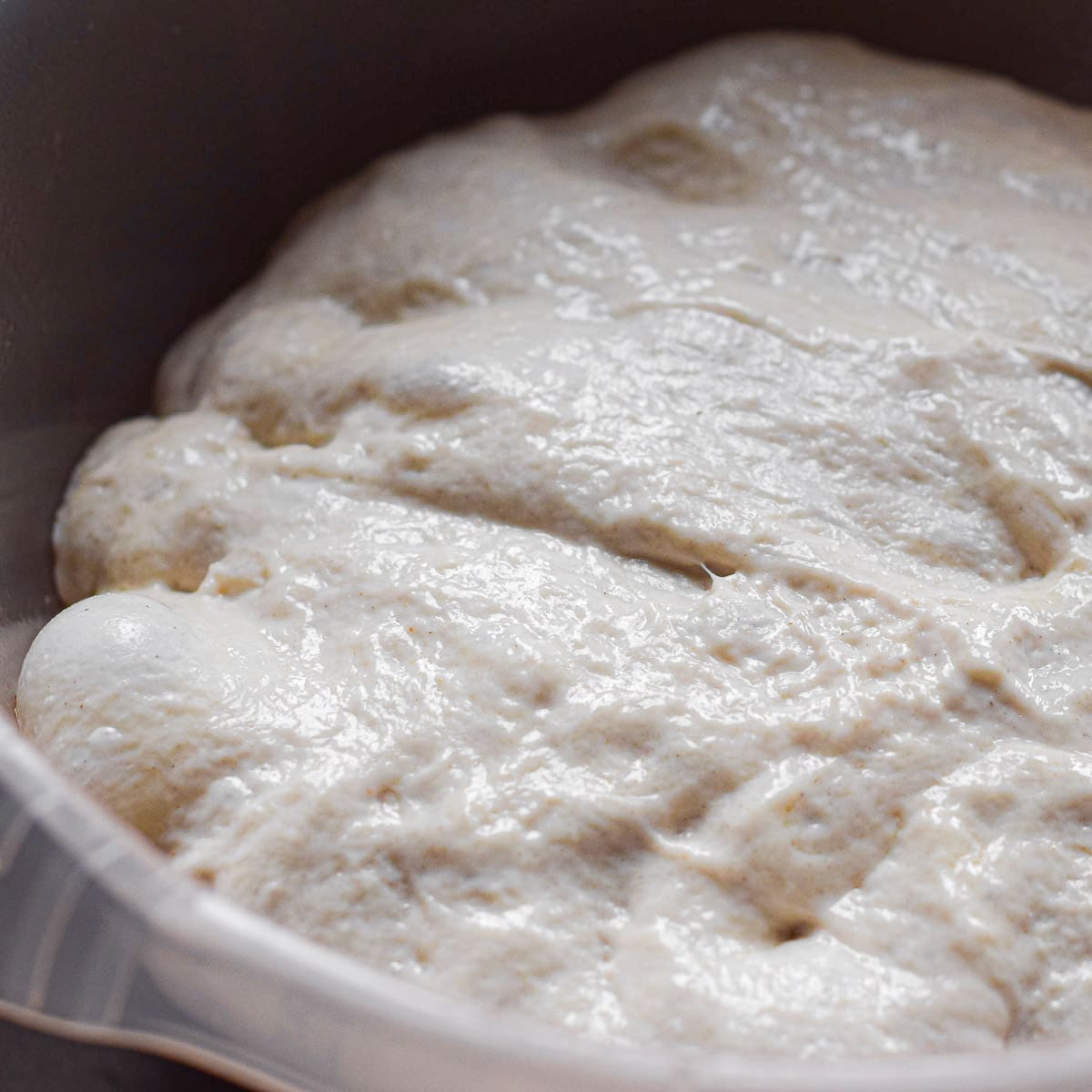
Mix the flour and water together and leave it to autolyse for around 1 hour.
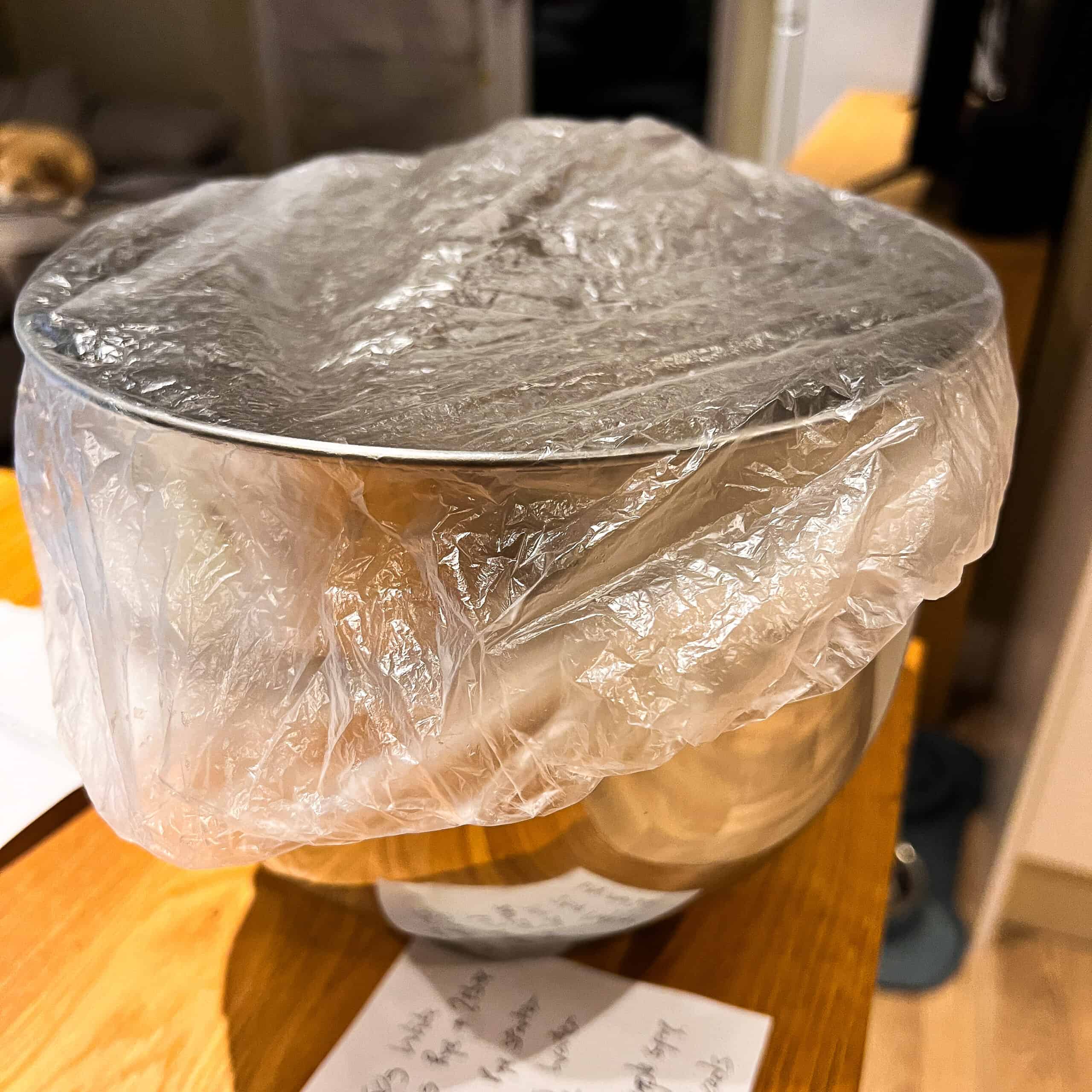
Add in the maple syrup and starter and leave to stand. Add the salt.
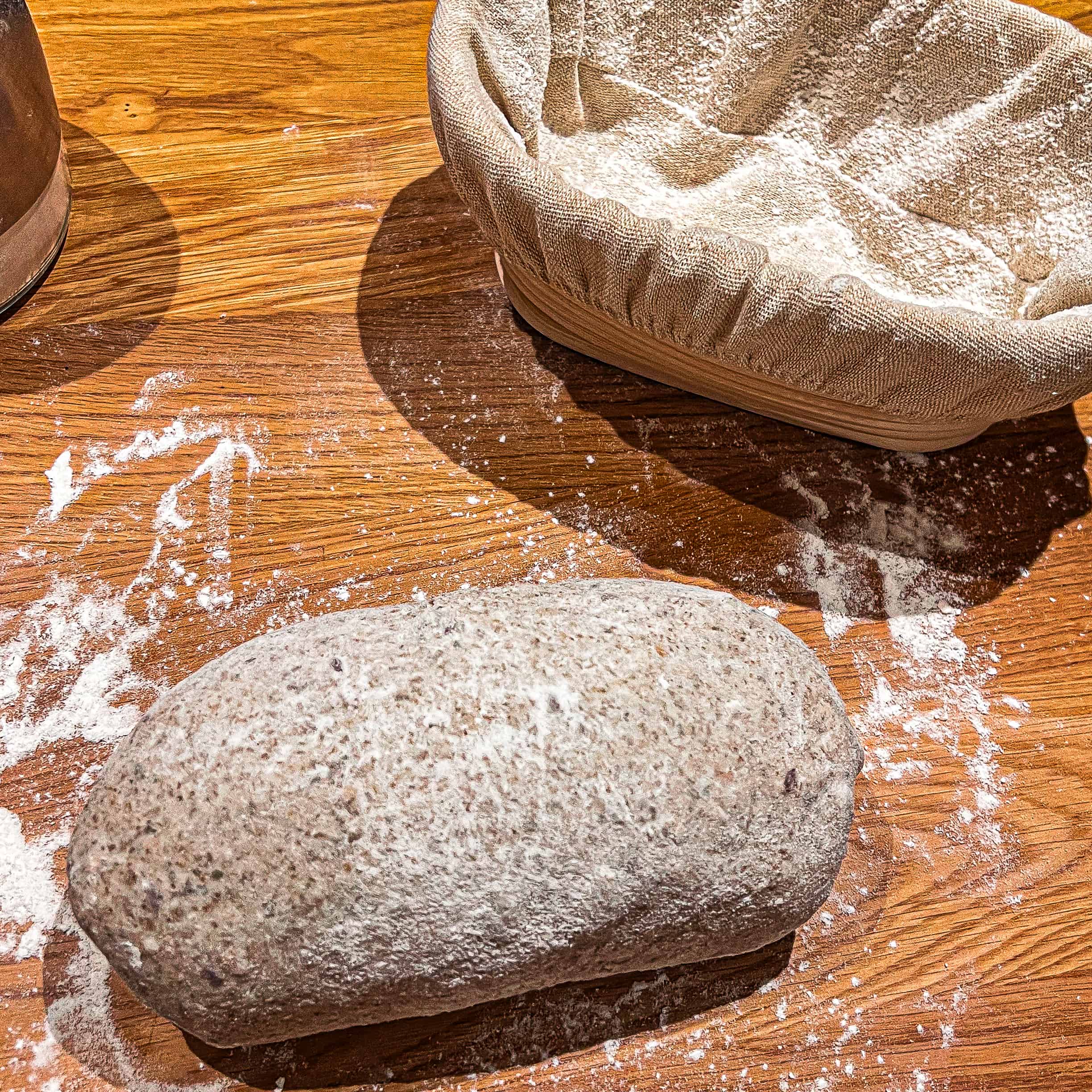
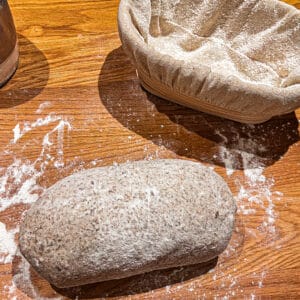
Once the initial prove has taken place, shape into a rectangle and place into a banneton.
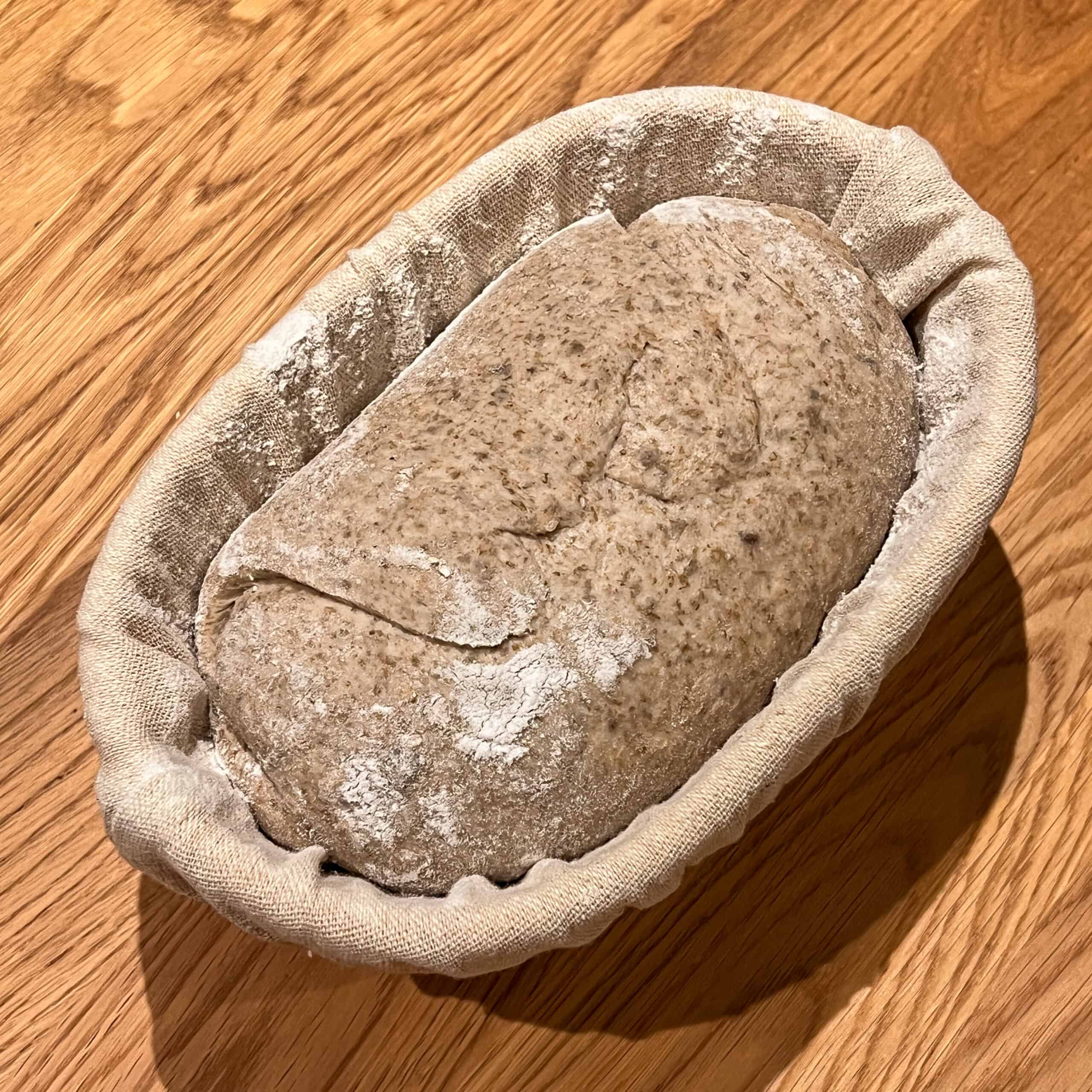
Let this prove overnight in the fridge.
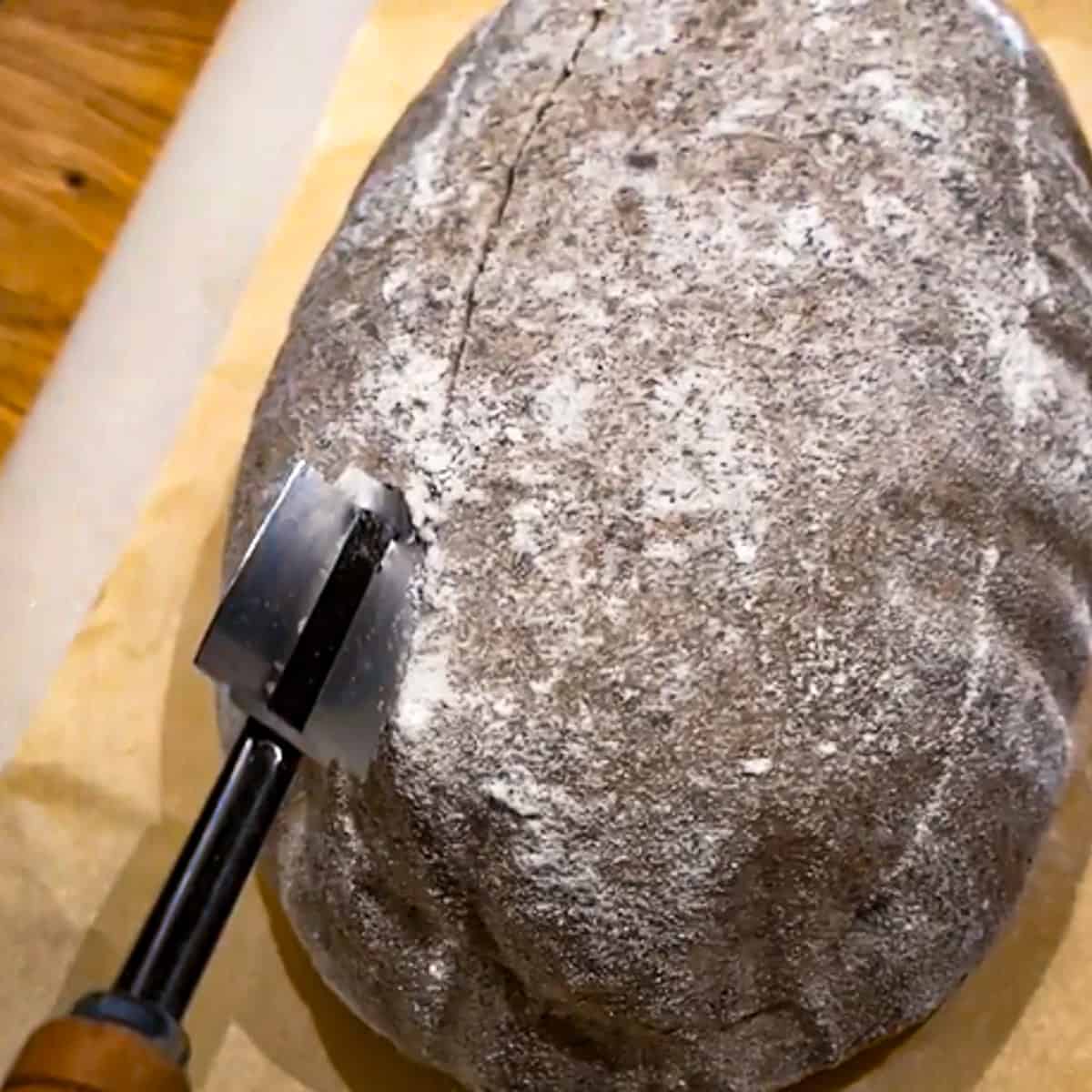
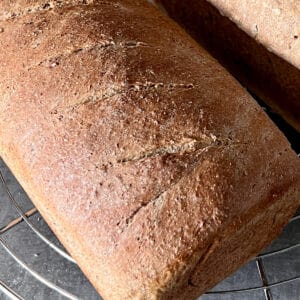
Score with a blade or lamé to get the ridge effect.

Bake at 200C (390F) or until golden on the top and hollow when tapped underneath. This will take around 25 to 40 minutes.
Preparing the starter
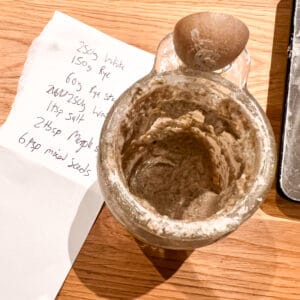
This bread is made from an off shoot of my regular San Francisco sourdough starter. I took some of the discard after a feed and then began to feed that with rye flour. This was a pure experiment but after a few days I had a fully active starter again capable of a 1:2:2 ratio feed.
This means that for every one of starter, it can take 2 water and 2 flour and successfully rise within 4 hours and be ready to go to work and bake this maple syrup rye sourdough bread.
What is a 1:2:2 ratio of starter?
In my example, a 1:2:2 means that for every one of starter, it can take 2 water and 2 flour and successfully rise within 4 hours. So if I have 1 table spoon of starter, I can mix in 2 table spoons of water and 2 tablespoons of flour and mix it up. This will rise to double the size in the space of 4 hours and be ready for use.
A good starter will be able to contend with 1:2:2 or even 1:4:4 ratios to have a successful bake.
Another good way to tell if your starter is ready is to do the float test. When you add a blob of starter to some water, does it float? If so then it means it has plenty of air in those little starter particles moving around and therefore they are ready for action.
Maintaining your starter
Keeping a sourdough starter is a bit of a task however I've got a post dedicated to help you grow one from new. This also contains lots of information about how to maintain a starter and what to do if things don't go to plan. Check out the article to help you get to grips with understanding how starters work before you delve into making the maple syrup rye sourdough bread.
Proving Maple Syrup Rye Sourdough Bread
The art of sourdough all comes in the proving of the bread and Maple Syrup Rye Sourdough Bread is no different at all. In fact, this one took me a lot longer to prove than I was anticipating due to how new the starter was. The prove time was over 24 hours (with 8 hours of that being left over night on the top). As we are in December here in the UK, the temperatures in the house do not get too high and so it takes a longer time to prove the bread.
Placing it in a banneton covered for a longer period of time before going for the full cold prove in the fridge made the Maple Syrup Rye Sourdough Bread recipe starter work a bit more. I've found the longer a prove takes to happen the more the starter is working and the release of the flavour becomes more intense.
Fair word of warning though, you can over prove a bread and you can also make it taste beyond nice to the point that the sourdough is over powering and off putting. The ideal window is between 24 to 48 hours. Anything less may result in an under proved loaf. Anything more and the sour taste will be too much.
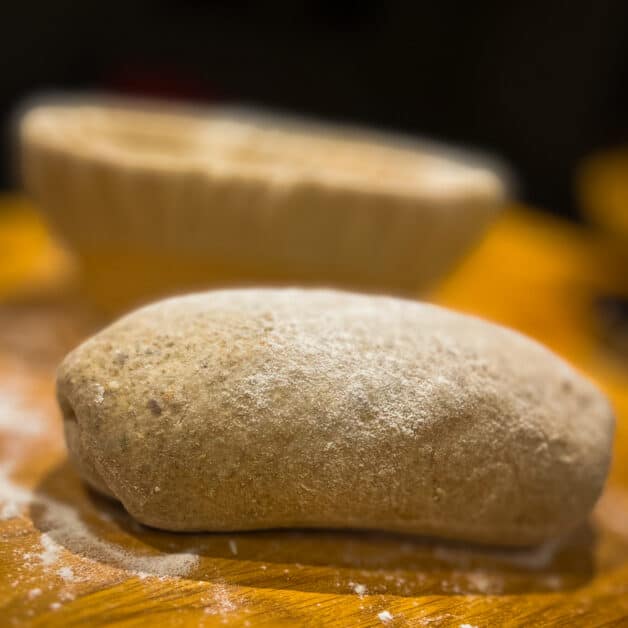
Baking the rye loaf
Prior to the bake it is good practise to score the top of the sourdough bread by using a sharp knife or bakers lamé to score along the surface. When scoring, hold the blade at a 45 degree angle to the top of the bread.
There are lots of lamé types to pick from. If doing a basic bake then a standard lamé will suffice, try one with interchangeable blades so they are easy to change over.
If you are looking to do designs on the loaf surface prior to cooking, you can use one of these shorter "blade only" lamés which allow for more accurate detailing.
Scoring will open up a weaker area of the crust allowing the air to escape and therefore the bread to rise. This also gives the sourdough crust ear effect which is the way a bread rises familiar to most bakers. A good ear shows it has risen and the bake is a success.
Help! My sourdough didn't rise properly
Do not fret if the bread doesn't rise. Baking sourdough is a learning experience and takes time and practise. Even those of us who have been doing this for years still have the off day.
There are plenty of reasons why a sourdough does not rise. Most common factors are:
Inactive starter - See my sourdough starter maintenance post
Under or over proved loaf - If the starter is no good then you can use the discard for another recipe. You can add it to other bread recipes too such as my best of both malthouse loaf.
Ambient temperature - Depending where you are in the world will have an effect on the bake time. Make sure the sourdough starter is also kept warm to suit the temperature of where you are.
Substitutions and additions
Maple Syrup - If you don't have any maple syrup you can use honey or golden syrup. It will be a little thicker but will still add the sweetness.
Seeds - You do not need to add seeds to this if you don't want.
Berries - Try some berries or even my Cranberry Sourdough for a twist.
Rye Flour - While it no longer becomes a rye loaf, you can substitute this for wholemeal flour.
Top tip
Use a different flour to that in the dough to stop the dough sticking to the banneton. So if using bread flour or rye flour, dust the banneton with rice flour as this will not get absorbed as quickly and makes it easier to work with.
Serving Suggestions
This Maple Syrup Rye Sourdough Bread offers a sweeter taste that a standard bread due to the maple syrup included. Therefore I highly recommend this with a cheese selection and accompany with crackers. You could try my sourdough starter discard crackers recipe for some inspiration.
It makes for an excellent post Christmas dessert along with some mulled wine and selection of cheeses.
For a standard sourdough bread, use 15% starter for the amount of flour you are using. So 500g of flour would call for around 75g of starter. Check out my bread hydration calculator for help and advice to getting the right ratios.
The starter does have an effect on the taste of the loaf and also how much a bread will rise. Not enough starter will mean the bread will take longer to rise (or sometimes not at all). Too much starter and the tangy sourdough flavour will become overpowering.
The rye flour is quite absorbent and may take more water than the recipe suggests. My recommendation is to gradually add water 15ml (1 tbsp) at a time giving a few minutes of mixing between additions. It is easier to wet a dry dough than dry a wet dough.
You might like these

The Recipe

Maple Syrup Rye Sourdough Bread
Equipment
- 1 Banneton basket For proving bread
Ingredients
- 250 g Strong white bread flour
- 150 g Rye flour
- 250 g Warm water
- 1 teaspoon Salt
- 2 tablespoon Maple syrup
- 3 tablespoon Mixed seeds Optional
- 60 g Rye sourdough starter
Instructions
Prep your starter
- In the days before, feed your starter to the point that on the latest feed, it will be ready on a 1:2:2 ratio within 4 hours of a feed. This means when feeding 1 part starter to 2 parts water, 2 parts flour it will rise to double its size in 4 hours.

Bread recipe
- Mix both the flours, salt, seeds all together to get your dry mixture.250 g Strong white bread flour, 150 g Rye flour, 250 g Warm water, 1 tsp Salt, 2 tbsp Maple syrup, 3 tbsp Mixed seeds, 60 g Rye sourdough starter
- In a measuring jug, add the water and maple syrup along with the starter. This is the wet mix
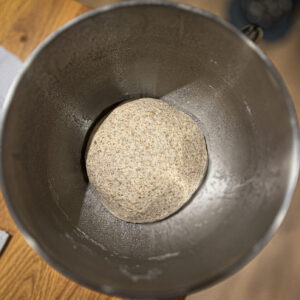
- Gradually add the wet mix into the dry mix and knead for 5 to 10 minutes by hand or mix in a mixer with a dough hook for 5 minutes. Rest for 5 minutes and then repeat. You should be left with a smooth dough.
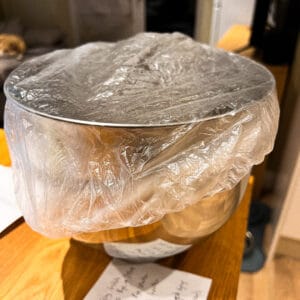
- Leave this to prove covered for 2 to 5 hours all depending on your ambient room temperature. This varies from place to place but then end goal is you are looking for the dough to increase in size (just short of double in size) and maybe a few bubbles on the top.
- At this point, lay out a bit of flour on a work surface and in to a banneton. Use rice or semolina flour in the banneton (anything other than bread flour or rye flour to stop it sticking).Shape the bread and place in the banneton.Place this in the fridge covered over night or up to 24 hours.
Baking time
- When the time comes to bake, preheat the oven for at least 30 minutes. I bake on a baking stone at around 200℃ (390℉) but if baking in a dutch oven, preheat this too.Turn out the bread from the banneton and score along the top of the dough at a 45° angle. Feel free to do a fancy design!
Baking stone
- Drop 3 or 4 ice cubes on the stone at the same time as putting the bread in. Bake for 30 to 40 minutes at 200℃ (390℉) until a nice brown crust has developed and the bread sounds hollow when tapped underneath.
Dutch oven
- At 200℃ (390℉), bake for 20 minutes covered in the dutch oven and then lift the lid off and bake for another 20 to 25 minutes until a nice brown crust has developed and the bread sounds hollow when tapped underneath.
Notes
Nutrition
More posts like this

5 responses to “Rye Sourdough with Maple Syrup”
-


Great use of leftover cupboard ingredients! -
Saw this recipe and tried it to use up a load of leftover wholemeal. Worked well although it was a bit dry. However I think I need to try a wetter dough next time and it will be better.-
Hi Tim,
As it is a wholemeal or brown flour, I’d recommend adding a bit more water to the mix or a splash of milk. Try adding about 25ml increments until the dough is a bit more sticky.
-
-
Hi! I dont see a baking temperature on the recipe.
-
Hi Melissa,
Thanks for letting me know.
Go for 200C (390f). I’ll update the recipe accordingly.Also, thank you. You are my 100th comment on the blog 🥳
-


Leave a Reply