


Affiliate Disclosure As an Amazon Associate I earn from qualifying purchases. This post may contain affiliate links. For more details, refer to my Disclaimer page.
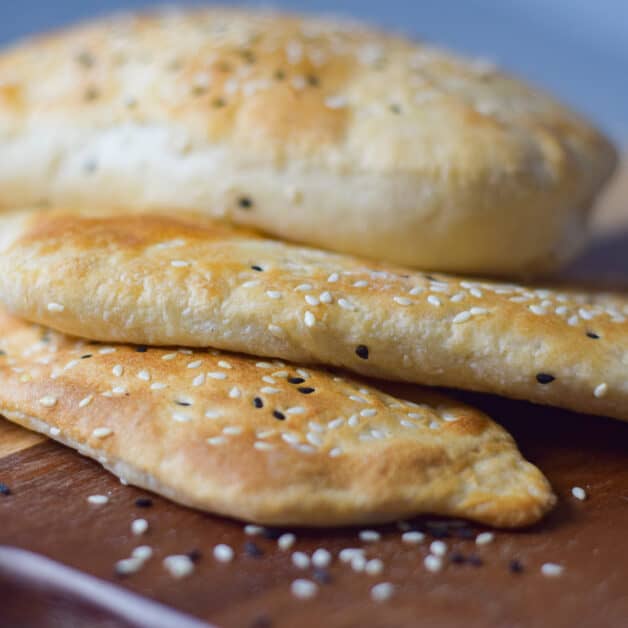
Shaobing is a layered Chinese flatbread, traditionally baked, topped with sesame seeds, and eaten as a breakfast or street food across Northern China. The name (烧饼, pronounced shao-bing) translates roughly to "baked cake". The defining feature is the lamination: thin sheets of dough brushed with an oil-and-flour paste, rolled and folded so the bread bakes into separate flaky layers.
This recipe makes six shaobing in just under an hour. The method is straightforward once you understand the folding, and the result is a crisp, sesame-topped flatbread that holds up to fillings, dips, or a fried egg. I make these as a weekend breakfast bread and they have become a regular in our house.
Contents
What Is Shaobing?
Shaobing is a baked, layered flatbread from Northern Chinese cuisine, particularly associated with Shandong province. Different cities have their own famous versions:
- Zhoucun shaobing from Shandong is paper-thin, fully sesame-covered, and famously crispy.
- Huangqiao shaobing from Jiangsu is rounder and slightly thicker, with a longer-keeping crumb.
- Beijing-style shaobing is the more common breakfast version, similar to what this recipe produces.
The bread has a history going back to the Eastern Han Dynasty (25 to 220 CE). According to Chinese legend, it was brought from the Western Regions (Central Asia) by General Ban Chao and originally called hubing (胡餅). It is considered a relative of Persian and Central Asian naan and Near Eastern pita, all of which share the layered, oven-baked flatbread tradition.
For more on flatbreads in different traditions, see my easy pitta bread recipe and my easy homemade naan bread.
Why this recipe works
I've found there are three important things to make Shaobing work. The points where most home bakers go wrong:
- The water temperature. Around 35°C is the sweet spot. Too cold and the yeast is sluggish; too hot and it dies. Mixing a small amount of boiled water with cold tap water is the quickest reliable method.
- The oil-and-flour paste. Heating self-raising flour in oil until it smells sweet (around 5 minutes) cooks out the raw flour taste and creates the layer-separating paste. Skipping this step gives you a dense, single layer bread.
- The lamination. Folding the dough into thirds twice creates the layers that puff in the oven. Cut the folds short and you lose the flake. This is the key to great Shaobing.
🥘 Ingredients for Shaobing
- Flour - A simple bread flour will work for Shaobing flatbread. As the bread is layer upon layer, the air will sit between causing it to fluff out. There is also a filling which is made from self raising flour mixed with oil, so you will need both types of flour for this recipe.
- Water - The ideal temperature for the water is around 35C. I much prefer to use cool boiled water. The recipe does state 50ml cold water and 70ml boiled. This is a quicker way to get the right water straight away. However you can use the full 120ml directly from the kettle but just let it cool to the right temperature first in a jug.
- Yeast - For this recipe I use instant yeast. This can be 1 packet of 7g instant yeast or measured out in teaspoons. You can also use fresh yeast. If you are using fresh, mix this in with the water before use. My yeast of choice is the Allinsons Easy Bake yeast which is a great price and just works.
- Salt - Regular table salt will work for this recipe. Salt can stop yeast from working so be sure to stick the to right amounts.
- Oil - I've tried both vegetable oil (rapeseed oil) and olive oil for this recipe. The olive oil gives a lighter taste and texture but be sure to use refined olive oil if this is what you use. Extra virgin olive oil seems to give a distinct taste taking away from the bread so would not recommend that. For first time attempts I would recommend to sticking with regular vegetable (sunflower oil or rapeseed oil).
- Seeds - The topping of this bread is the seeds that the dough is rolled in. White sesame is traditional. I also mix in a few nigella seeds (sometimes called black onion seeds) for visual appeal, which is a personal touch rather than the real authentic deal. Traditional Shaobing is usually all sesame, sometimes mixed white and black sesame. Both look good. If you want to stay closer to traditional, use all-white sesame seeds.
For the full ingredients along with amounts be sure to look at the recipe card at the bottom of the post.
This Shaobing bread recipe is a relatively easy recipe to put together and offers a nice crunchy sesame seed bite to it due to the mixed seeds rolled on to the dough just before cooking.
🔪 Instructions how to make Chinese flatbreads
Unlike a Chinese breadstick recipe, this Asian flat bread requires folding and rolling of the dough (called laminating) to make layers. When cooked, the dough flakes apart and makes a nice layered effect on the texture. Repeating this process allows for a gentle build up of layers, separated by the oil mixed with flour as the paste filling and allows the Shaobing to get its unique texture.
- Mix and knead. Combine the dough ingredients and knead for a couple of minutes until a ball forms. It will be sticky, so wet or lightly oiled hands help. A food mixer with a dough hook works well here. Wrap the ball in oiled clingfilm and rest for 30 minutes.
- Make the oil paste. While the dough rests, heat the oil in a pan and stir in the self-raising flour. Cook gently for around 5 minutes until it smells sweet and takes on a little colour. Pour into a bowl and let it cool fully. This is the filling that will separate your layers.
- Roll and paint. After the 30 minute rest, roll the dough out into a rectangle around 12 by 16 inches (30 by 40cm). Brush the cooled oil paste evenly across the surface using a pastry brush. Avoid soaking the dough through; a thin even layer is what you want.
- Roll, slice and shape. Roll the rectangle tightly from the long edge into a sausage. Slice into 6 even portions.
- First lamination. Flatten each portion into an oval and fold it into thirds, folding one end over the middle and the other end over the top. Repeat the fold-into-thirds for each of the six pieces. Then do a second round of folds across all six pieces. Two rounds of lamination is the target.
- Second rest. Let the laminated portions rest for 10 to 15 minutes. While they rest, heat the oven to 200°C (180°C fan, Gas Mark 6).
- Sesame and shape. Spread the sesame seeds on a flat surface. Roll the top of each portion in the seeds, pressing gently so they stick. Roll out flat with a rolling pin into a shaobing shape (around 6 by 4 inches / 15 by 10cm) and place on a lined baking sheet.
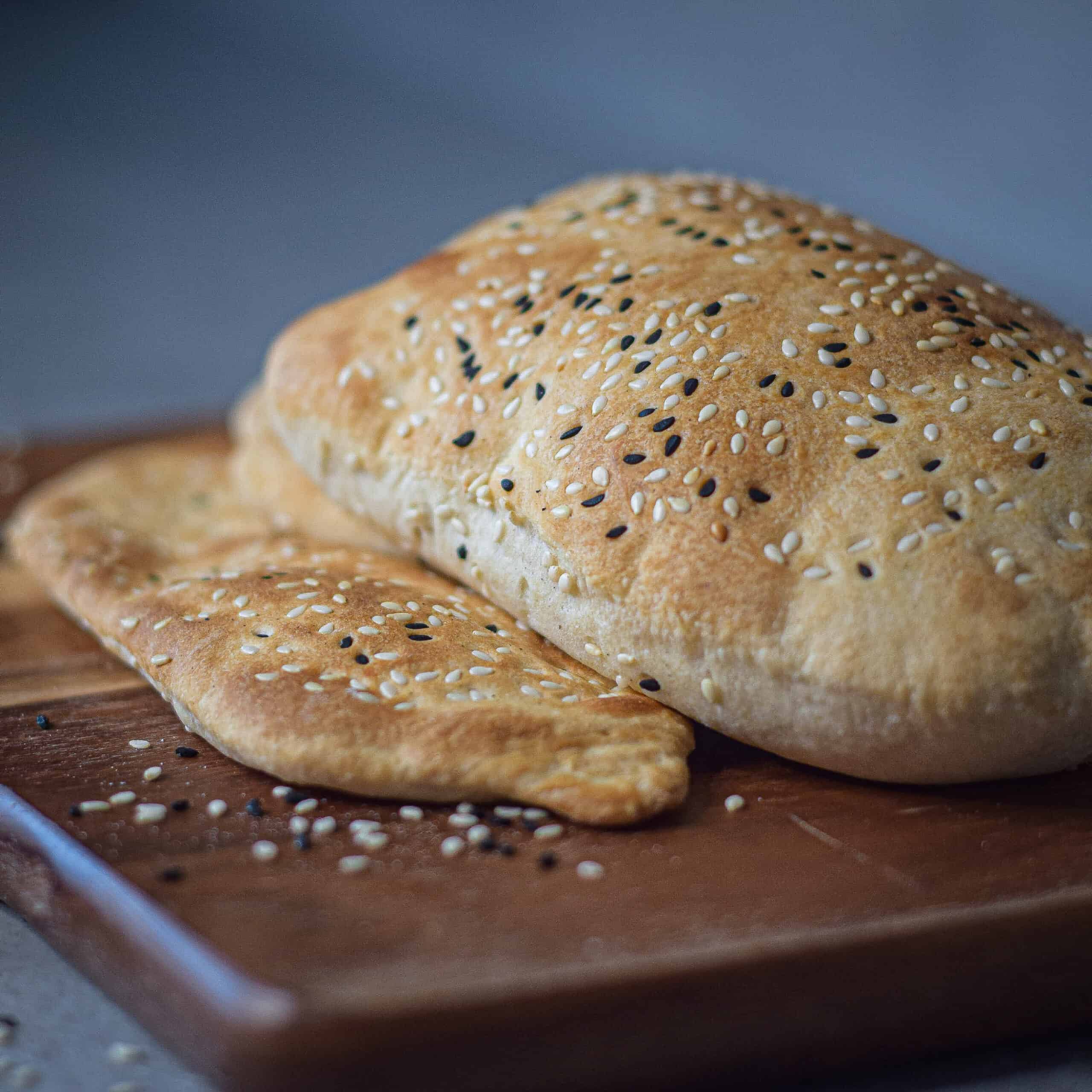
- Bake. Brush the tops with a little more oil and bake for around 10 minutes until golden brown. The Shaobing should puff up visibly during baking. They are done when the tops are an even gold colour and the bread feels light and hollow when lifted.
How to eat Shaobing
In China, shaobing is breakfast and street food. The traditional pairings are:
- With soy milk (savoury or sweet) for a classic Northern Chinese breakfast.
- Stuffed with a youtiao (long fried dough stick), giving a soft-crunchy contrast inside the bread.
- With congee or a steamed egg dish as a dipping bread.
- Filled with braised beef, pork or scallions for a lunchtime hand pie.
- With hot pot in winter, in the Beijing tradition.
At home in the UK, shaobing works well anywhere you would normally reach for a pitta or naan. A few combinations I come back to:
- Split and filled with a fried egg and chilli oil for breakfast.
- Stuffed with shredded leftover BBQ meat. The BBQ smoked gammon works particularly well, cold, with a sharp pickle.
- Alongside BBQ chicken and garlic kebabs for a fusion plate.
Variations
Shaobing is a category, not a single recipe. Once you are confident with the plain sesame version, the technique adapts to:
- Sweet shaobing with red bean paste or black sesame paste added between the layers before the final roll.
- Spring onion shaobing with finely chopped spring onion and a pinch of five-spice mixed into the oil paste.
- Savoury filled shaobing stuffed with braised beef, scallions or pork floss, sealed shut, then rolled and baked.
- Spiced shaobing with Sichuan peppercorn, salt and a little sesame paste in place of plain oil.
The method stays the same; the filling changes.
🥄 Handy Equipment
There are three pieces of equipment I would recommend which will make this recipe much easier to make:
Pastry brush - The oil on dough can become quite messy if pouring on so a brush is essential to getting an even spread. There are silicone brushes which are available and while these are great for cleaning, I don't really rate them for spreading anything across dough. I'd much rather recommend a bristle pastry brush which will give you a much smoother finish to your oil spread (or egg wash in other recipes).
Danish whisk - These very distinct looking whisks give a great airy mix to water and flour at the early stages of making dough. I used to use a plastic spatula but on discovering the Danish whisk, I much prefer to use these now. These are the whisks usually with a wooden handle and then a metal spiral whisk head to allow lots of air into the dough.
Rolling pin - The simple rolling pin is a fundamental piece of equipment for a bakers drawer. This Shaobing recipe calls for layers of dough to be rolled and then oiled and rolled again. This is possible to do by hand but a wooden rolling pin or plastic rolling pin would make life a lot easier.
A good stand mixer or dough mixer can take the kneading out of the equation if you make bread regularly.
Troubleshooting shaobing
My layers fused together and the bread is dense. The oil paste was either too thin, soaked into the dough, or missed patches. Spread a thin but complete layer across the rolled dough.
The shaobing did not puff up. Either the yeast was dead (check the water temperature), the second rest was skipped, or the oven was not hot enough at the start. 200°C should be reached before the bread goes in.
The bread is hard or tough. Over-kneading at Step 1, or rolling out too thin at Step 7. Two minutes of kneading is enough; the lamination does the rest.
The seeds fell off in the oven. The seeds need to be pressed in firmly when rolling. A light brush of water on the dough before the seed roll helps them stick.
The bottoms are pale and the tops are dark. Use a lined baking sheet rather than placing directly on the rack, and check your oven's heat distribution. Some ovens benefit from a quick switch to fan-bake for the last 2 minutes.
Shaobing FAQ
Shaobing is a mild, slightly sweet baked flatbread with the toasted nutty flavour of sesame on top. The layers give a flaky, lightly crisp texture on the outside and a soft interior.
Roughly "shao-bing", with the first syllable closer to "shaow" (rhyming with "now") and a soft "bing" on the end. In Mandarin pinyin: shāobǐng.
No. Scallion pancakes (cong you bing) are unleavened, pan-fried and flaky from oil layers alone. Shaobing is leavened with yeast, baked in an oven, and topped with sesame seeds.
You can make a flatter, denser version using only the laminated oil paste for separation, but you lose the puff. The yeasted version is closer to traditional Beijing-style shaobing.
Yes. Cool fully, bag in pairs, freeze for up to 2 months. Reheat from frozen in a 180°C oven for 4 to 5 minutes.
Naan is traditionally cooked in a tandoor (clay oven) at very high heat and is typically softer and more pliable. Shaobing is oven-baked at lower temperatures, layered through lamination, and sesame-topped. Both share a common ancestor in Central Asian baked flatbreads.
Some Chinese supermarkets in larger cities (London, Manchester, Birmingham) stock frozen shaobing or sell freshly baked from in-store bakeries. Outside those, home baking is the most reliable option.
❄ Storing Shaobing flatbreads
At room temperature: Shaobing keeps well for 2 to 3 days in an airtight container or bread bag. The oil content helps them stay softer for longer than a plain unleavened flatbread.
In the fridge: Not recommended. Refrigeration dries out flatbread quickly and firms up the layers. Room temperature or freezer is better.
To freeze: Cool the shaobing fully after baking, then bag them in pairs in freezer bags with the air pressed out. They keep for up to 2 months. Defrost at room temperature for an hour, or refresh straight from frozen in a 180°C oven for 4 to 5 minutes.
For more on freezing baked goods, see my guide on how to freeze bread.
❤ Shaobing Rating
Top marks for ease of bake and taste on this sesame flatbread. I will be making this one again as it will be a staple breakfast bread - I can see this being great to dip in eggs or eat with jam so check out my other egg recipes for tips.
Ratings
- Difficulty: Easy
- Speciality ingredients required? No
- Effort: Minimal
- Taste: Amazing
- Time to make: Under an hour
Shaobing flatbread gets a 4.5 out of 5 rating from me. It is an easy and quick Chinese sesame bread to make with no tricky ingredients required. Struggling to find out where to by Shaobing, well now you can make your own.
My version of this recipe is inspired by this recipe so a big thank you to them .
A note on my version (H2)
This is a Beijing-style plain sesame shaobing adapted for a UK home kitchen. The nigella seeds mixed with sesame are my own choice for the look. Most traditional recipes use white sesame alone, or a mix of white and black sesame. If you want a more authentic finish, swap the nigella for black sesame seeds.
Other breads to try
If you enjoy this, you might also like:
The Recipe

Shaobing Flatbread
Ingredients
Dough
- 200 g Bread flour
- 50 ml Just boiled water
- 70 ml Cold water
- ½ teaspoon Yeast
- ½ teaspoon Salt
- 1 tablespoon Oil
Internal filling
- 35 ml Oil
- 40 g Self raising flour
Topping
- 2 tablespoon Sesame seeds/Black onion seeds mix
Instructions
- Mix the dough ingredients all together and knead for a couple of minutes until a ball forms. It will be sticky, so wet hands/oiled hands helps. Once formed, wrap in oiled clingfilm and leave on one side for 30 minutes.
- While the dough is resting, in a pan heat the filling oil and once hot, mix in the self raising flour. Let this heat through and wait for it to start to smell sweet and get a little colour (maybe 5 mins). Once ready, carefully pour into a bowl and let it cool.
- When the dough has rested for 30 mins, roll it out into a big rectangle (around 12" x 16".
- Paint on the filling, spread it with a pastry brush or dough scraper.
- Tightly roll from the long edge into a sausage shape.
- Slice the sausage into 6 even portions.
- For each portion, flatten into an oval and then fold into thirds. Then repeat.
- Once you have done all 6, repeat the process again once more.
- Leave the portions to rise for 10 minutes. While these are rising, put the oven on to 200°C
- Roll the portions into the sesame seeds, then roll out flat into a flatbread shape (about 6" x 4") and place on a baking sheet.
- Cook them in the oven for 10 minutes until golden brown.
Nutrition
More posts like this
One response to “Shaobing Bread Recipe”
-


Simple to make. This took about an hour to rise for me.


Leave a Reply