


Affiliate Disclosure As an Amazon Associate I earn from qualifying purchases. This post may contain affiliate links. For more details, refer to my Disclaimer page.
I’ve recently moved house and while I love the place we’ve moved to, the kitchen is smaller than my last. Downsizing a kitchen space comes with challenges so I wanted to document how I plan to make the most of a smaller kitchen space.
Contents
Intro and Caveat
While this is still work in progress, I will always be open to suggestions to help me too, so please leave comments for any help or advice you can offer.
Whether you're moving to a smaller home like I did or simply embracing a minimalist lifestyle, downsizing your kitchen can be a smart decision. In this blog post, I will guide you through some of the things I learnt along the way when optimising a kitchen space without compromising on functionality or style.
From clever storage solutions to strategic organisation tips, let me help you to get ready to transform your kitchen into a compact yet efficient food prep haven.
Declutter and Organising
Decluttering and organising your space is a crucial step in downsizing a kitchen efficiently. By sorting and categorising items, utilising vertical space, and implementing smart storage solutions, you can create a more streamlined and functional kitchen experience.
Sorting and Categorising Items
The first step in decluttering your kitchen is to sort and categorise your items. Start by going through each cabinet, drawer, and counter-top space, and evaluate the items you have. Ask yourself if you really need each item or if it's just taking up valuable space. If you are moving house, this is a good habit to get into prior to a move. There is a whole movement dedicated to decluttering with plenty of Youtubers to show you how to make the most of this.
To make the process easier, create categories for your kitchen items. You can categorise them into groups such as cookware, utensils, small appliances, dinnerware, and pantry items. As you go through each item, decide if it's something you use regularly, something you haven't used in a long time, or something you can live without. My tip here is to be ruthless. Use the "if you've not used it in 2 years, get rid".
Don't forget that when I'm saying "get rid", this doesn't always mean binning it. Take a look at local car boot sales and flea markets. You can make a lot of money selling things off. If you have just 20 items and you sell them all for 50p, that's £10 in your pocket. Imagine if ten of those items sold for £5 instead. One persons trash is another persons treasure.
Utilising Vertical Space
One effective way to maximise space in a downsized kitchen is to utilise vertical space. Look for areas where you can hang or mount items to free up valuable counter and cabinet space. For example, installing hooks or racks on the walls can be perfect for hanging pots, pans, or kitchen tools.
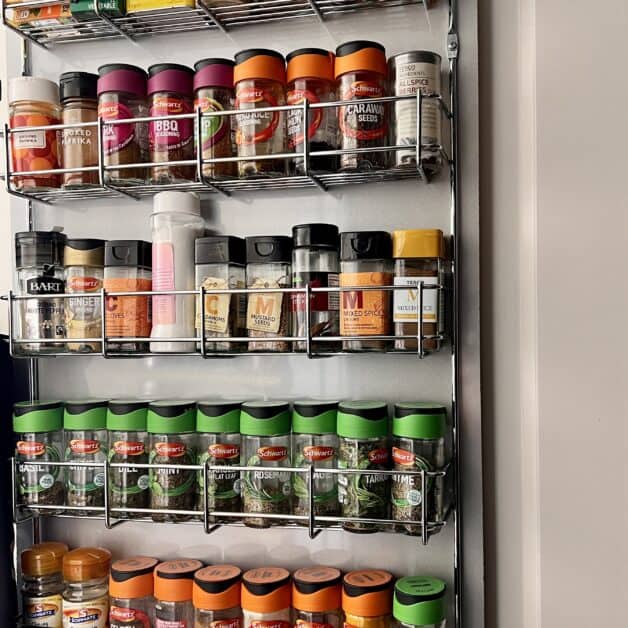
Consider using hanging fruit baskets or wall-mounted shelves for storing items like spices or frequently used ingredients. By taking advantage of the vertical space, you can keep your kitchen essentials within reach while keeping your counter tops and cabinets clutter-free. In my new kitchen, I have an under stairs cupboard which was accessed from the kitchen. This is now my under stairs larder, along with a spice rack mounted on the door.
Implementing Smart Storage Solutions
When downsizing a kitchen, storage is key. Implementing smart storage solutions can help you make the most out of the available space. Consider investing in stackable containers or nesting bowls to save space in your cabinets.
Utilise drawer dividers to keep utensils and small items organised and easily accessible. Install pull-out shelves or rotating carousels in corner cabinets to maximise storage efficiency. Magnetic strips can be used to store knives or metal utensils on the wall, freeing up drawer space.
Additionally, consider using transparent bins or labelled storage containers in your pantry to keep ingredients and food items organised. This will not only make it easier to find what you need but also help to prevent food waste.
By decluttering, sorting, categorising, utilising vertical space, and implementing smart storage solutions, you can transform your downsized kitchen into a well-organised and functional space.
Assessing Essential Tools and Utensils
When it comes to downsizing a kitchen, the first step is to critically assess your current collection of tools and utensils. Ask yourself: Do I really need all of these items? Consider your cooking preferences, lifestyle, and the functionality of each tool.
Take a moment to declutter your kitchen. Remove any duplicate or rarely used tools. Ask yourself if you truly need that avocado slicer or those egg cups. I do a lot of baking and there was a definite excess of dough scrapers for when I have been making my sourdough bread. By keeping only the essential items, you can free up valuable space in your cabinets and drawers.
Donating or Selling Unnecessary Items
Once you have identified the tools and utensils that you no longer require, consider donating or selling them. There might be someone else who would benefit from these items, and it can be a fulfilling way to give back to the community.
Consider donating them to a local charity or help out a person who is looking to kit out with basic items. Put them for free on Facebook Marketplace or offer to a friend who is setting up their own kitchen. Not only will it help you declutter, but it will also be a win-win situation for all parties involved.
Investing in Quality and Space-Saving Tools
One of the keys to a streamlined kitchen is investing in high-quality, multi-purpose tools that can help you maximise your limited space. Look for tools that serve multiple functions and take up minimal storage space.
Consider investing in a quality chef's knife which is something I made sure to have, a versatile cutting board, and a set of stackable mixing bowls. These items can perform various tasks and reduce the need for multiple specialised tools. I bang on all the time about getting one good knife that is a good all rounder.
Any chef will cope with a pairing knife, chefs knife and bread knife. (TBH, a good chefs knife will cover all three!) Additionally, look for space-saving utensils, such as collapsible measuring cups and nesting cookware sets, which can be easily stored in a smaller location when downsizing a kitchen.
By selecting quality tools that serve multiple purposes and take up less space, you can declutter your kitchen and create a more functional cooking area. Remember, downsizing your kitchen is not about sacrificing functionality; it's about optimising your space and keeping only what you truly need.
Optimising Cabinet and Pantry Space
Having a well-organised and efficient kitchen is essential, especially when it comes to smaller spaces. One area that often needs attention is cabinet and pantry space. By optimising these areas, you can maximise storage and accessibility, making your kitchen more functional and enjoyable to use.
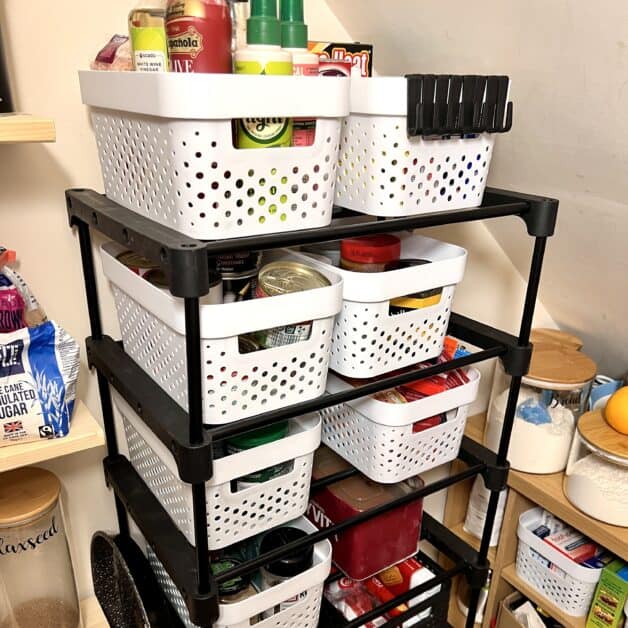
As mentioned earlier, my under stairs cupboard was kitted out with some shelving, an old shoe rack and old TV cabinet. This allowed me to put jars and tins in baskets and store it all under the stairs. It's a cool and dry place (as all packaging always asks for).
Utilising Pull-Out Shelves and Organisers
These innovative solutions allow you to utilise every inch of space and make it easier to access items stored at the back of the cabinet. With pull-out shelves, you can effortlessly slide them out, eliminating the need to rummage through a cluttered cabinet. Additionally, using organisers such as spice racks or dividers can help keep similar items grouped together, making it easier to locate and retrieve what you need.
Implementing a System for Easy Access
Creating a system for easy access is another key aspect of optimising cabinet and pantry space. Consider organising your items based on frequency of use or category. This was a suggestion offered by Mrs Dad What Cooks and was an absolute game changer! For example, place frequently used items at eye level or within easy reach, while less frequently used items can be stored higher or lower.
Categorising items by type, such as grouping baking supplies or snacks together, can also help streamline your storage system. By implementing a logical and intuitive organisation system, you'll be able to quickly find what you need. This will reduce frustration and save time.
Using Space-Saving Containers and Labels
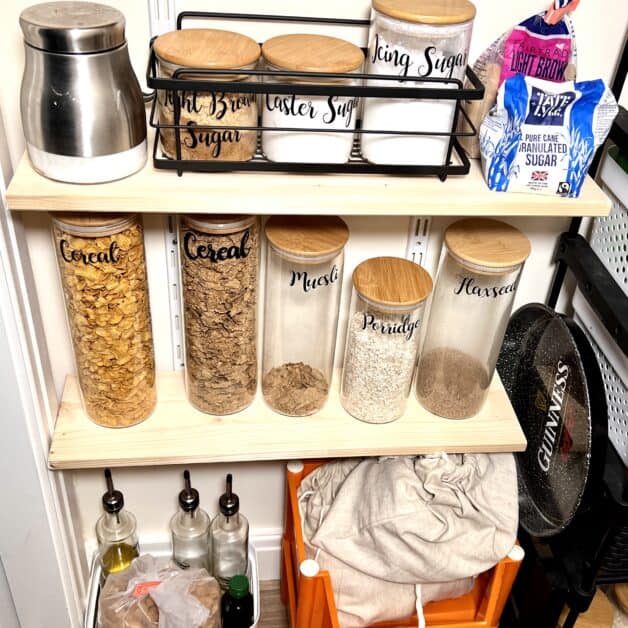
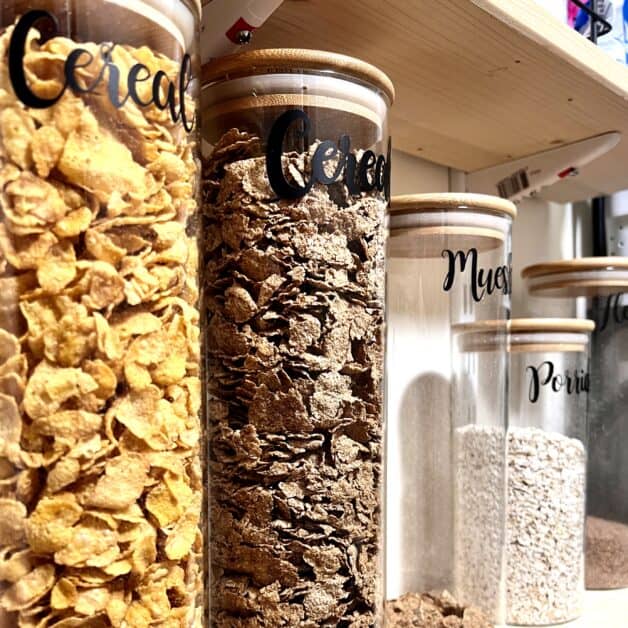
To further optimise your cabinet and pantry space, invest in space-saving containers and utilise labels. Clear, airtight containers can help maximise shelf space by eliminating bulky packaging and allowing items to be stacked. They also help keep your ingredients fresh and visible at a glance.
Labelling containers with the contents and expiration dates ensures that everything is easily identifiable. This reduces the chances of items being forgotten or wasted. Consider using vertical space by attaching labels to the inside of cabinet doors, enabling you to quickly locate specific items.
Remember, organising your cabinet and pantry space is an ongoing process. Regularly assess and declutter to ensure that you're only storing items you truly need and use.
You can incorporate these strategies of utilising pull-out shelves and organisers:
- Implementing a system for easy access.
- Use space-saving containers and labels (labels custom printed from Etsy)
- Make the most of your kitchen's cabinet and pantry space.
- Create a more efficient and enjoyable cooking experience.
Pick the right type of kitchen equipment for those you are keeping.
Downsizing the Dining Area
When it comes to downsizing a kitchen, one area that often poses a challenge is the dining space. However, with the right approach and some creative thinking, you can still enjoy a functional and cosy dining area when downsizing a kitchen.
Choosing a Compact Dining Set
When space is limited, opting for a compact dining set is a smart choice. Look for tables and chairs that are specifically designed for smaller spaces. Consider round or square tables instead of rectangular ones, as they take up less floor space. Additionally, choose chairs that can be easily tucked under the table when not in use, saving valuable space.
Utilising Multi-functional Furniture
To maximise the functionality of your dining area, consider investing in multi-functional furniture pieces. For instance, you can choose a dining table with built-in storage compartments or shelves underneath. This provides a convenient place to store tableware, linens, or small kitchen appliances and reducing clutter when downsizing a kitchen.
Another option is to choose a extendable dining table that can be adjusted according to your needs. This allows you to accommodate more guests when necessary without sacrificing space on a daily basis.
Enhancing Lighting and Visual Space
When it comes to kitchens, a bright and spacious environment can make all the difference. Enhancing the lighting and visual space in your kitchen can create a welcoming and airy atmosphere that makes meal prep a pleasure. In this section, we'll explore three effective ways to achieve this: incorporating natural light sources, installing under cabinet lighting, and using mirrors to create the illusion of space.
Incorporating Natural Light Sources
One of the simplest ways to brighten up your kitchen and create a sense of spaciousness is by incorporating natural light sources. If your kitchen has windows, make the most of them by keeping them clean and unobstructed. Consider using sheer curtains or blinds that allow light to filter through while still providing privacy.
If your kitchen lacks natural light or you want to maximise the sunlight you have, you may want to explore options such as skylights or solar tubes. These additions can bring in ample natural light, making it feel brighter and more expansive when downsizing a kitchen.
Installing Under Cabinet Lighting
To add both functionality and a sense of ambience to your kitchen, consider installing under cabinet lighting. This type of lighting not only enhances the visual appeal of your kitchen but also provides valuable task lighting for counter-top activities.
Under cabinet lighting comes in various forms, including LED strips or puck lights. These can be easily installed and offer the flexibility to control the brightness and colour temperature according to your preferences. I much prefer warm glow to day glow, but each to their own! By illuminating your counter-tops and workspaces, under cabinet lighting creates a more visually appealing and inviting kitchen environment.
Using Mirrors to Create the Illusion of Space
Mirrors are a versatile tool when it comes to creating the illusion of space in any room, and the kitchen is no exception. Strategically placing mirrors in your kitchen can reflect light and make the area feel larger than it actually is.
Consider hanging a mirror on a wall opposite a window to reflect natural light and make your kitchen appear brighter. You can also place mirrors behind open shelving or on cabinet doors to add depth and create a more spacious feel.
Remember, it's important to position mirrors strategically to avoid any potential glare or distorted reflections. By incorporating mirrors when downsizing a kitchen, you can effectively enhance both the lighting and visual space, giving your kitchen a fresh and open feel.
Incorporating natural light sources, installing under cabinet lighting, and using mirrors are all effective techniques to enhance the lighting and visual space when downsizing a kitchen. By implementing these methods, you can transform your kitchen into a bright, welcoming, and spacious area that inspires culinary creativity.
Conclusion of Downsizing a kitchen
In conclusion, downsizing a kitchen can be a daunting task, but with proper planning and organisation, it can also be a rewarding experience. By prioritising functionality and maximising space, you can create a more efficient and streamlined kitchen that meets your needs. Remember to declutter, utilise vertical space, and invest in multi-functional furniture and storage solutions.
Additionally, don't forget to consider your lifestyle and cooking habits when making decisions about what to keep and what to let go. With these tips in mind, you'll be well on your way to enjoying a smaller yet highly functional kitchen that is tailored to your needs. So go ahead, embrace the downsizing journey and create a kitchen that works for you. So go on, get on with downsizing a kitchen.
More posts like this



Comments
No Comments
Leave a Reply