


Affiliate Disclosure As an Amazon Associate I earn from qualifying purchases. This post may contain affiliate links. For more details, refer to my Disclaimer page.
Yes, you can freeze swede. It keeps well for up to three months in the freezer and the process is straightforward, though it does require a quick blanching step first to preserve the texture and nutritional value.
This post gives details on how to blanch and freeze swede, turnips and similar root vegetables like carrots and parsnips.
Contents
Preparation for blanching
So this is a simple little tip, but saves time when doing food preparation. Once you have diced your desired root vegetables, use the fresh ones for the meal you are making and anything left over in the pack can be saved. But rather than just putting them back in the fridge to go off later, it is possible to freeze them.
Freezing turnips is not only a great band name, but also possible and then use them later in one of the instant pot recipes or slow cooker recipes I have to offer.
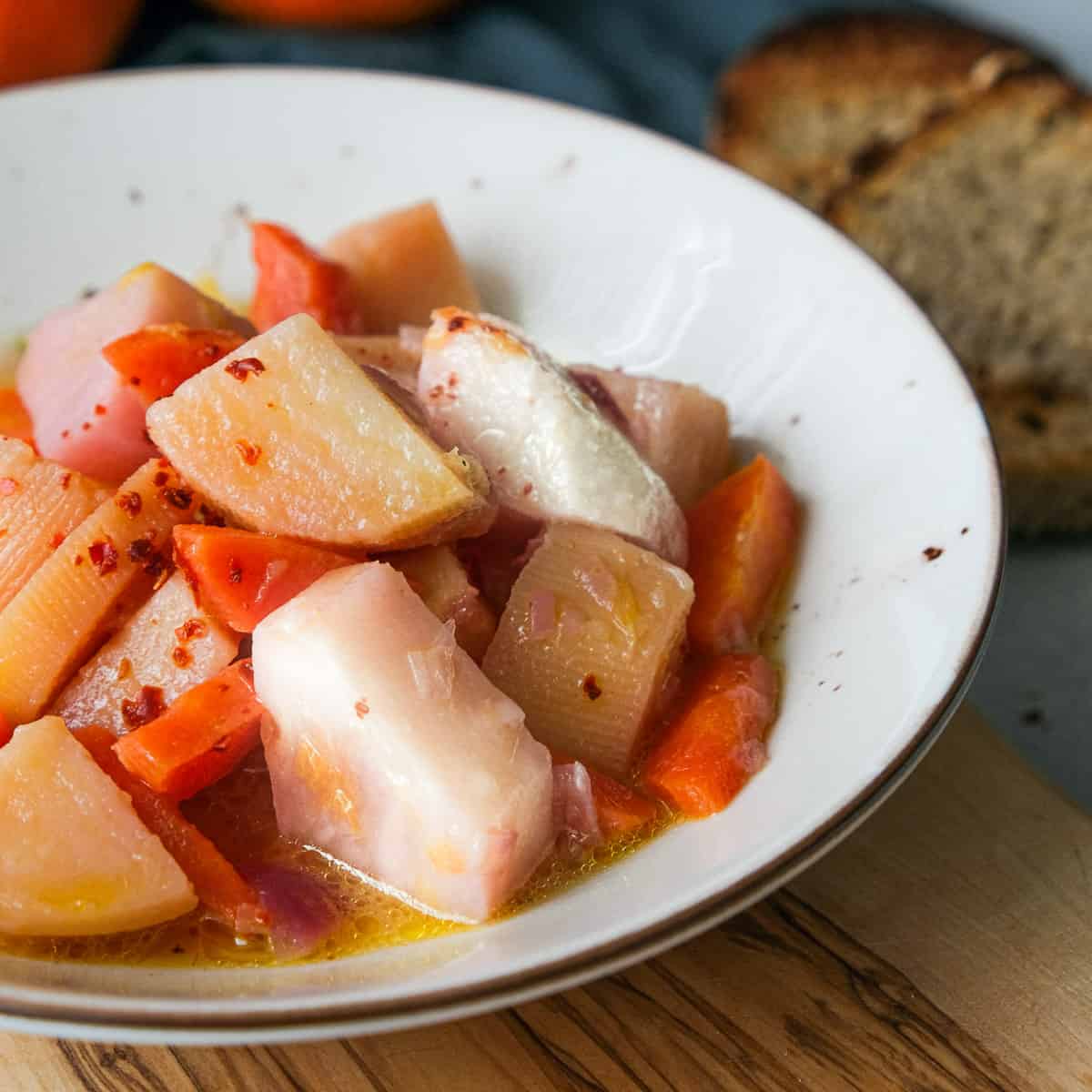
What is blanching vegetables?
Blanching is defined as a method of briefly cooking food usually in boiling water or steam to preserve nutritional value and the 'goodness' of the food in question.
After the brief boiling or steaming, the produce can be dunked in ice water to stop the cooking process quickly and then transferred to the freezer for storage.
If storing in the freezer, separate into portions before freezing to make things easier when it comes to meal prep. A portion of veg is easier to defrost than separating off part of a bigger batch of frozen food. Remember, once defrosted you cannot re-freeze.
Blanching a swede
Before you freeze most root vegetables, you will need to blanch them. Blanching is a method used to quickly cook the vegetable briefly in boiling water:
STEP ONE - Chop up the swede into small 1 to 2cm cubes. This is sometimes called 'dicing'.
STEP TWO - In a medium sized pan, add a pinch of salt (about ¼ teaspoon) and some boiling water, or bring some water to the boil in the pan if not using a kettle).
STEP THREE - Drop in the chopped swede or turnip and boil it for two minutes.
STEP FOUR - Once the two minutes is up, drain the veg using a sieve and let them cool. At this point you can dip them in an ice bath of water to stop the cooking process completely if going in the freezer.
STEP FIVE - Bag them up and pop them in the freezer. For ease, portion them off into serving sizes you'll need. Go for around 50g to 100g per person.
When you need to use them, take out of the freeze and then once defrosted, cook them as though you would if they were freshly chopped. They work well in a winter vegetable soup or other slow cooker meal.
You can freeze it without blanching, but the texture will suffer as a result. It will freeze ok but lose a lot of quality on defrosting and might go a bit mushy. That said, freezing raw swede would be ok if you are planning to use it in a soup.
Blanching preserves colour, texture and nutrition during freezing
Can you freeze turnips and other root veg?
The method to freeze most root vegetables such as turnip, squash, sweet potato and similar is much the same. Providing that the size of the piece being cut are not bigger than 2cm cubes, ideally 1cm then the blanching method will work well.
You can also freeze carrot and sprouts using the same method. Blanche them for 2 minutes in boiling water, then dump in an ice bath and then they will be suitable for freezing. It works best if you cut the carrots into slices or batons. Sprouts should be halved.
Can You Freeze Swede Raw or Does it Need to be Cooked First?
Raw swede gives you more flexibility when it comes to cooking it later. Cooked swede is better suited to dishes where texture matters less, such as soups and mash.
| Freezing Raw Swede | Freezing Cooked Swede | |
|---|---|---|
| Do you need to blanch it? | Yes, blanching is recommended before freezing raw swede | No, cooked swede can go straight into the freezer once cooled |
| Texture after freezing | Firm, holds its shape well when reheated | Softer, best suited to mashed swede or soups |
| Best for | Casseroles, stews, hotpots, roasting | Soups, mash, blended dishes |
| How long does it keep? | Up to 3 months | Up to 3 months |
| Can you freeze without blanching? | Yes, but the texture will be mushier when defrosted | Not applicable |
Quick steps
- Dice the turnip or swede
- Boil up some water in a pan
- Drop the diced turnip or swede in to the pan and simmer for 2 minutes
- Take them out and let them cool
- Store in freezer bags in portion sizes
- Never refreeze once defrosted!
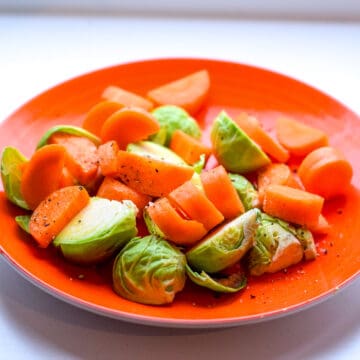
You can safely get a couple of months out of the swede if kept air tight in the freezer. Never go longer than 3 months as a rule of thumb.
Some of the best meals to cook swede in are casseroles and slow cook meals. Broths and soups work well with swede too. Try my slow cooker beef casserole recipe for a good recipe to add swede or turnip in.
Storing swede and turnip
A fresh swede will last a week or so if kept at room temperature. However once it has been cut into the air must be kept away from it to make it last longer.
If you do not plan to use the swede all in one go then freezing it might be the best way to make it last.
Meals that go with swede


More posts like this


Comments
No Comments
Leave a Reply