


Affiliate Disclosure As an Amazon Associate I earn from qualifying purchases. This post may contain affiliate links. For more details, refer to my Disclaimer page.
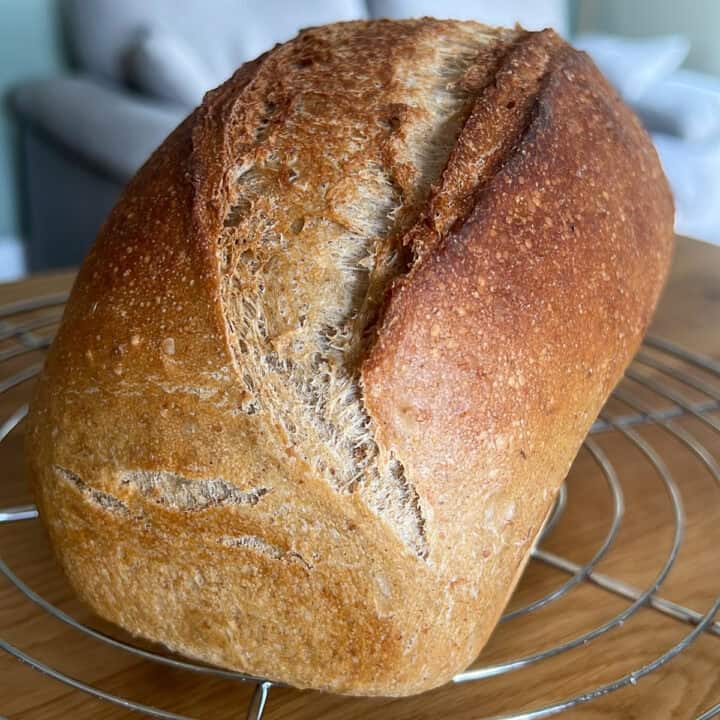
This is an easy Guinness bread with yeast and no treacle is needed to make it. A malty type loaf with no water added at all. This makes a great sandwich loaf and can be easily sliced and used over a few meals.
I try a Guinness brown bread recipe to see just how sweet the loaf is without any added treacle sweeteners. This is an experimentation and the first time I have made this loaf, but it seems quite simple and one to try to impress friends.

Contents
🥘 Ingredients
The secret to this loaf is the simple ingredients and the distinct lack of water. The only liquid added here is Guinness stout.
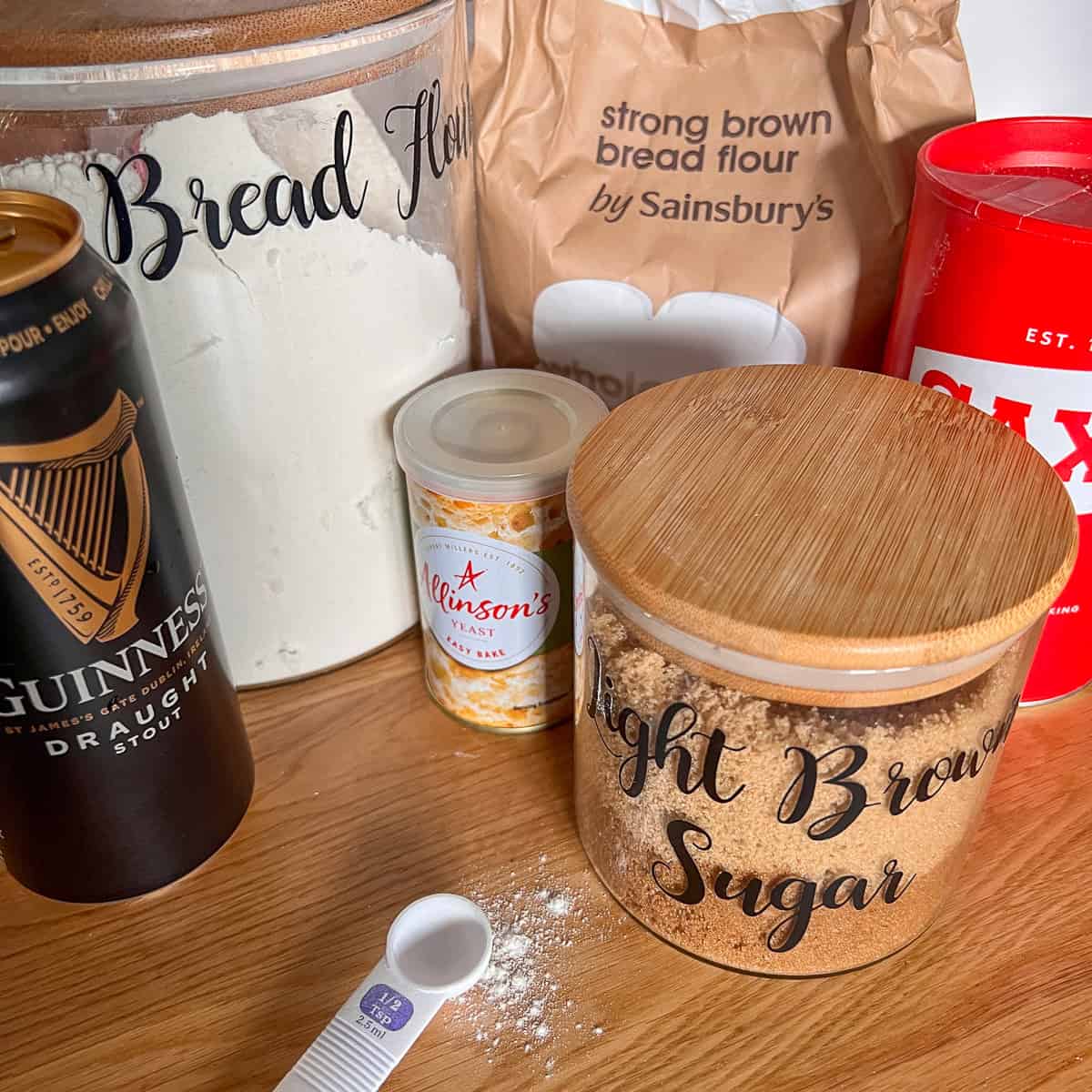
- Guinness - 440ml can
- Yeast
- Sugar
- Salt
- Flour
This is quite a forgiving recipe. You don't actually need to put any yeast in at all as there is already some in the Guinness. However just adding that extra ¾ teaspoon will help with the rise and really speed things up.
🔪 Instructions
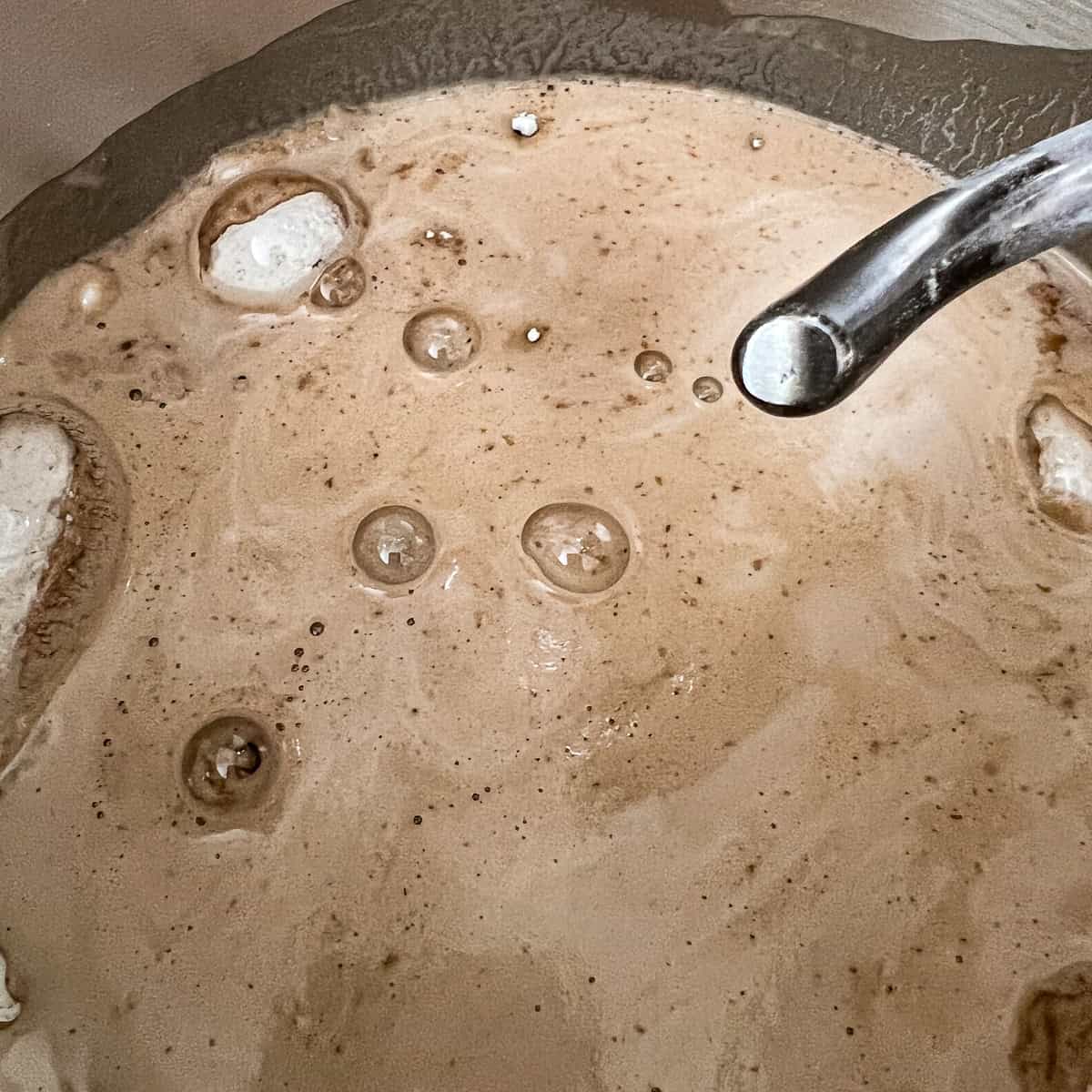
- Place all the dry ingredients in a mixing bowl, quickly mix with your hand or a spatula and then pour in the Guinness.
Only add about 300ml of the Guinness to start - add the rest gradually - ONLY IF IT IS NEEDED. Don't end up with a sticky mess!
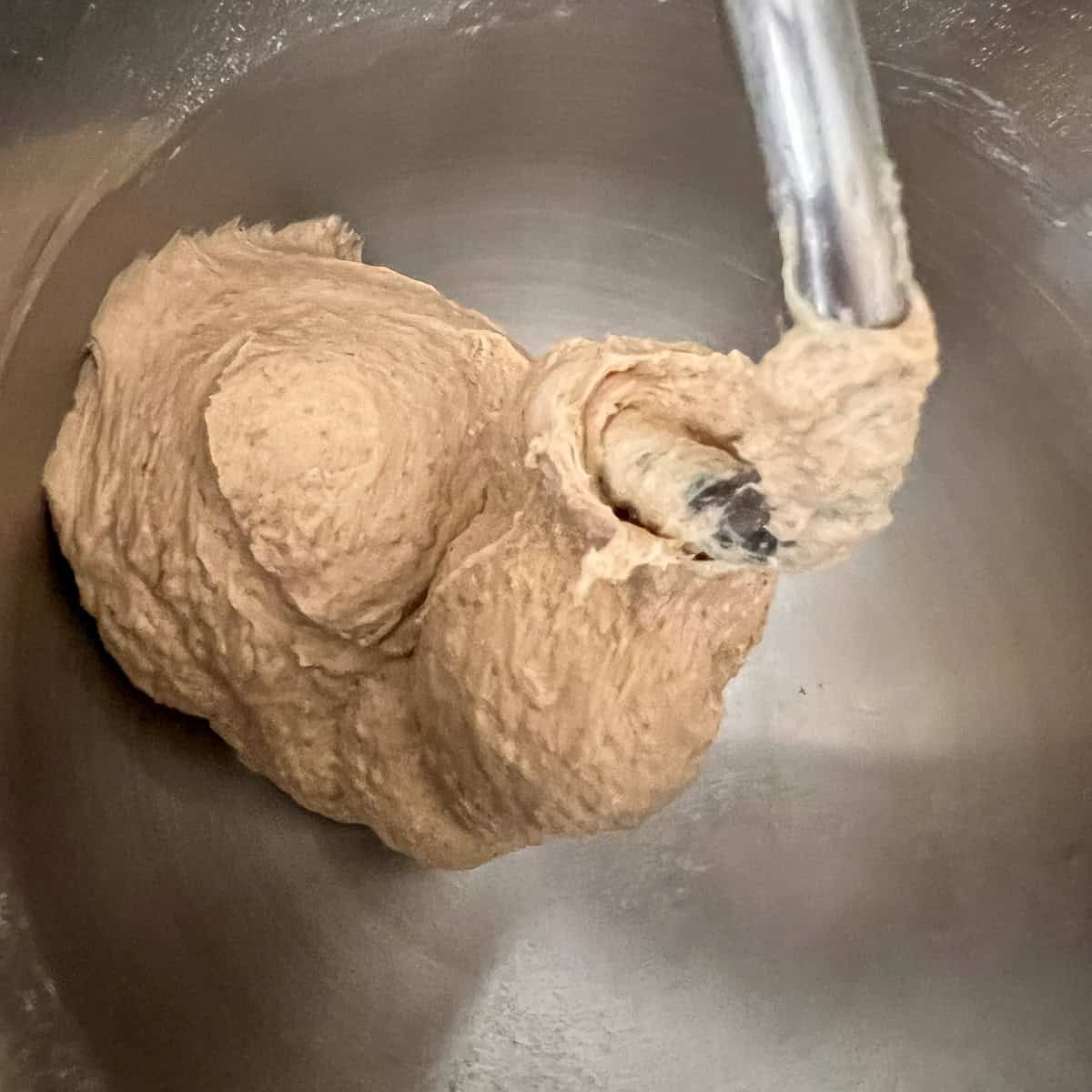
- Mix on a low speed for around 5 minutes. After 5 minutes, leave it to stand for 3 to 4 mins and then mix again for another 5 minutes. On the second mix, keep an eye on the texture.
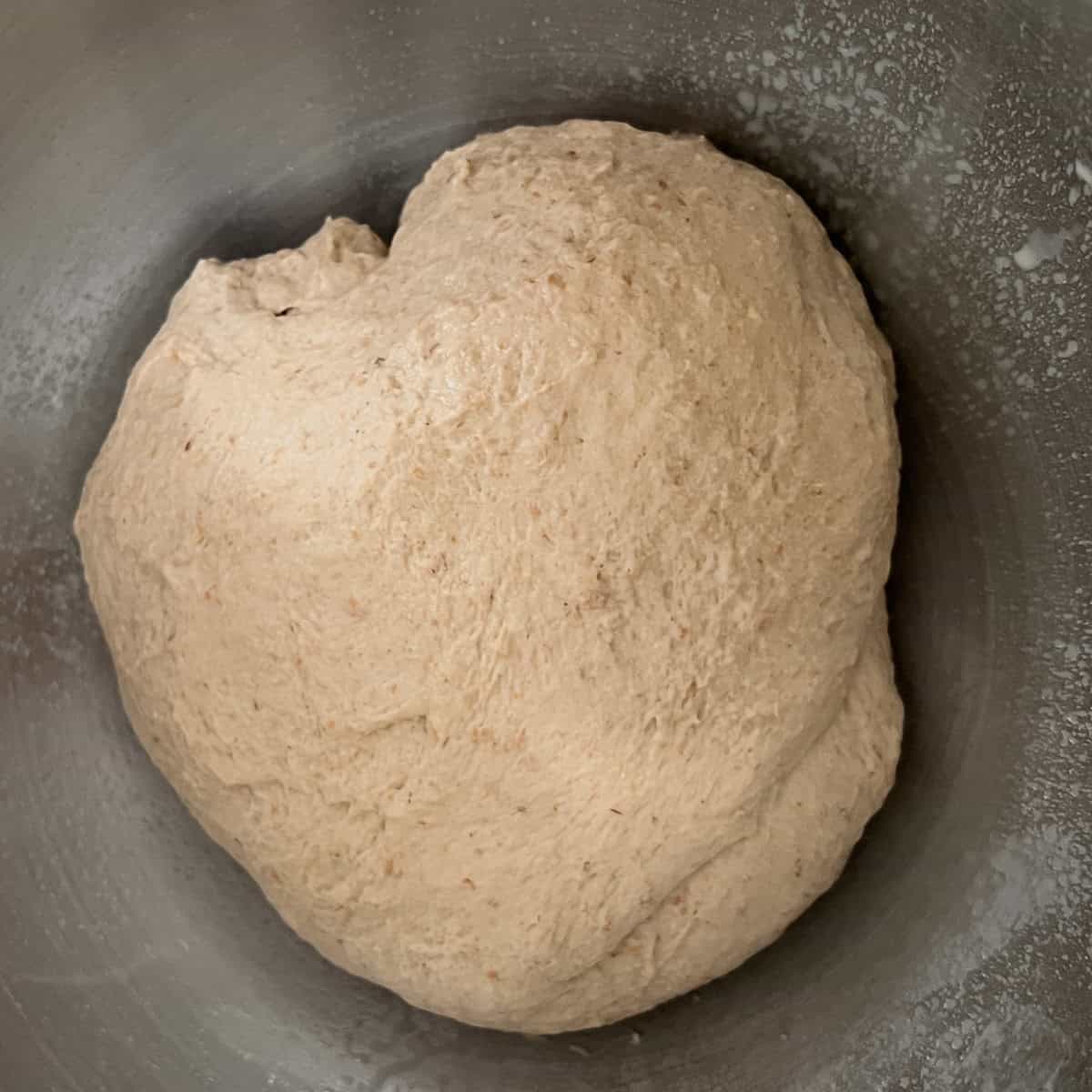
- Mixing is complete after about 10 minutes in the stand mixer.
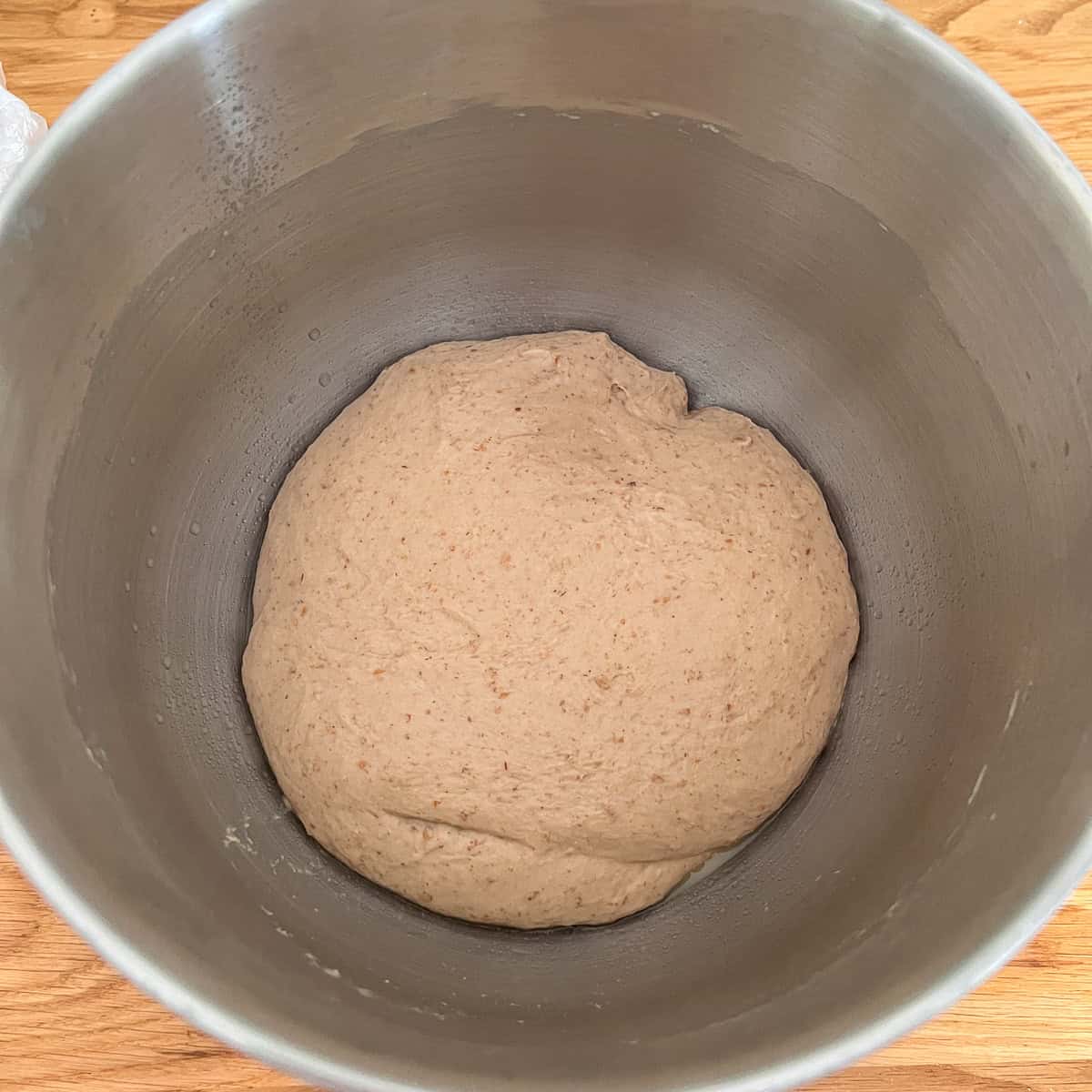
- When mixed it should be quite smooth and resist if you prod it.
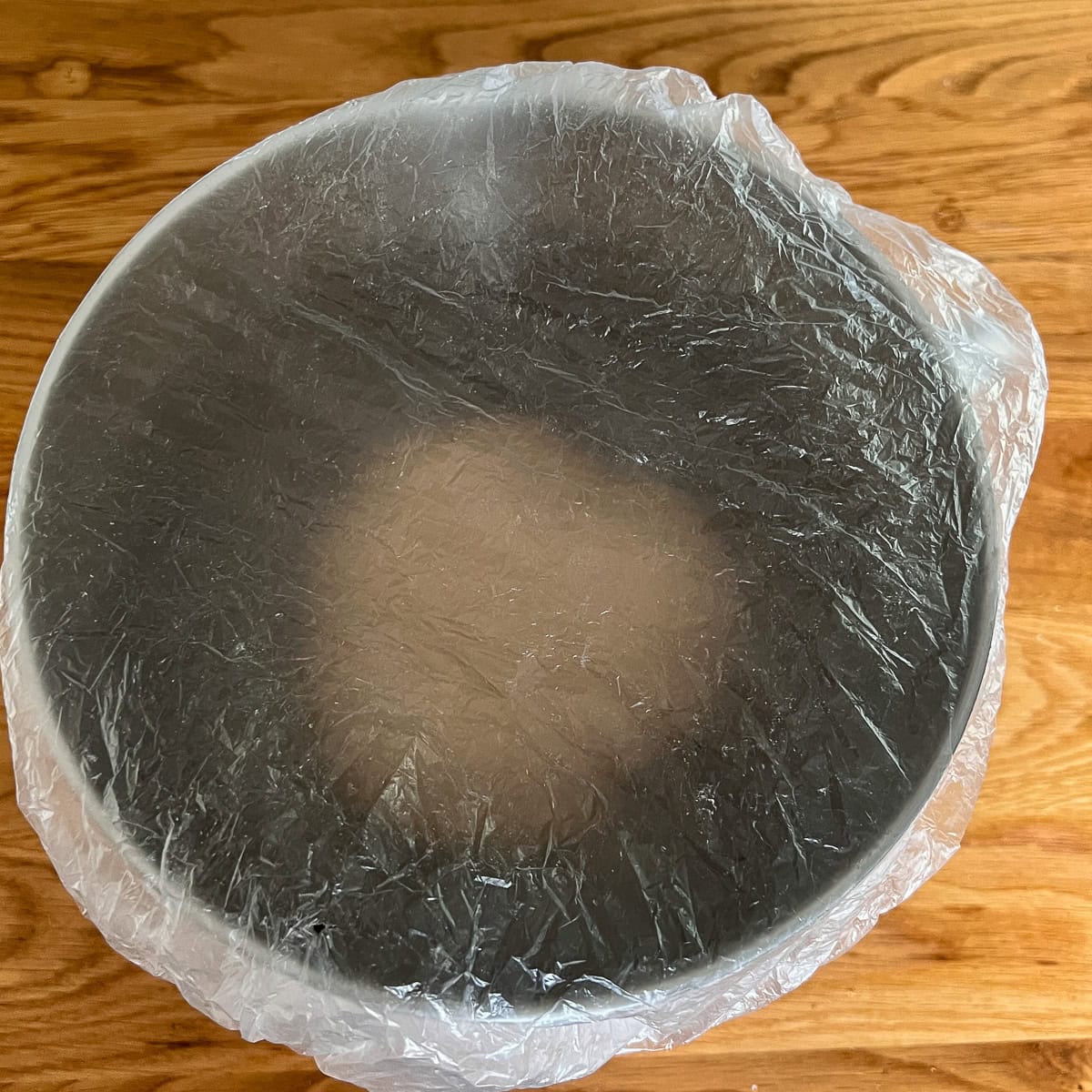
- Cover and leave to rise. I find shower caps are good to cover a mixing bowl with!
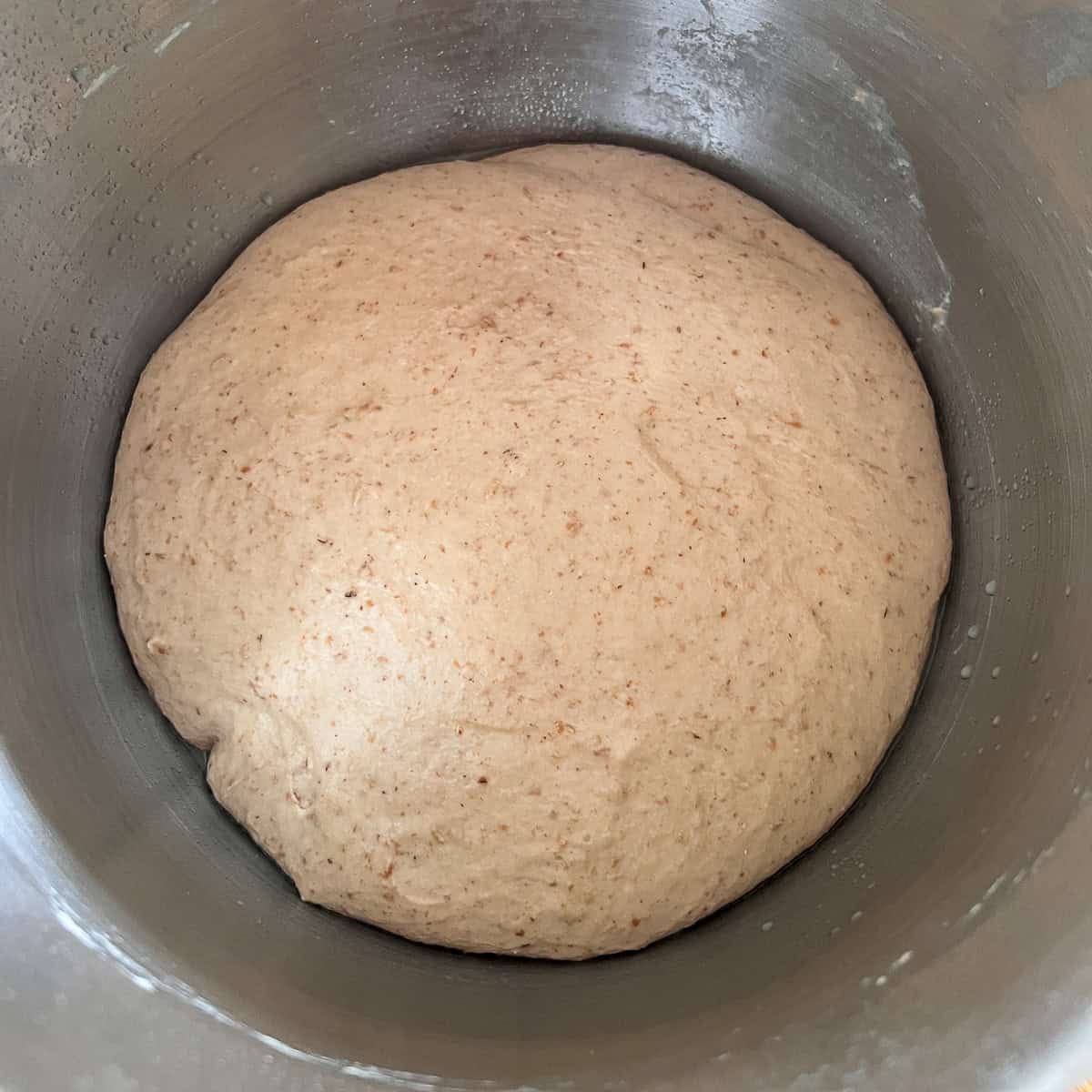
- The dough has finished rising after about 60 to 90 minutes (ambient temperature/yeast activity depending). It should be just below double in size what it was before it went in.
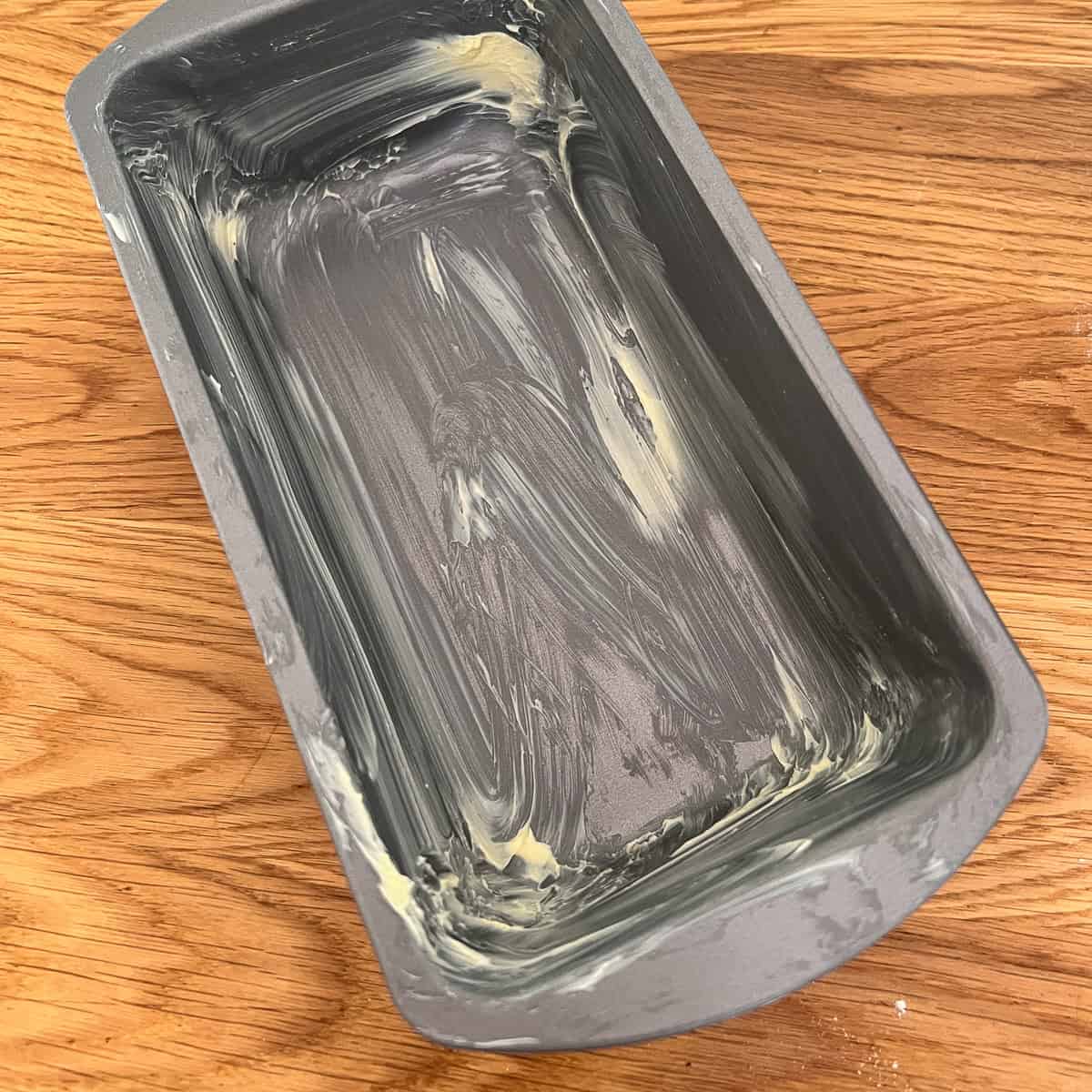
- Grease a loaf tin using butter or margarine. Rub it all in around with kitchen roll.
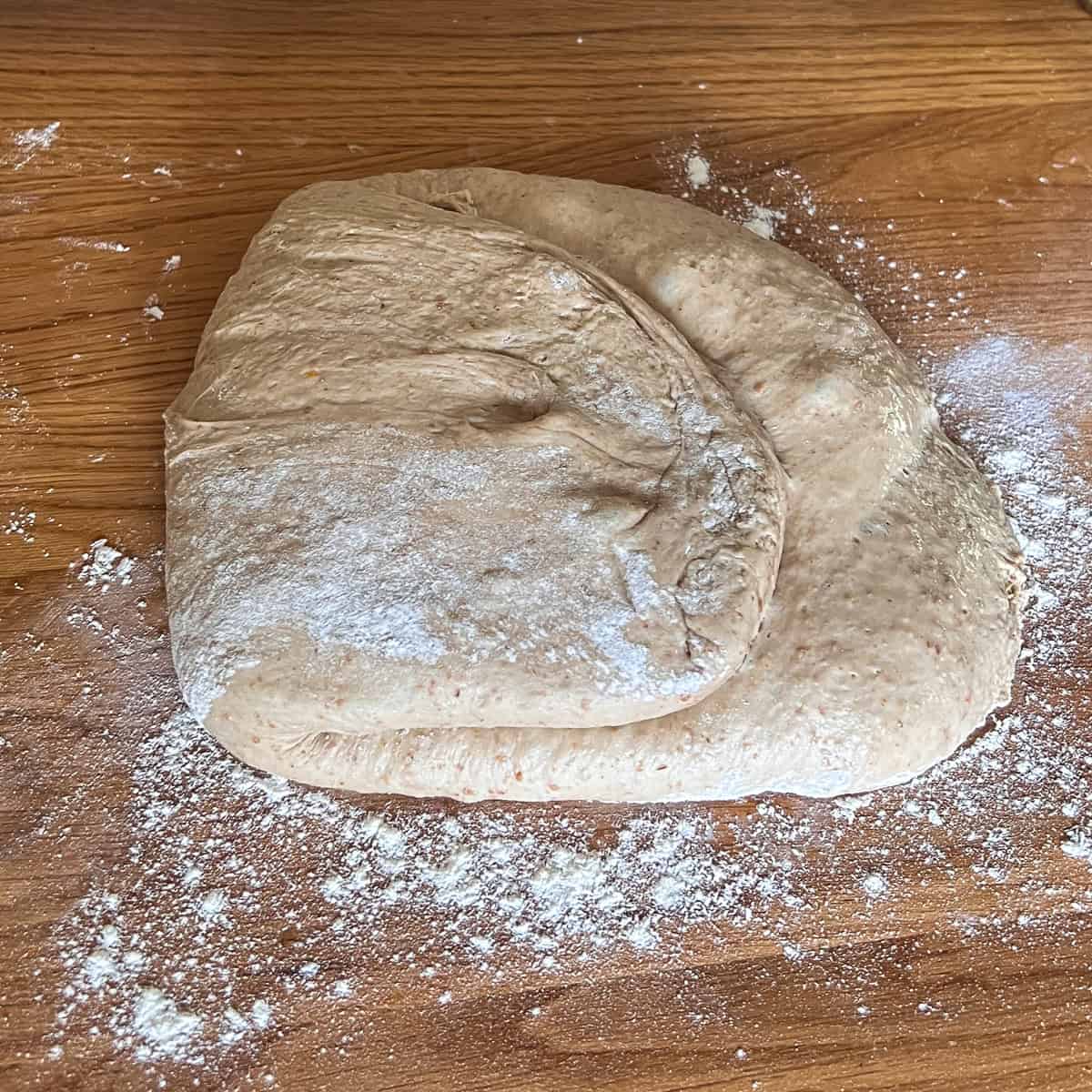
- Tip out the dough on to a floured surface and knock the air out.
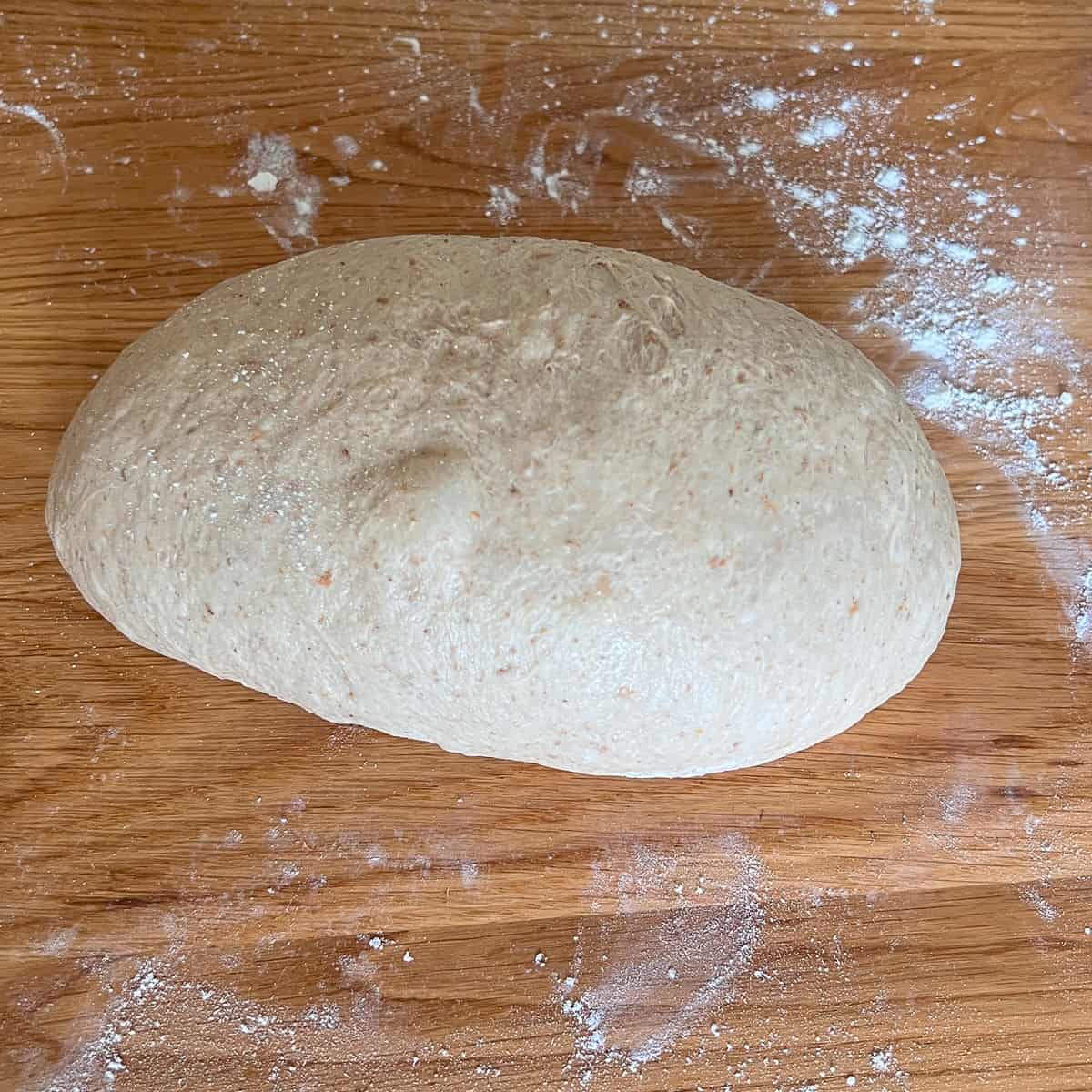
- Shape the dough into an oval loaf of bread shape. Tuck underneath so the skin of the loaf remains tight.
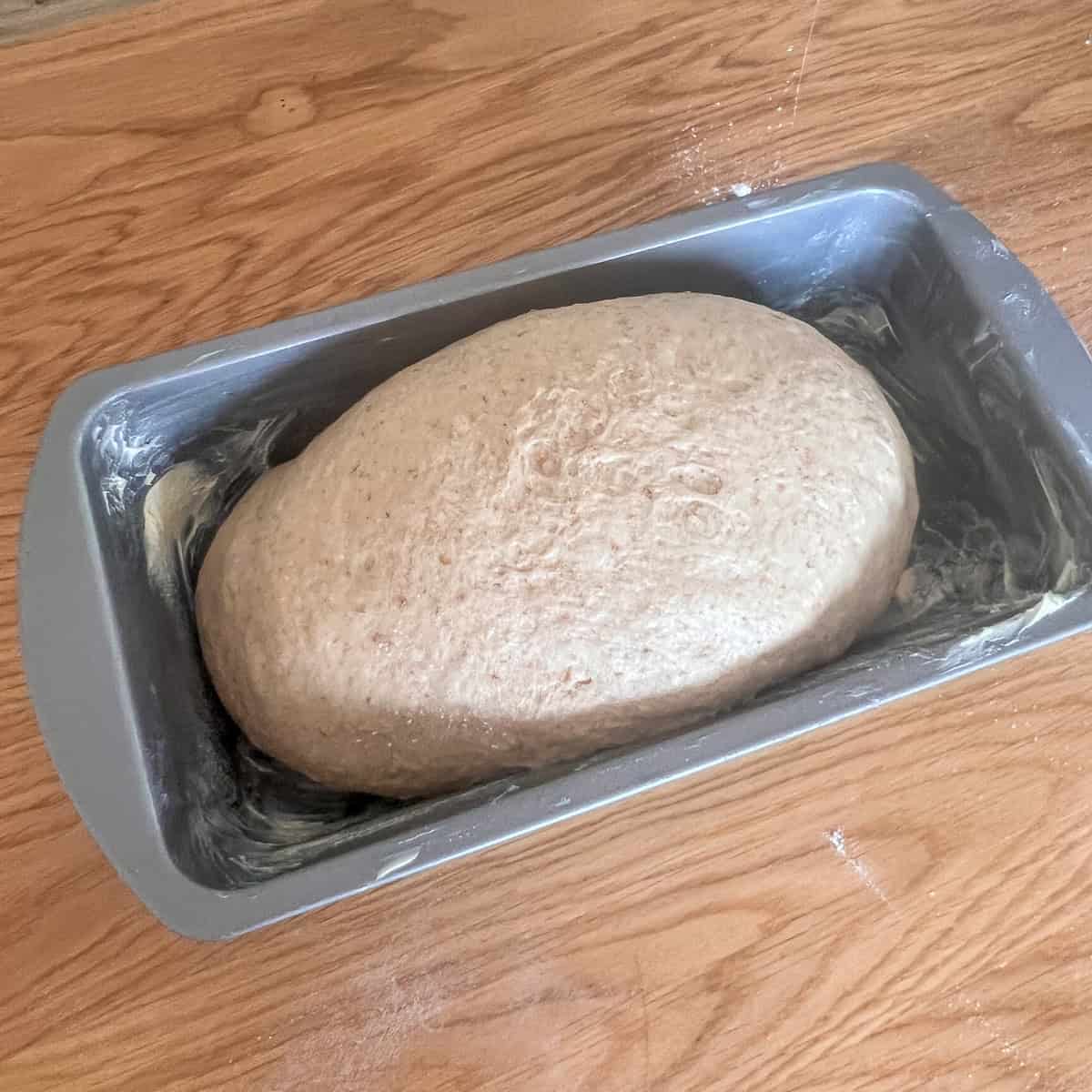
- Place the shaped loaf carefully into the tin.
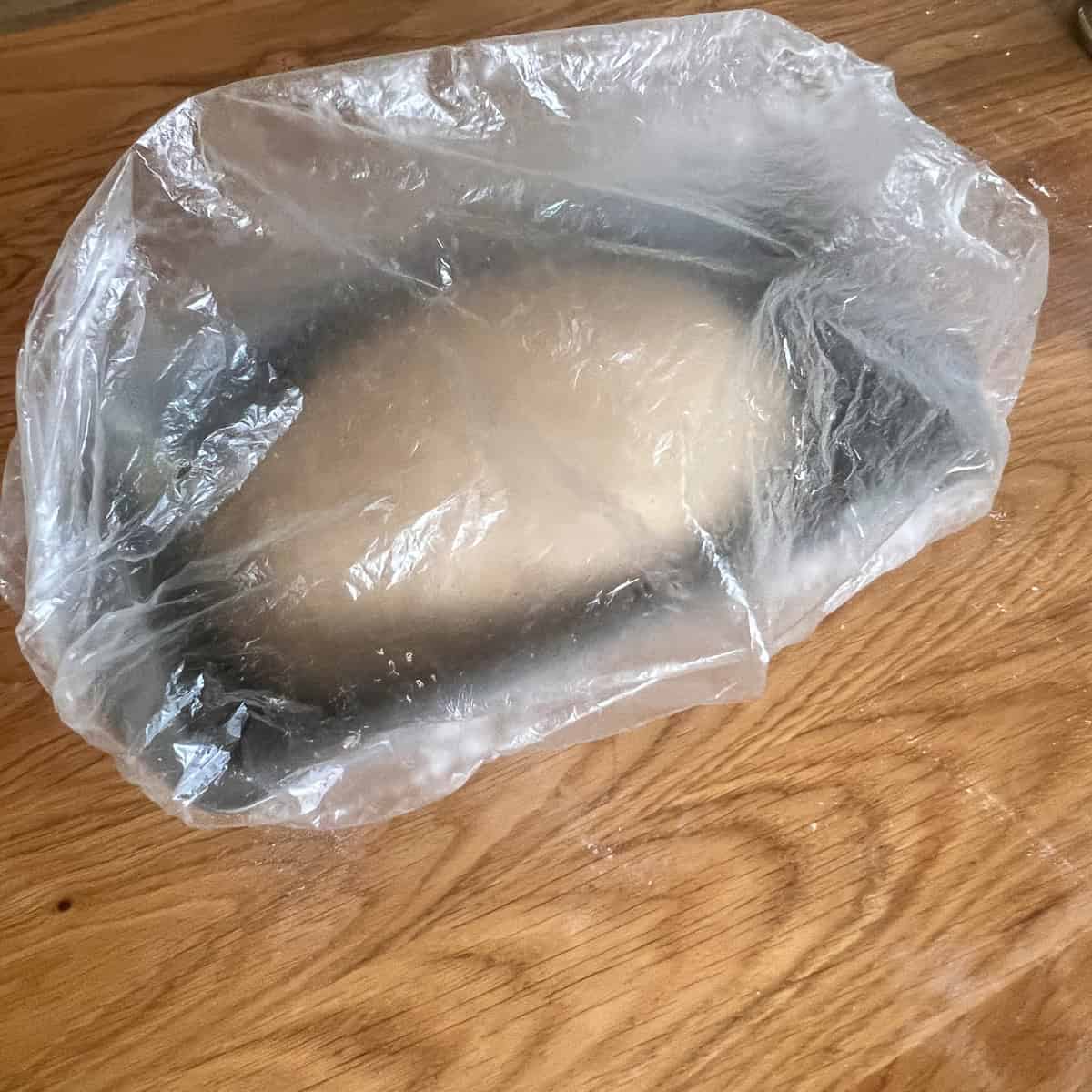
- Cover the dough and leave to prove.
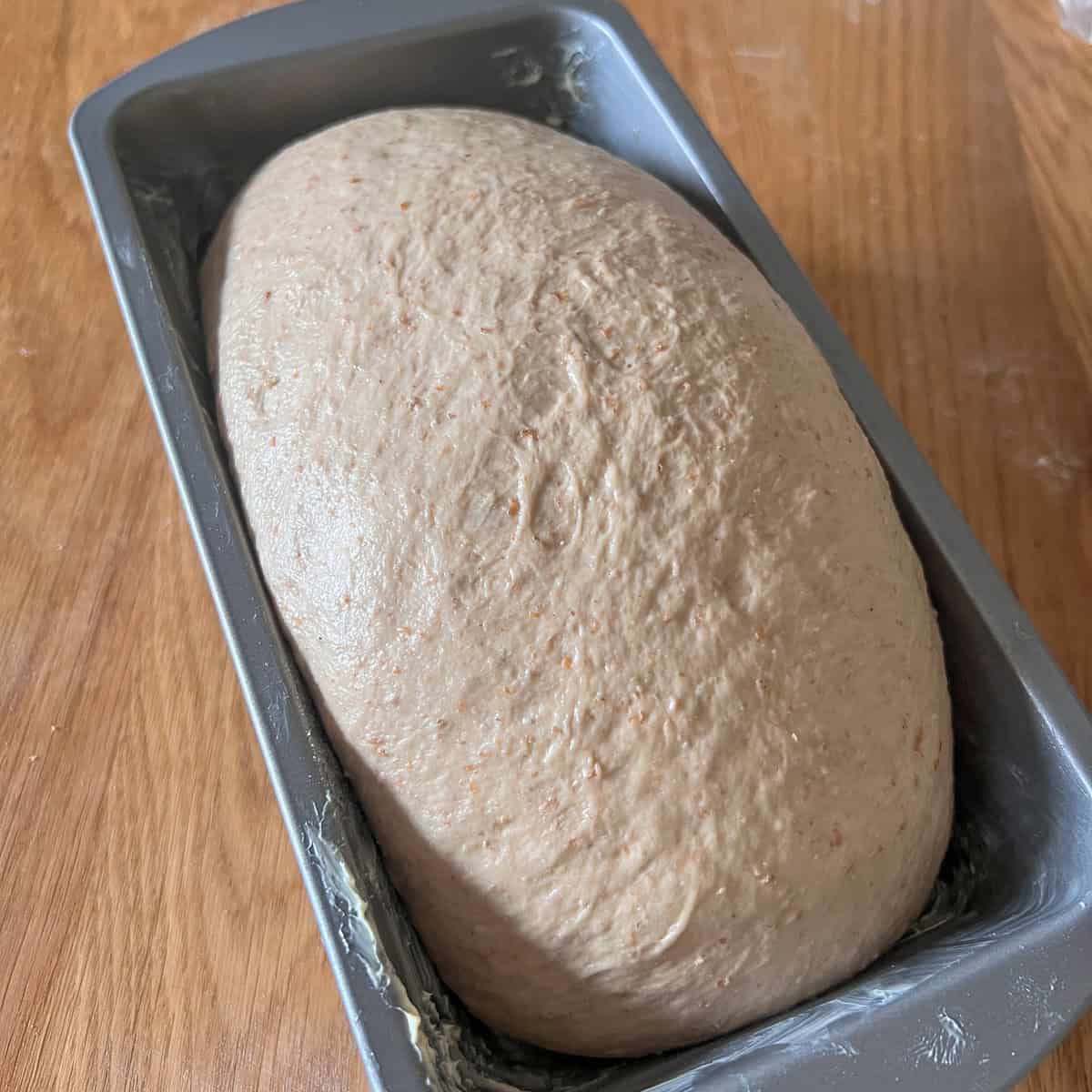
- The dough is proved when raised above the lip of the tin. It will be around double the size it was before going in the tin.
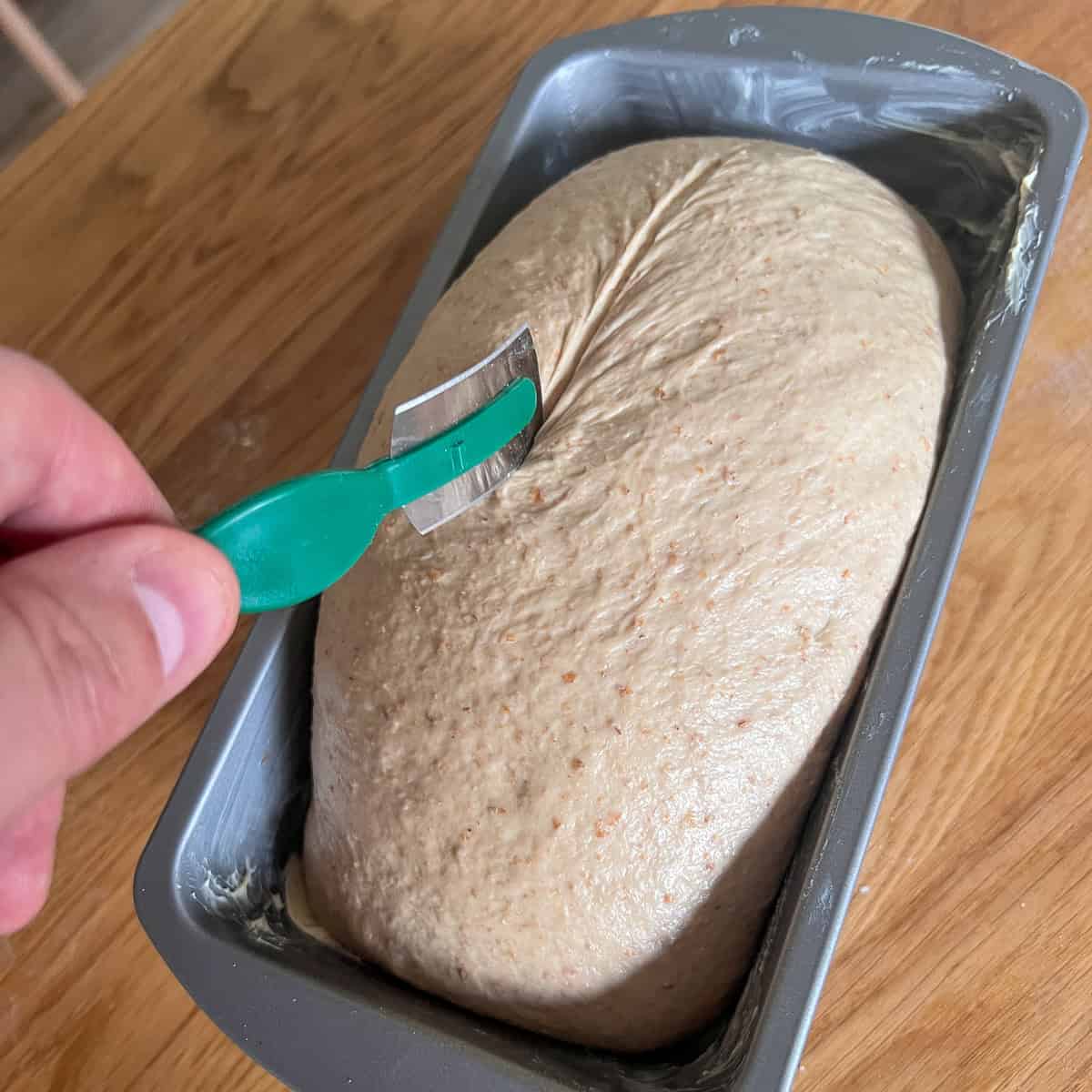
- With a sharp knife or lamé, score down the centre of the dough. This creates a line to expand in the tin and develop a nice 'ear' to the loaf.
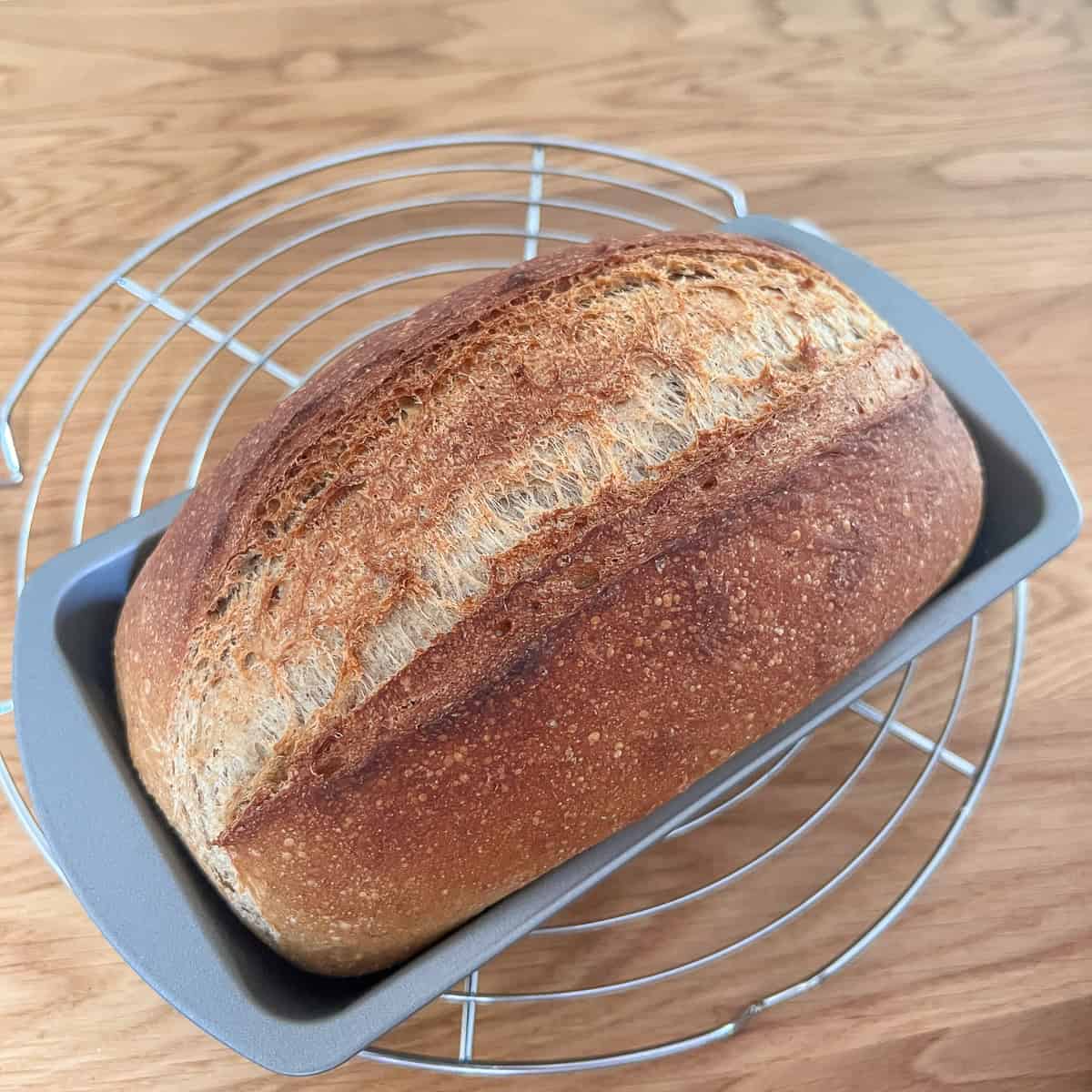
- After baking in the oven for 25 to 30 minutes at 180C/350F/Gas 4, take out and check its cooked.
It should be golden brown and when out of the tin if it is cooked the underside of the loaf will sound hollow if tapped.
📖 Subs & Variations
Flour
This recipe can take a few amendments. Firstly, the flour in this Guinness beer bread recipe is 80% white bread flour and 20% wholemeal but still makes a brown loaf. This is to make the crumb a bit more sturdy while still being a nice sandwich bread. You could go all in 100% white flour.
Alternatively you can add in some seeds and make it a real grain wholemeal and use 50% white, 50% wholemeal/brown flour and 20g seeds.
Sweetness
Add a further variety to the loaf by swapping out the brown sugar for 2 tablespoons of treacle. This will give it a dark sweet taste and texture and take it to another level. Probably not great for a sandwich, but having on it's own with some butter (and) or thick slices of Cheshire cheese on top will taste great. Definitely a treat for a cold winters day.
⭐ Tips For Success
As with all bread making, practise makes perfect. You may want to try varying the amount of liquid in the mix to get the right consistency for shaping.
Too dry and the bread won't rise properly. Too wet and the dough will be too difficult to handle. Take your time getting a good consistency in the mixer (hence the reason for only gradually adding in the last 30ml of liquid).
Guinness Brown Bread no treacle recipe
This recipe does not need to have treacle included unlike some of the other Guinness Bread recipes around. The sweetness comes from the sugar added and the sugars within the Guinness too. Adding treacle will make this thicker and sweeter but it really is not necessary.
Air Fryer success
You can do the proving and cooking of this bread in a Ninja Foodie air fryer. This comes in particularly useful during colder weather or in climates of lower ambient temperatures. Check out the Ninja Foodie bread recipe for more details on how to bake with your air fryer.
🥗 Pairings
Try serving this bread with a few of these recipes.
The Recipe

Guinness Brown Bread Without Treacle
Equipment
- Bread tin 2lb loaf tin
Ingredients
- 400 g Bread flour
- 100 g Wholemeal flour
- ¾ teaspoon Yeast
- ½ teaspoon Salt
- 330 ml Guinness Use a 440ml can and drink the rest 🙂
- 2 tablespoon Sugar
- 1 tablespoon Butter for greasing
Instructions
- Throw all the dry ingredients in a mixer bowl. Stir them together.400 g Bread flour, 100 g Wholemeal flour, ¾ tsp Yeast, ½ tsp Salt, 2 tbsp Sugar
- Add most of the Guinness, around 300ml and then start the mixer for 5 minutes on a low setting.330 ml Guinness
- The dough needs to come together and not be dry, but not be too sticky and wet either. Use the remaining liquid to gradually add but only if needed. A lot of this depends on the flour and how much liquid it absorbs.
- Once mixed for around 10 minutes in total (5 minutes, rest, 5 minutes) then leave the dough in the mixing bowl and cover for around an hour (could be longer or less time - all depends on ambient temperatures). We're looking for the dough to rise to just below double in size.
- Grease a bread tin with butter or margarine.1 tbsp Butter
- Once it has risen, tip in on to a lightly floured surface and knock all the air out. Roll it into a loaf shape and then place in the bread tin.
- Preheat your oven to 180℃/350℉/Gas 4
- Cover gently and leave to rise again for another 30 to 40 minutes to prove. This time we are looking for it to more or less double in size again.
- Uncover and then bake in the tin in the oven for up to 25/30 minutes until fully risen and a nice gold brown colour is on top. To make sure the loaf is cooked, tip out of the bread tin and tap the underneath of the loaf - it should sound hollow.
Notes
Nutrition
More posts like this
Comments
No Comments
Leave a Reply