


Affiliate Disclosure As an Amazon Associate I earn from qualifying purchases. This post may contain affiliate links. For more details, refer to my Disclaimer page.
Fresh herbs make a real difference to home cooking, and the good news is that most of the ones I rely on will grow happily outside in the UK. I garden in Northern England, where space is tight and the weather is not exactly Mediterranean, so everything here has earned its place by surviving my garden and ending up in my cooking.
This is a cook's guide first and a gardening guide second. I will cover which herbs are worth growing, how to keep them alive, and the part most growing guides skip over, which is what each herb actually tastes good with.

Contents
- The best herbs to grow for cooking
- Which herbs are easiest to grow in the UK?
- Do these herbs come back every year?
- Which herbs need full sun, and which cope with less?
- When should you plant herbs in the UK?
- Can you grow different herbs in the same pot?
- Can you grow herbs from supermarket pots?
- How do you harvest herbs without killing the plant?
- How do you store and preserve fresh herbs?
- Which herb goes with what food?
- Common herb-growing problems, and how to fix them
- Frequently asked questions
- Your Comments
The best herbs to grow for cooking
My selection of six herbs I grow are as follows:
- Oregano for pizza, pasta and bread
- Coriander for curries and spiced dishes
- Thyme for potatoes, chicken and slow-cooked meat
- Rosemary for lamb, roast potatoes and bread
- Basil for tomato dishes, pizza and pesto
- Parsley for fish, sauces and finishing a plate
They are all common kitchen herbs and suit various meals so I can use them in the majority of my cooking.
Which herbs are easiest to grow in the UK?
The easiest are the Mediterranean perennials: rosemary, thyme and oregano. They cope with poor soil, they do not need much water, and they come back year after year once established. Basil and coriander require a bit more work as both want warmth and neither (generally in my experience) survives a UK winter outdoors.
If you are new to growing herbs, start with thyme. It tolerates dry spells, poor soil and a fair bit of neglect, and it keeps producing well into autumn.
Do these herbs come back every year?
Some do and some do not, which is worth knowing before you plant. Here is the quick reference:
| Herb | Type | Comes back each year? | Sunlight | Best used in |
|---|---|---|---|---|
| Rosemary | Perennial (evergreen) | Yes, for years | Full sun | Lamb, roast potatoes, bread |
| Thyme | Perennial (evergreen) | Yes | Full sun | Potatoes, chicken, slow cooking |
| Oregano | Perennial | Yes, dies back in winter | Full sun | Pizza, pasta, bread |
| Parsley | Biennial (usually grown as annual) | Sometimes, for one extra year | Sun or part shade | Fish, sauces, garnish |
| Coriander | Annual | No, resow each year | Sun or part shade | Curries, spiced dishes |
| Basil | Tender annual | No, will not survive a UK winter | Warmth and full sun | Tomato dishes, pizza, pesto |
The takeaway is that rosemary, thyme and oregano are a one-off planting that keeps giving. Basil and coriander need replacing every year, and parsley usually lasts a year before it runs to seed.
Which herbs need full sun, and which cope with less?
The Mediterranean herbs, rosemary, thyme and oregano, want as much sun as you can give them and prefer dry, well-drained soil. My oregano lives in a wall-mounted planter on the shed wall that catches the sun for most of the day, and it has thrived there.
Basil also wants warmth and bright light, which is why it was always happier on a sunny windowsill indoors than out in the garden. Parsley and coriander are more relaxed and will tolerate part shade, which makes them useful for a spot that does not get full sun.
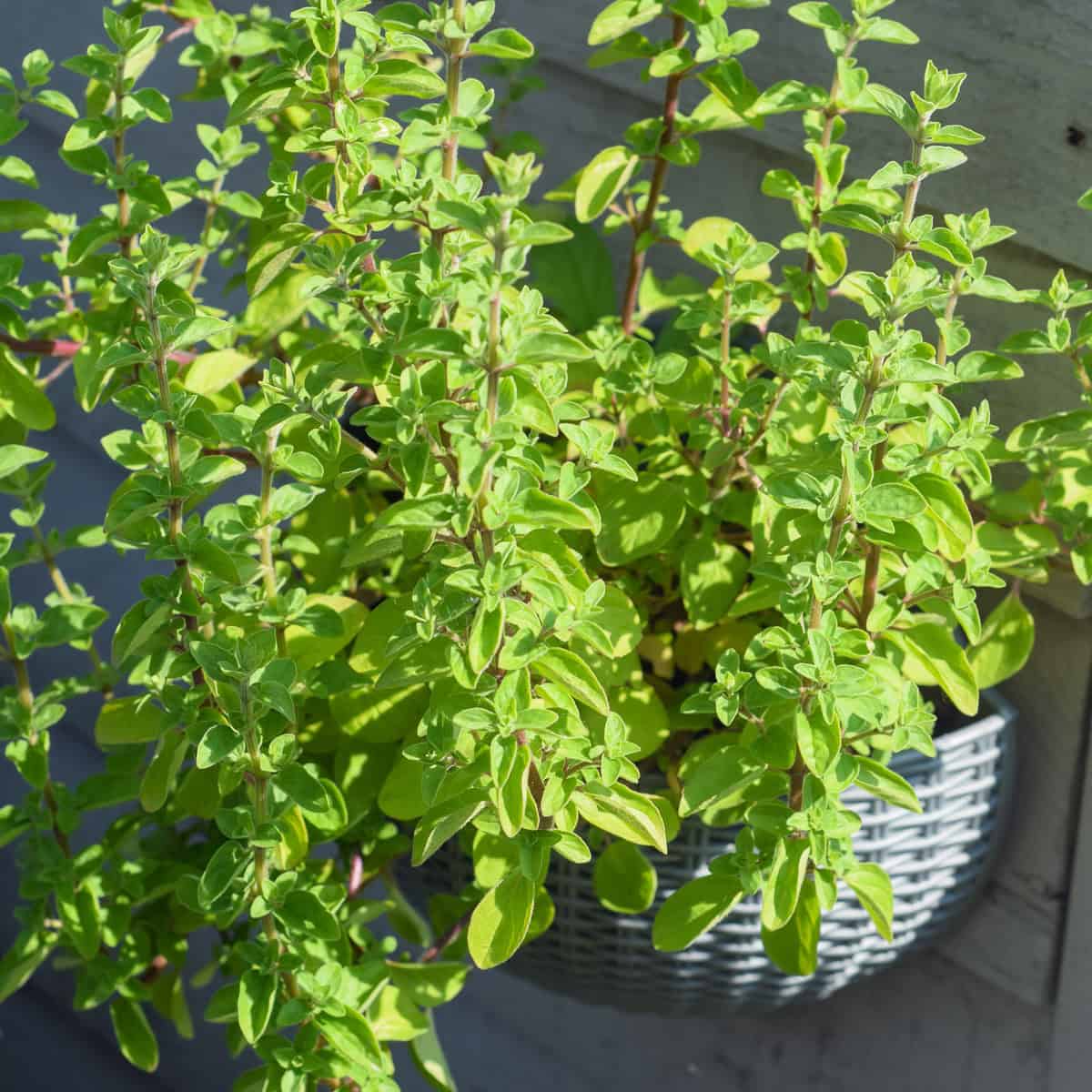
I mounted the oregano in a plastic basket bought online. There is drainage in the bottom but the water holds nicely and keeps the herb hydrated. The baskets came as a pair from our favourite large online retailer, however I'm sure plenty of garden centres do these too.
I have had further success in planting herbs in troughs or planters in the garden. This gives more room for the roots to grow and allow them to be stronger.
When should you plant herbs in the UK?
For perennial plants like rosemary and thyme, spring or early autumn is best, so the roots can settle before extreme weather. For herbs grown from seed, wait until spring once the soil has warmed up, usually from April onwards. Basil is the exception and needs more warmth, so start it indoors on a sunny windowsill and only move it outside once the risk of frost has passed, which in the north can be late May.
I would avoid sowing seed outdoors in the depths of winter. Established plants bought from a garden centre are far more forgiving if you want results in your first season.

Can you grow different herbs in the same pot?
You can, as long as you group herbs with similar water needs. I grow rosemary and thyme together in one pot and both do well, because they are both dry-loving Mediterranean herbs that like the same conditions. The rule worth following is to keep the dry-loving herbs (rosemary, thyme, oregano) together and the thirstier ones (parsley, coriander) separate, so you are not overwatering one to keep the other happy.
With the rosemary, keep an eye out for woody dead ends. I snip those off first when cooking, so the plant is not putting energy into trying to revive them.
Can you grow herbs from supermarket pots?
Yes, and it is the cheapest way to start. A lot of my herbs began as the small pots sold at Asda and Sainsbury's. Rather than using the whole pot in one go and binning the rest, I planted them on.
One tip: those supermarket pots are usually a dense clump of many seedlings grown fast for the shelf, not one strong plant. They do better if you gently split the clump into two or three smaller sections and pot those on with fresh compost, so each has room to root properly.
How do you harvest herbs without killing the plant?
Pick little and often, and always cut just above a pair of leaves rather than stripping a stem bare. That encourages the plant to branch and grow back bushier. As a rough guide, do not take more than about a third of the plant at once, and give it time to recover before the next harvest. Regular light picking actually keeps soft herbs like basil and coriander productive for longer.
How do you store and preserve fresh herbs?
For the short term, soft herbs like parsley, coriander and basil keep best stood in a glass of water in the fridge, loosely covered. For longer storage you have two options depending on the herb:
- Freezing works well for soft herbs. Chop them, pack into an ice cube tray, top with a little oil or water and freeze. Drop a cube straight into a pan when cooking. If you want a fuller rundown on freezing, I have written about freezing produce in my guide to freezing turnips and swede.
- Drying suits the woody Mediterranean herbs better. Thyme, rosemary and oregano dry well and hold their flavour, which is handy at the end of the season before the plant dies back for winter.
Which herb goes with what food?
This is the part I care about most. The aim is to let the herb bring out the best in a dish rather than take it over. Here is how I use each one.
Oregano
A classic Italian flavour, best with pizza and pasta. It also works mixed into a bread dough for a little extra depth. I use it on my simple pizza and it suits a homemade pizza dough well.
Coriander
I use coriander a lot in curries and spiced dishes. The leaves make a good garnish, and the stalks are too good to waste, so I chop them into the base of a curry. It works nicely in something like a cauliflower katsu curry or alongside nduja chicken and naan bread.
Thyme
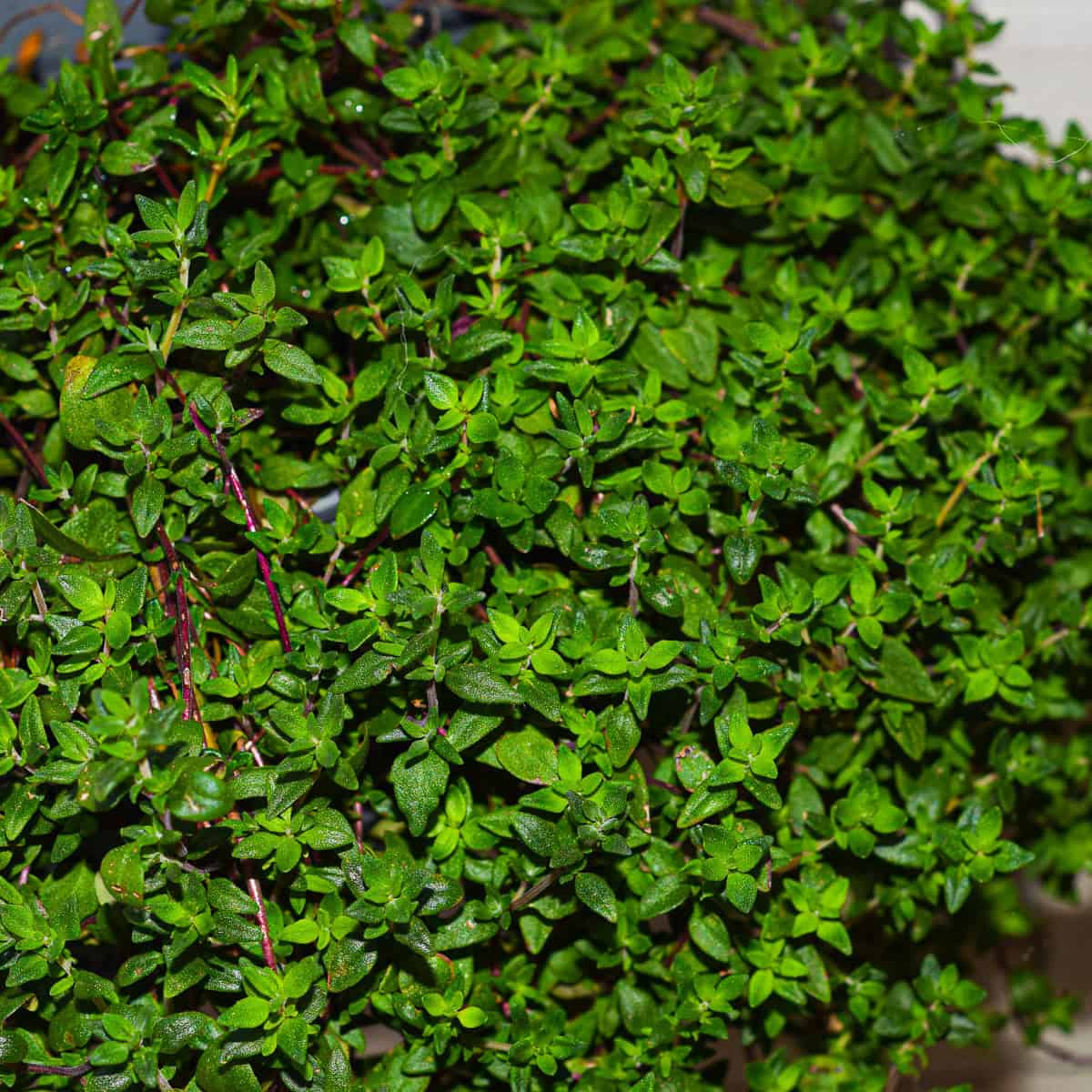
Thyme is my go-to for potato dishes, chopped through mash with a little garlic, or mixed with paprika and scattered over chips. It is not limited to potatoes though, as it is excellent with chicken and in anything slow-cooked. Try it with air fryer chips or a crispy baked potato.
Rosemary
Rosemary suits potatoes and meats like lamb and chicken. One of my favourites is a jacket potato on the BBQ: before wrapping it in foil I add salt, pepper, oil and a sprig of rosemary. It is also a great bread topping with garlic, on a sourdough crust or across a focaccia tray. Good matches on the blog include roasted lamb loin, lemon herb beer can chicken and charcoal sourdough. Rosemary and garlic also make a lovely homemade garlic herb butter.
Basil
Basil leaves work brilliantly with tomato, on pizza and through pasta. Served with mozzarella the flavour complements the cheese, and basil, pine nuts and garlic blitzed together make a quick pesto that is great with chicken. It is a natural fit for a margherita pizza or a chicken pesto pasta.
Parsley
Parsley is the one I reach for to finish a dish. It is mild enough to use generously, so it suits fish, stirs through sauces and brightens up potatoes. A scatter of chopped parsley over oven baked salmon does the job, and it also goes into a garlic herb butter.
Common herb-growing problems, and how to fix them
A few issues come up again and again, so here is what usually causes them:
Woody, dying ends on rosemary. Trim them off as they appear so the plant is not wasting energy on them. The trimmings are still fine to cook with.
Basil collapsing or going yellow. Almost always too much water or too much cold. Water at the base rather than the leaves, keep it warm, and do not leave it sitting in soggy compost.
Coriander bolting (running to seed). Coriander runs to seed quickly in heat. Sow a little fresh every few weeks through spring and summer so you always have young leaves coming through.
Leggy, thin basil. Pinch out the growing tips and any flower buds. That pushes the plant to grow bushier rather than tall and sparse.
Frequently asked questions
Thyme, rosemary and oregano are the easiest. They are hardy perennials that tolerate poor soil, need little water and come back every year.
Rosemary, thyme and oregano are perennials and come back annually. Basil and coriander are annuals that need resowing each year, and parsley is a biennial that usually lasts about a year.
Yes. Split the clump into smaller sections and pot them on with fresh compost so each has room to root.
Plant perennial herbs in spring or early autumn, sow most seed from April once the soil warms, and keep basil indoors until the risk of frost has passed.
Stand soft herbs in water in the fridge for the short term. For longer storage, freeze soft herbs in oil or water and dry woody herbs like rosemary and thyme.
More posts like this


Comments
No Comments
Leave a Reply