


Affiliate Disclosure As an Amazon Associate I earn from qualifying purchases. This post may contain affiliate links. For more details, refer to my Disclaimer page.
Let me guide you through the pros and cons of the various types of pizza peel available on the market today. Firstly we'll look at the two styles and review the pros and cons of wooden and metal peels. Then we can take a look at the big brands and see what they have to offer.
Full Disclosure
This post contains affiliate links to various pizza oven manufacturers. While the review is all my own collected opinions and I have not been asked to write this, some links will give me a small commission should you decide to buy a product via the links in this post.
Contents
Various Types of Pizza Peels compared
Wooden Pizza Peels:
- Pros:
- Less Sticking: The porous surface absorbs moisture, reducing the chances of dough sticking.
- Aesthetic: Traditional and visually appealing.
- Heat Resistance: Stays cooler, making it easier to handle.
- Cons:
- Thickness: Bulkier, making it harder to manoeuvre in tight ovens.
- Maintenance: Requires regular seasoning and can be prone to warping or cracking over time.
Metal Pizza Peels:
- Pros:
- Thinner: Easier to slide under pizzas for retrieval, especially cooked ones.
- Durability: Less prone to warping or cracking, with minimal maintenance required.
- Versatility: Often comes with perforations, reducing flour use and sticking.
- Cons:
- Sticking: Dough is more likely to stick if not properly floured.
- Heat Transfer: Conducts heat, so it can get hot quickly and burn the pizza base.
What Size Pizza Peel Do I Need?
As a general rule of thumb you need a slightly larger diameter to what pizzas you are going to make. A regular house hold should manage with a 14" peel.
- 12” peel: Small ovens, pizzas up to 12”.
- 14”–16” peel: Standard home ovens, most pizzas.
Match your peel slightly bigger than your pizza, not your oven. A bigger peel is harder to handle.
Gozney Pizza Peel
Gozney has a range of peels which are of various width, length and of course price. For the bigger ovens, the Balance Turning Peel will give you a bit more control to turning the pizza around once you have begun cooking. This is also the reason for a turning peel vs a placement peel. This is achieved by the teardrop shape of the peel.

The metal handle and peel give a solid feel to the pizza cooking process. While remaining slimline and lightweight you feel a good sense of control while manoeuvring pizza dough.
The Gozney Balance Placement peel has an aluminium plate and beech wood handle. This is a shorter length peel but again offering solid control. The perforations allow the dough to move freely and refresh the pizza stretch if you need to move things about. This is one of the favourites of mine.
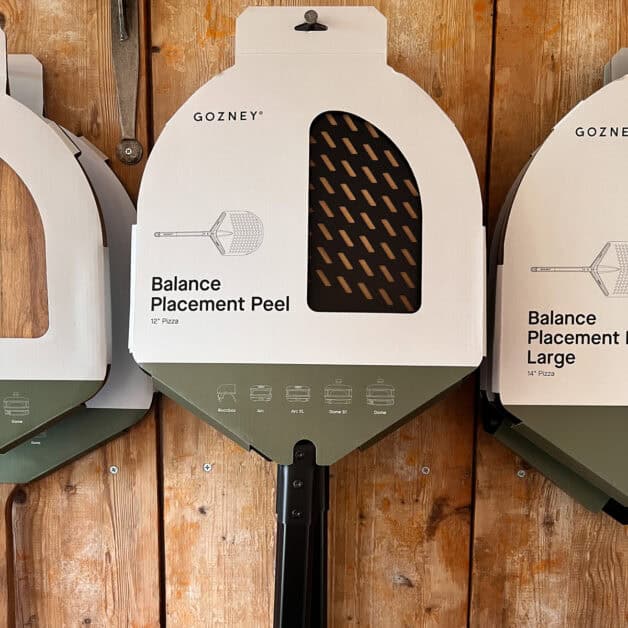
Gozney Balance Placement Peel
Ooni Pizza Peel
The basic Ooni metal peel is a solid metal peel with a corrosion resistant coating added to it. The handle feels like a hard plastic but I wasn't sure exactly what the material was. This has perforated gaps to allow for easy sliding and non sticking as it allows steam to escape and any excess flour to fall through.
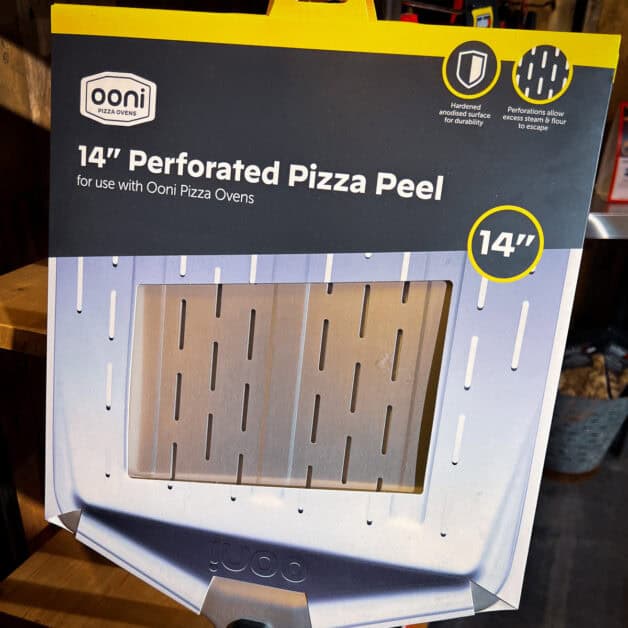
Ooni Perforated Pizza Peel
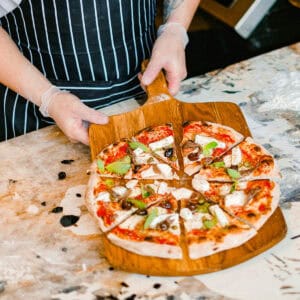
Ooni also do a wooden pizza peel which is combined to also perform as a serving platter. More on the pros and cons of these later.
Woody Pizza Peel
The Woody Oven pizza peel comes in the package with the Pizza Oven Kit. It looks and feels much like the Ooni Perforated Pizza Peel however it features a wooden handle. The peel is again a solid metal thin enough to slide under the dough to launch onto the oven.
A great value pizza peel good for all round use. Worth just having a spare one of these to hand if nothing else!
Looking for some ideas for pizza dough? Check out the pizza dough calculator to find out how much you need to make.
Best Flours For Pizza Peels
To avoid sticking, it is recommended to add some flour to the pizza peel before use:
- Semolina: Classic choice, gives a smooth slide.
- Rice flour: Ultimate non-stick, especially for high-hydration doughs.
- Regular flour: Works fine, but can burn faster and stick more.
Using a different flour to what your dough is made from will ensure it does not get absorbed into the dough and you can work freely with the pizza base without it sticking.
Pizza Dough Sticks To Peel
To prevent pizza dough from sticking to the peel, start by lightly dusting the peel with rice flour or semolina flour. When working with pizza dough I find semolina flour is the more traditional type. These coarse grains act as tiny ball bearings, allowing the dough to slide off the pizza peel easily.
Ensure the dough is well-floured on the bottom but not too sticky on top. It is a good idea to work quickly to prevent the dough from absorbing moisture and sticking and so making sure to only stretch the dough when you are ready to take it to the pizza stone will help avoid wasting dough.
Give the peel a gentle shuffle or shake before transferring the pizza to the oven to ensure it is loose. If it sticks, lift the dough's edges and sprinkle more flour underneath.
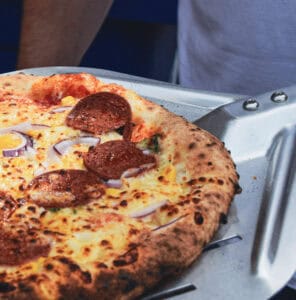
Proper handling and timing are key to success so keep an eye on the crust while baking and then move it around the metal peel to keep the edge even. This is where a turning peel will come in handy.
Wooden Pizza Peel as Chopping Board?
I'm in two minds about this. With both Gozney and Ooni offering a combined pizza peel / serving board this does beg the question at what point does the pizza get sliced up?
If you were to retrieve the pizza via the wooden peel and then slice on that to serve, would this not leave marks and cuts on the board? Maybe so, but my issue with this is the grooves made which will catch flour and potentially interrupt the smooth action of sliding a pizza dough into a pizza oven.
Maybe I'm over thinking this, or maybe the sales patter of it all outweighs the practicality of a combined serving board/pizza peel. I think I'll stick to a regular pizza peel and separate pizza chopping board.
Pizza Peel Comparison Table
| Peel Model / Type | Material | Best For | Perforated? | Length | Ease of Use | My Verdict |
|---|---|---|---|---|---|---|
| Wooden Pizza Peel | Wood | Launching raw dough | ❌ | 12″–16″ | 👍 Easy | Classic choice, gentle on dough |
| Metal Solid Peel | Aluminium / Stainless | Beginners / solid surface | ❌ | 12″–16″ | 👍 Easy | Simple, durable, great first peel |
| Metal Perforated Peel | Aluminium / Stainless | Crisp base / small flour mess | ✅ | 12″–18″ | 👍 Moderate | Best overall slide for cooked pizzas |
| Gozney Balance Placement Peel | Aluminium / Beech handle | Precision launching | ✅ | 12″–14″ | 👍 Good | Great control, light feel |
| Gozney Balance Turning Peel | Aluminium / Metal handle | Turning & retrieving | ❌ | Larger profile | 👍 Good | Excellent for mid‑cook rotations |
| Ooni Perforated Peel | Metal (coated) | Ooni ovens / high heat | ✅ | 12″ / 14″ / 16″ | 👍 Good | Well balanced, classic choice |
| Woody Oven Peel | Metal + Wood handle | All‑round general use | ❌ | Mid‑size | 👍 Easy | Solid value peel / spare option |
| Wooden Peel with Serving Board | Wood | Dual serve + launch | ❌ | 14″–16″ | 👍 Easy | Looks great, but not my fave for cutting |
Pizza Peel FAQ's
The placement peel is used to place the pizza in the pizza oven. The turning peel is used to turn the pizza during cooking and then retrieve the pizza when cooked.
A wooden peel is best for beginners because dough is less likely to stick.
Not essential, but a wooden peel for launching and a metal turning peel for cooking gives the best results.
You can, but it’s not ideal. Most are too thick and don’t slide well.
Yes, they allow steam to escape, reduce sticking, and help create a crispier base.
Placement peel: Used to place your raw pizza in the oven. Usually lighter, shorter, and easier to handle.
Turning peel: Used mid-cook to rotate your pizza and then retrieve it once done. Usually metal and slightly bigger to handle cooked pizza without spilling.
Conclusion
In summary, wooden peels excel at transferring raw dough into the oven without sticking but need a bit more care to make sure they don't burn. Metal peels are ideal for retrieving cooked pizzas and require less maintenance.
- Wooden peels: Perfect for launching raw dough, traditional, cooler to handle, but require care.
- Metal peels: Ideal for retrieving cooked pizzas, low maintenance, perforated versions reduce sticking and flour mess.
If you want my personal setup for home pizza night: a wooden placement peel to launch, and a metal turning peel for cooking and retrieving. Combine that with my homemade pizza dough recipe and that covers every situation to make pizza night less stressful.
More posts like this
Comments
No Comments
Leave a Reply