


Affiliate Disclosure As an Amazon Associate I earn from qualifying purchases. This post may contain affiliate links. For more details, refer to my Disclaimer page.
A guide to smoking meat for people who've got the BBQ grilling basics down and want to move into low and slow. Covers the gear you actually need, how hot smoking differs from cold, time and temperature guidance for common cuts, and the snake method setup that does most of the heavy lifting on a kettle BBQ.
Contents
- Welcome to the Smoky Side of BBQ
- What is Smoking Meat, Really?
- Essential Smoking Gear (Don’t Overthink It)
- Smoking Times & Temperatures: A Cheat Sheet
- Managing the Smoke
- My Favourite Beginner Smoking Recipes
- BBQ Smoker FAQs
- So You’ve Mastered the Basics... Now What?
- The Texas Crutch (A.K.A. Wrapping Meat Like a Pro)
- Reverse Searing: Perfect Steaks Every Time
- Layering Flavours: Rubs, Spritzes, Sauces
- Resting and Holding Meat
- Smoked Side Dishes: Yes, It’s a Thing
- BBQ Smoker FAQs
- Your Comments
Welcome to the Smoky Side of BBQ
Right, you’ve grilled a few burgers, got a handle on the heat, and maybe even nailed a steak or two. Now it’s time to dive into the deep end — smoking meat. This is where the magic really happens. Big flavours, long cooks, and results that’ll make you the envy of the cul-de-sac.
When I first tried smoking meat, I honestly thought I’d cracked it... until I pulled out something that looked like a meteorite. Turns out, smoking is part art, part science, and mostly patience. But it’s so worth it.
What is Smoking Meat, Really?
Smoking is all about cooking low and slow. You’re not blasting meat over high heat and you’re gently infusing it with smoky flavour while it cooks through over long periods of time, hours in fact.
Hot Smoking vs Cold Smoking
- Hot smoking: What we’re doing here. Cooks and smokes the meat at the same time (110°C to 135°C).
- Cold smoking: More advanced. It’s used to flavour things like cheese, fish, or bacon, without cooking them.
Quick Summary: If it’s your first rodeo, stick with hot smoking and a reliable meat thermometer.
Essential Smoking Gear (Don’t Overthink It)
You don’t need a fancy smoker to start. You can use a standard BBQ with a lid like the Weber Master Touch 57 (I have this one). Here’s what works:
Smokers for Beginners
- Kettle-style charcoal grill – Just set up a two-zone fire and add wood chips using the Weber MasterTouch 57.
- Bullet smoker (like the Weber Smokey Mountain 47cm) – Ideal entry-level smoker
- Pellet grill – Bit pricier but idiot-proof with set-it-and-forget-it temps. Take a look at the Weber Smoque Pellet Grill.
Must-Have Tools
- Meat thermometer such as this Inkbird bluetooth one
- Wood chips (hickory, applewood, beech with giving a different taste to various meats) or maybe some wood pellets
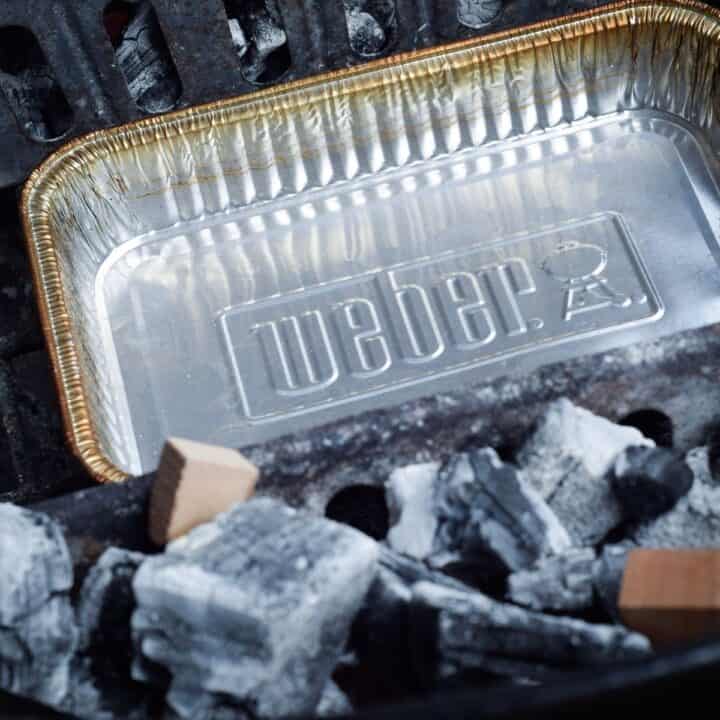
- Water pan (keeps the ambient temperature stable and the meat juicy). A drip foil tray will work well if you are using the Weber MasterTouch.
Pro Tip: Always soak wood chips in water for 30 mins before tossing them on the coals.
Smoking Times & Temperatures: A Cheat Sheet
Here’s where most of us mess up – cooking too fast or guessing doneness.
| Meat | Temp (°C) | Time | Internal Temp |
|---|---|---|---|
| Ribs | 110-120 | 5–6 hrs | 90°C |
| Brisket | 110-120 | 10–14 hrs | 95°C |
| Pulled Pork | 110-125 | 8–10 hrs | 93°C |
| Chicken | 120-135 | 3–4 hrs | 74°C (thigh) |
Example: My first brisket stalled at 70°C for 3 hours. I panicked. Don't. It’s normal. It’s called “the stall.” Just ride it out.
If you want more information on internal cooking temperatures to check meats are done, take a look at my conversions and calculations page for further details.
Managing the Smoke
Too much smoke and your food tastes like a bonfire. Not enough and it’s just roasted meat. The smoke should be added at the beginning of the cook so if adding wood chunks to coals which are in a line (the snake method) then add the wood chunks nearer the lit end.
Tips for Better Smoke:
- Thin blue smoke = perfection. White billowy smoke = back off with the wood for the moment.
- Don’t overdo wood. A small handful every hour is usually plenty
- Keep the lid shut! Every peek can either drop the temperature or increase it by introducing more oxygen and adding time to your cook.
My Favourite Beginner Smoking Recipes
- 3-2-1 Pork Ribs – Already on the blog and foolproof
- BBQ Smoked Gammon with Honey & Mustard – Sweet, sticky, smoky goodness
- Smoked Chicken Thighs or Full chicken – Cheap, forgiving, and delicious
BBQ Smoker FAQs
Pork shoulder or chicken thighs. They’re forgiving and affordable. I'd always recommend starting out with a cheaper cut of meat because the first few smokes are definitely going to be a learning curve.
Nope! You can smoke on a charcoal BBQ with the right setup.
Too much smoke, the wrong type of wood, or a dirty grill can cause these types of problems. Keep the smoke light and clean.
An offset smoker is a type of BBQ designed for low and slow cooking for items like brisket, pork shoulder, ribs, and other big cuts of meat. It has a firebox on the side where you burn charcoal or wood. The heat and smoke flow across the main chamber (where your food is) and then out the chimney the other side. This allows the smoke to gently cook your food indirectly.
Because you’re cooking at lower temperatures (around 110°C–135°C), the meat has time to tenderise, slowly rending the fat and the smoke builds up that BBQ flavour sometimes with a gorgeous pink smoke ring you see when you slice into the meat.
Offset smokers are ideal if you want proper American-style BBQ with maximum flavour. Keep in mind that they do take a bit of patience as you’ll need to tend the fire and manage the temperature constantly. If you love the idea of real wood-smoked meat and don’t mind playing pitmaster for a few hours, an offset smoker like the Char Broil Oklahoma Joe is the way to go. If you fancy this without the constant temperature monitoring then try a pellet grill like the Weber Smoque.
Advanced BBQ Techniques: Take Your Grilling to the Next Level
So You’ve Mastered the Basics... Now What?
Alright, you’ve got the hang of lighting your grill without burning your eyebrows or the garden shed. You’ve smoked your first pork shoulder, and it didn’t turn into jerky (unless that was on purpose). Now it’s time to go to the next level and up your BBQ game.
Read on if...
- Want to go beyond simple sausages and burgers
- Fancy learning a few clever tricks to impress your mates
- Like the idea of BBQ as more than just cooking and see it as an art form
Let me share some of the more advanced techniques I’ve picked up over years through trial and error (and the occasional victory).
The Texas Crutch (A.K.A. Wrapping Meat Like a Pro)
What It Is:
The Texas Crutch is when you wrap meat in foil or butcher’s paper partway through the cook to beat “the stall” — that moment when the internal temp plateaus out. This is an expected part of cooking or smoking meats. Moreso in the UK too where ambient temperatures can be a little lower.
Why You’d Do It:
- Speeds up cooking
- Helps retain moisture
- Softens tough cuts like brisket and pork shoulder
Foil vs Butcher’s Paper:
- Foil traps in all the moisture meaning that the meat can sweat in the steamy wrapping. You can punch holes in if you want, but it's better to use butchers paper if you need that.
- Butcher’s paper allows the meat to breathe a bit (better bark)
Don’t wrap the meat too early. Wait until your brisket or shoulder hits 70–75°C internally.
Reverse Searing: Perfect Steaks Every Time
How It Works:
- Cook your steak low and slow using indirect heat until it’s nearly done
- Crank the heat and sear it at the end for crusty, caramelised magic
Why it’s better:
- More control over how the meat is finished
- Allows for even cooking edge-to-edge
- Less chance of you burning the outside of the meat
Where to use this. I'd say this is a great tip for cooking thick cuts such as ribeye, tomahawk, porterhouse. Makes you look like you really know what you’re doing.
Layering Flavours: Rubs, Spritzes, Sauces
Don’t Just Rub It and Forget It
Advanced BBQ isn’t about doing more, it’s about doing it right.
- Dry rub – Start with your base: salt, pepper, sugar, paprika
- Spritz – Every hour or so, mist the meat with a mix of apple cider vinegar, water, and maybe a splash of bourbon
- Sauce – Apply late (last 15 mins) or it’ll burn
This combo helps build a deep, layered bark and keeps things juicy.
Example: My pork shoulder gets a Dust Bros based rub. People ask for leftovers. There aren’t any.
Resting and Holding Meat
Letting It Rest Is Just As Important As Cooking It
- Resting = This should always be done after cooking and it means letting the meat sit, unwrapped, 15–30 mins after cooking
- Holding = wrapping in foil and a towel, then placing in a cool box for 1–4 hours to keep it warm but not let it cook further.
Why bother with resting or holding meat?
- It helps with redistributing juices
- It improves texture and can sometimes make carving easier to do
- Gives you time to prep sides and have a sneaky beer
If you’re smoking a big cut and it’s seems to have finished cooking early then don’t panic. Holding it can make it even better. You can wrap in some foil and keep warm either on a cooler part of the grill or even take off the heat and place in a cool box.
Smoked Side Dishes: Yes, It’s a Thing
Your BBQ smoker isn’t just a meat cooker. Smoked sides are easy and take your smoker cookout to a new level with some extra options.
Ideas to try cooking on your smoker:
- Smoked mac and cheese (yes please)
- Charred corn with lime butter
- BBQ baked beans with bacon bits
- Smoked garlic and rosemary potatoes
Use a foil tray or cast iron pan to keep contents in while cooking. Place over indirect heat and let the smoke do its thing.
BBQ Smoker FAQs
Wrap it during the stall, spritz regularly, and don’t skip the resting period.
It helps build bark, adds flavour, and prevents dryness over long cooks.
Potentially yes, but to avoid this you can place it in a cool box (no ice packs of course) to keep it warm and safe from drying out.
weather Forecast for your BBQ
BBQ Weather Check
3-day forecast for outdoor cooking
Checking the forecast...
More BBQ Cooking
Comments
No Comments
Leave a Reply